Agios Antonios (Sfougaras)
Kato Selles, Crete
Agios Antonios (Sfougaras) – Kato Selles, Crete
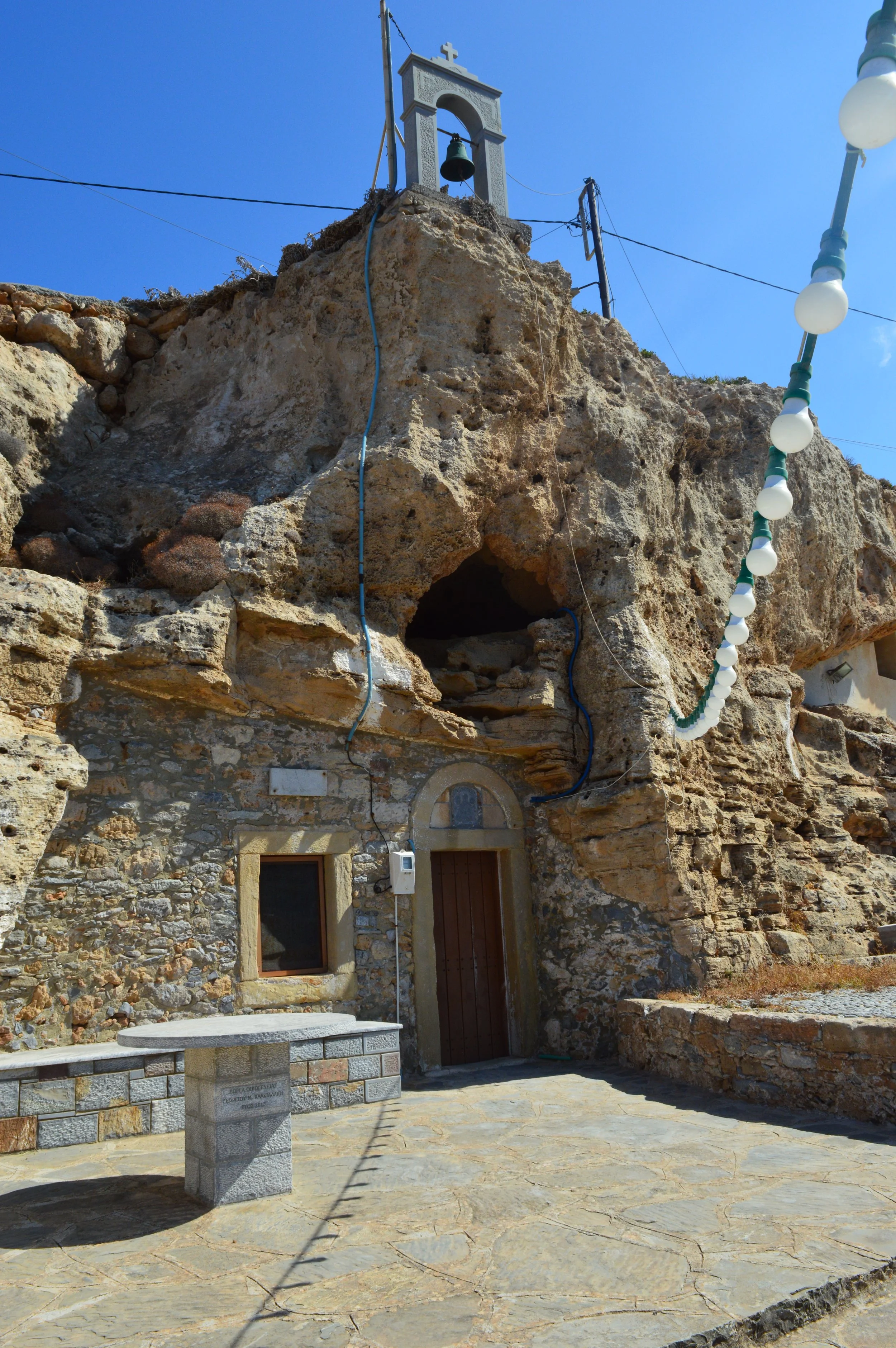
The small church of Agios Antonios, also known as Agios Antonios Sfougaras, is one of the most unusual religious landmarks on the northern coast of the Mirabello region. Built inside a natural cave just above the secluded beach of Agios Antonios, near Kato Selles, it combines the spiritual history of the area with a striking coastal setting.
The site lies approximately 30 km northwest of Agios Nikolaos and around 3 km north of the village of Selles. Unlike the larger monasteries of Crete, Agios Antonios is a modest cave chapel, closely connected to the surrounding landscape and the history of religious life in this remote part of Lasithi.
History and Religious Significance
The religious site of Agios Antonios has a long history. The former monastery is mentioned in documents dating to 1611 and was recorded in an inventory in 1635. These references indicate that the site was already established during the Venetian period, although its precise foundation date and the details of its earliest history remain uncertain.
The church is dedicated to Saint Anthony, one of the most important figures in the Christian tradition of monasticism. Saint Anthony the Great is particularly associated with solitude, prayer and the ascetic life, making the natural caves and secluded coastline around Kato Selles an appropriate setting for a place of worship.
The caves beside the chapel are believed to have served as cells for monks or hermits. Their presence suggests that the site may once have supported a small religious community, although the available historical information does not establish exactly how many people lived there or for how long.
The Cave Church and Surrounding Structures
The most distinctive feature of Agios Antonios is its small church, built within a natural cave beside the sea. Rather than standing as a separate building, the chapel is incorporated into the rock, creating a close connection between the place of worship and its natural surroundings.
Several other caves can be found beside the main chapel. These are thought to have been used as monastic cells, possibly providing simple spaces for prayer, rest and solitude. The wider site also includes a paved courtyard and a covered water cistern, elements that reflect the practical needs of people who once lived in this isolated coastal location.
What to See
A visit to Agios Antonios offers several points of interest:
The cave chapel: The main attraction is the small church built into the natural rock, just a short distance from the shoreline.
The neighbouring caves: Look at the additional cave spaces beside the chapel, traditionally believed to have served as monastic cells.
The paved courtyard and cistern: These surviving features give an idea of how the small religious settlement was organised.
Agios Antonios Beach: The chapel is closely associated with the secluded pebble beach below it, making the two natural and cultural landmarks easy to combine in one visit.
Visiting Agios Antonios
Agios Antonios is located near Kato Selles, approximately 30 km northwest of Agios Nikolaos and 3 km north of Selles village. The route leads north from Selles towards the coastline, with the final approach including a dirt-track section. The chapel stands beside Agios Antonios Beach.
The surrounding coastline is quiet and relatively undeveloped. The beach is pebbly, with rocky surroundings and often strong waves, so swimming conditions can vary considerably with the weather. Visitors should take care on the coastal terrain and respect the religious character of the chapel.