Agios Nikolaos, Crete – A Complete Guide to the Town
Agios Nikolaos, Crete – A Complete Guide to the Town
Agios Nikolaos is one of the most attractive coastal towns in eastern Crete and the capital of the Lasithi regional unit. Built around the picturesque Lake Voulismeni and overlooking the beautiful Mirabello Gulf, the town combines a lively waterfront, traditional Cretan character, cultural attractions and easy access to some of the island's most impressive beaches and historical sites.
Known for its distinctive setting, relaxed atmosphere and cosmopolitan character, Agios Nikolaos offers a different experience from the larger cities of Crete. Its narrow streets, waterfront cafés, traditional tavernas, modern marina and small sandy beaches make it an appealing destination for both day visitors and travellers looking for a base from which to explore eastern Crete.
Whether you want to discover its history, enjoy a walk around the lake, explore local museums, swim in the nearby beaches or experience Cretan food and hospitality, Agios Nikolaos is a town well worth exploring.
Discover Agios Nikolaos
Agios Nikolaos is situated on the western side of Mirabello Gulf, approximately 65 km east of Heraklion. Its attractive location, partly built on hills overlooking the sea, gives the town a distinctive appearance, with views across the coastline and towards the small islands of Agioi Pantes and Fourni.
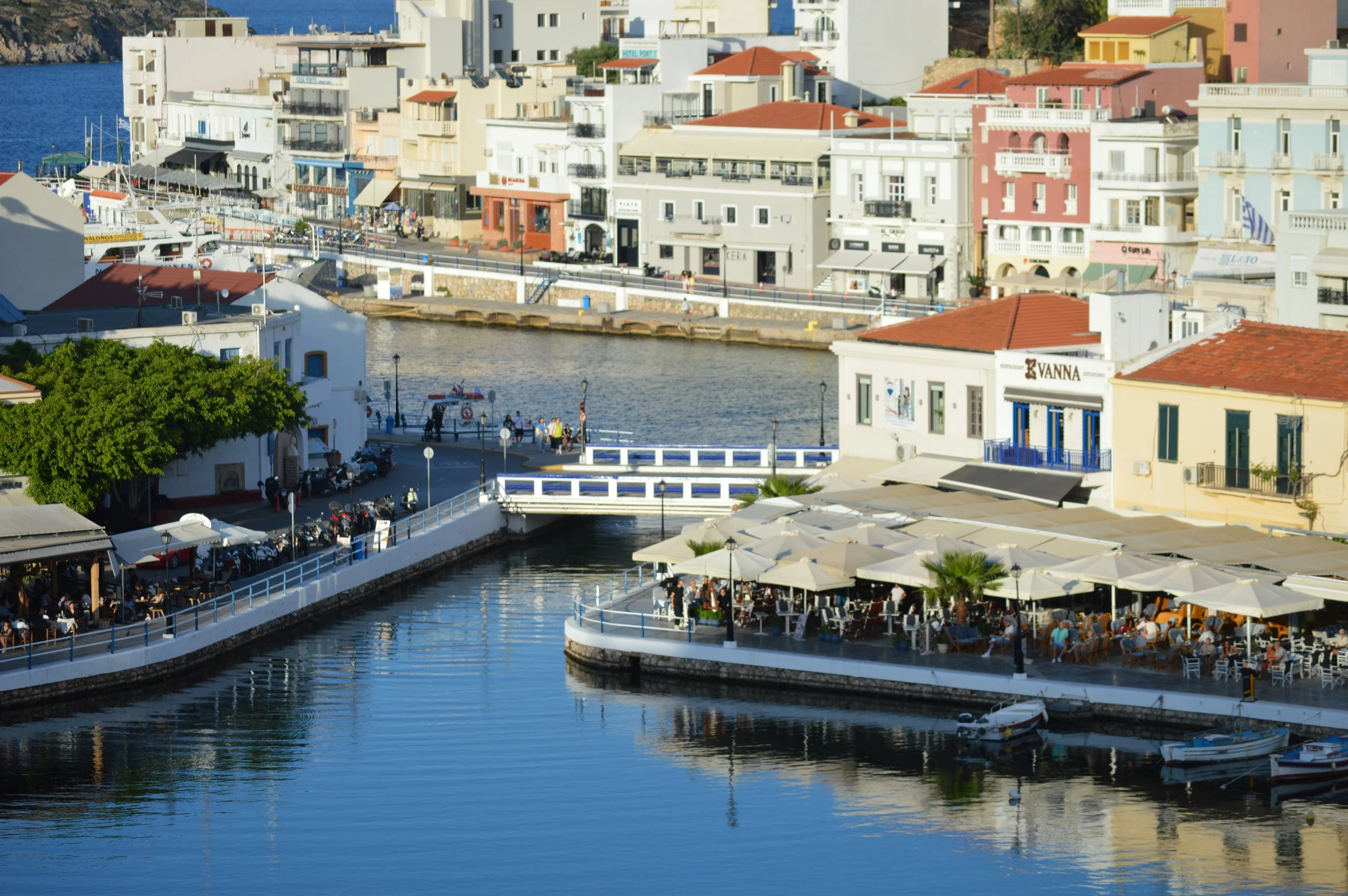
The heart of the town is Lake Voulismeni, a small natural lagoon connected to the harbour by a narrow canal. Restaurants, cafés and bars line its shores, creating one of the most recognisable waterfront settings in Crete. During the day, visitors enjoy the views over the water, while in the evening the surrounding streets and lakeside become a lively meeting place.
Beyond the lake, the town extends towards the marina, the commercial harbour and the main shopping streets. The central area is pleasant to explore on foot, with small squares, pedestrian streets, shops and traditional cafés offering plenty of opportunities to experience everyday life in the town.
Agios Nikolaos has a welcoming atmosphere throughout much of the year. Although it is an established tourist destination, it remains an active regional centre where visitors can experience both modern seaside life and the traditions of eastern Crete.
History and Cultural Heritage
The history of the area around Agios Nikolaos reaches back to antiquity. The modern town developed in the nineteenth century, particularly from the mid-1860s, when a new settlement and port began to grow in response to the need for a harbour serving eastern Crete.
The town was built partly over the remains of the ancient settlement of Kamara, which served as the harbour of the important ancient city of Lato. Archaeological traces of the ancient settlement have been identified within the modern urban area.
The name Agios Nikolaos comes from the small Byzantine church of Saint Nicholas, located on a rocky peninsula north of the town. The church is believed to date from the early Byzantine period and is one of the area's important religious monuments.
Over the centuries, the wider Mirabello region developed through successive historical periods, including the Minoan, Greek, Roman, Byzantine, Venetian and Ottoman eras. Evidence of this long history can be found in archaeological sites, churches, museums and traditional settlements throughout the municipality.
Today, Agios Nikolaos is the administrative and commercial centre of Lasithi, while its cultural identity remains closely connected to the history, traditions and landscapes of eastern Crete.
Things to See and Do in Agios Nikolaos
The town has several interesting attractions that can easily be explored during a walking tour. Most of the main sights are located within or close to the centre.
Lake Voulismeni
Lake Voulismeni is the most famous landmark of Agios Nikolaos and the focal point of the town. Surrounded by steep rocky slopes, colourful buildings, cafés and restaurants, it creates a distinctive setting that attracts visitors throughout the year.
A narrow canal connects the lake with the harbour. This connection was created in 1870, transforming the former enclosed lagoon into part of the town's waterfront.
Local legends have given the lake a mythical reputation, including stories that it is bottomless and that ancient goddesses once bathed in its waters. Its considerable depth and unusual shape have contributed to these stories.
Today, visitors can walk around the lake, enjoy a meal overlooking the water or simply relax at one of the cafés. It is particularly atmospheric in the evening, when the surrounding restaurants and bars become lively.
The Harbour and Marina
The harbour and marina are among the most attractive areas of Agios Nikolaos. Located close to Lake Voulismeni, they offer pleasant views of fishing boats, sailing vessels and yachts against the backdrop of the town.
The waterfront is ideal for a leisurely walk, especially in the late afternoon and evening. Boat excursions and organised sea trips also operate from the wider harbour area, offering opportunities to explore the coastline and nearby destinations.
Archaeological Museum of Agios Nikolaos
The Archaeological Museum of Agios Nikolaos is one of the most important cultural attractions in eastern Crete. Its collection presents archaeological discoveries from across the Lasithi region, covering a long period from the Neolithic era to Roman times.
Among its most notable exhibits are finds from the Early Minoan cemetery of Agia Fotia, as well as objects from important archaeological sites such as Malia and Fournou Korifi near Myrtos.
One of the museum's best-known objects is the Goddess of Myrtos, an impressive Early Minoan libation vessel shaped like a female figure. The collection offers visitors a valuable introduction to the prehistoric cultures and archaeological heritage of eastern Crete.
Folklore Museum of Agios Nikolaos
The Folklore Museum provides an insight into traditional Cretan life and the customs of earlier generations. Its exhibits include traditional clothing, textiles, household objects, agricultural tools and items connected with local crafts.
For visitors interested in understanding the everyday culture of Crete, the museum offers a useful complement to the archaeological collections.
The Church of Agios Nikolaos
Located on a small rocky peninsula north of the town, the Byzantine church of Agios Nikolaos is an important religious monument and the place from which the town takes its name.
The small stone church is traditionally dated to the early Byzantine period, although it underwent restoration following an earthquake in the early fourteenth century.
Its location is particularly attractive, offering beautiful views across Mirabello Gulf towards the islands of Agioi Pantes and Fourni. It is a worthwhile stop for visitors interested in Byzantine architecture, religious history and coastal scenery.
Kitroplatia Square
Kitroplatia is one of the most pleasant seaside areas in Agios Nikolaos. The square is located beside a small beach and is surrounded by restaurants, cafés and accommodation.
It offers a more relaxed waterfront atmosphere than the busy area around Lake Voulismeni. Visitors can enjoy a coffee, have lunch beside the sea or take a short break before continuing their exploration of the town.
Eleftherias Square and the Main Shopping Streets
Eleftherias Square is one of the central meeting points of Agios Nikolaos. The surrounding streets connect several important parts of the town and provide access to shops, cafés and local services.
The nearby 28th October Street is one of the main shopping streets, with boutiques, souvenir shops, jewellery stores and businesses selling local products.
Walking through this part of town is a good way to discover its everyday character beyond the waterfront.
Beaches in Agios Nikolaos
One of the advantages of visiting Agios Nikolaos is that several beaches are located within walking distance or a short drive from the town centre.
The coastline offers a variety of swimming spots, from small urban beaches to longer sandy stretches surrounded by natural landscapes.
Ammos Beach
Ammos Beach is located close to the town centre and the commercial harbour. Its convenient position makes it a popular choice for visitors who want to enjoy a swim without travelling far.
The beach has sandy sections and clear water, with cafés and other facilities nearby.
Kitroplatia Beach
Kitroplatia is a small beach situated directly beside Kitroplatia Square. Its central location makes it particularly convenient for combining swimming with a meal or coffee at one of the nearby restaurants.
The beach has a mixture of sand and pebbles and offers an attractive setting close to the town's waterfront.
Gargadoros Beach
Located south of the centre, Gargadoros is a pleasant coastal area with clear water and a more relaxed atmosphere. It is accessible on foot from town and is popular with both locals and visitors.
Nearby restaurants and cafés make it a convenient place to spend a few hours by the sea.
Almyros Beach
Almyros Beach is one of the most popular beaches in the Agios Nikolaos area. Situated a short distance south of the town, it has a long sandy shoreline, shallow waters and natural vegetation around the Almyros River wetland.
The beach is organised, with facilities available during the summer season. Its relatively shallow water makes it particularly suitable for families.
Ammoudara Beach
Ammoudara Beach is located south of Agios Nikolaos, along the coastal road towards Ierapetra. It is known for its sandy shoreline, clear waters and organised sections with sunbeds and umbrellas.
It is a good option for visitors looking for a beach day outside the busy town centre.
Local Food and Gastronomy
Food is an important part of the experience in Agios Nikolaos. The town offers a wide choice of traditional tavernas, seafood restaurants, cafés and modern dining establishments.
Visitors can discover the flavours of Cretan cuisine through dishes prepared with local olive oil, fresh vegetables, herbs, cheeses and seasonal ingredients.
Some traditional specialities worth trying include:
Dakos: A traditional Cretan dish made with barley rusks, tomato, olive oil and local cheese.
Kalitsounia: Small pastries filled with cheese or herbs, prepared in different ways across Crete.
Gamopilafo: A traditional rice dish cooked in meat broth, associated with Cretan celebrations.
Antikristo: A traditional Cretan method of slowly roasting lamb or goat around an open fire.
Fresh seafood: Fish, octopus, squid and other seafood are commonly found in restaurants around the harbour and waterfront.
Cretan cheeses: Local varieties such as graviera, mizithra and anthotyro are important parts of the regional food culture.
Visitors should also look for local olive oil, honey, herbs, wine and raki, which reflect the agricultural traditions of eastern Crete.
The waterfront around Lake Voulismeni and the harbour is particularly popular for dining, while the streets further inland offer opportunities to discover smaller cafés and traditional establishments.
Shopping and Local Life
Agios Nikolaos is one of the main shopping destinations in eastern Crete. Its central streets contain a variety of shops, ranging from fashion boutiques and jewellery stores to souvenir shops and businesses selling traditional products.
The area around 28th October Street is particularly suitable for shopping, while the streets near the lake and harbour offer a combination of small shops, cafés and restaurants.
Visitors interested in local products can look for Cretan olive oil, honey, herbs, traditional sweets, ceramics, handmade items and locally produced textiles.
The town also has an active social life. During the day, cafés and squares provide meeting places for residents, while in the evening the waterfront becomes a popular destination for dining, drinks and entertainment.
Agios Nikolaos hosts cultural events and festivals throughout the year, including seasonal celebrations and activities connected with local traditions.
Excursions and Places to Visit Near Agios Nikolaos
Agios Nikolaos is an excellent starting point for exploring the wider Mirabello region and eastern Crete. Several important archaeological sites, traditional villages, beaches and historical destinations are located within easy reach.
Some of the most interesting excursions include:
Elounda
Located north of Agios Nikolaos, Elounda is a popular coastal destination known for its attractive waterfront, beautiful bay, hotels and restaurants. It is also an important starting point for boat trips to Spinalonga.
Plaka and Spinalonga
The small seaside village of Plaka lies opposite the historic island of Spinalonga. Visitors can explore the village, enjoy the waterfront tavernas and take a boat trip to the island, which is famous for its Venetian fortress and later history as a leper colony.
Kritsa
Kritsa is one of the largest and most traditional villages in the area. It is known for its stone houses, narrow streets, traditional crafts and the historic church of Panagia Kera, famous for its Byzantine frescoes.
Ancient Lato
Situated in the hills above the village of Kritsa, Ancient Lato is one of the best-preserved ancient Doric city-states in Crete. Its remains include public buildings, residential areas and impressive views across the surrounding countryside.
Neapoli
Neapoli is a historic inland town with traditional architecture, churches and a pleasant central square. It is also home to museums that explore the history and traditional life of the Mirabello region.
Voulisma Beach
Located near the village of Kalo Chorio, Voulisma is one of the most famous beaches in eastern Crete. It is known for its pale sand and turquoise waters, making it a popular destination for swimming and relaxation.
Milatos and Milatos Cave
The coastal village of Milatos offers a quieter seaside atmosphere, while nearby Milatos Cave is an important historical and natural site associated with tragic events during the Ottoman occupation of Crete.
Lasithi Plateau
Further inland, Lasithi Plateau offers a completely different landscape, with traditional villages, agricultural fields and mountain scenery. It is an excellent excursion for visitors interested in the rural traditions and natural beauty of Crete.
How to Get to Agios Nikolaos
Agios Nikolaos is located in eastern Crete and is connected to the island's main towns and transport routes.
Approximate road distances include:
Heraklion: 65 km west
Ierapetra: 36 km southeast
Sitia: 70 km east
Elounda: 10 km north
Neapoli: 15 km northwest
Kritsa: 10 km southwest
The town is accessible by car from Heraklion through the main northern coastal road. The journey offers views of the coastline and passes through several popular seaside settlements.
Public buses connect Agios Nikolaos with Heraklion, Ierapetra, Sitia and other destinations in eastern Crete. Visitors arriving at Heraklion International Airport can travel to Agios Nikolaos by rental car, taxi or bus, usually via Heraklion.
Having a car is particularly useful for exploring the surrounding villages, archaeological sites and beaches, although the central area of Agios Nikolaos itself is easily explored on foot.
Best Time to Visit Agios Nikolaos
Agios Nikolaos is a destination that can be enjoyed throughout much of the year, although the experience changes depending on the season.
Spring (March–May)
Spring is an excellent time to explore the town and its surroundings. Temperatures are generally pleasant, the countryside is green and the surrounding villages are particularly attractive. It is a good season for walking, sightseeing and cultural excursions.
Summer (June–August)
Summer is the busiest period, when the town has its liveliest atmosphere. Restaurants, cafés, shops and beach facilities operate at full capacity, while boat trips and excursions are widely available. The warm weather makes it ideal for swimming and enjoying the coastline.
Autumn (September–October)
Autumn is another excellent period to visit. The sea often remains warm enough for swimming, while temperatures become more comfortable for exploring the town and surrounding countryside. The atmosphere is generally more relaxed than during the peak summer months.
Winter (November–February)
During winter, Agios Nikolaos becomes quieter and offers a more local experience. Many seasonal tourist businesses reduce their operating hours or close, but the town remains an active regional centre with restaurants, cafés and shops serving residents throughout the year.
Visitor Tips
Explore the town on foot: The central area, Lake Voulismeni, harbour, marina and main shopping streets are all close enough to enjoy during a walking tour.
Visit Lake Voulismeni at different times: The atmosphere changes throughout the day, and the lake is particularly attractive in the evening.
Allow time for the museums: The Archaeological Museum and Folklore Museum provide a deeper understanding of the history and culture of eastern Crete.
Enjoy the local beaches: You do not need to travel far from the centre to find a place for swimming.
Try traditional Cretan food: Take the opportunity to enjoy local dishes and products at the town's tavernas and restaurants.
Explore beyond the town: Elounda, Plaka, Kritsa and Ancient Lato are all worthwhile excursions.
Consider a boat trip: The harbour and nearby coastal settlements provide opportunities to discover the Mirabello Gulf from the sea.
Allow at least one full day: A full day is recommended to explore the town comfortably, visit its main attractions and enjoy the waterfront. If you also want to discover the surrounding area, consider staying longer.