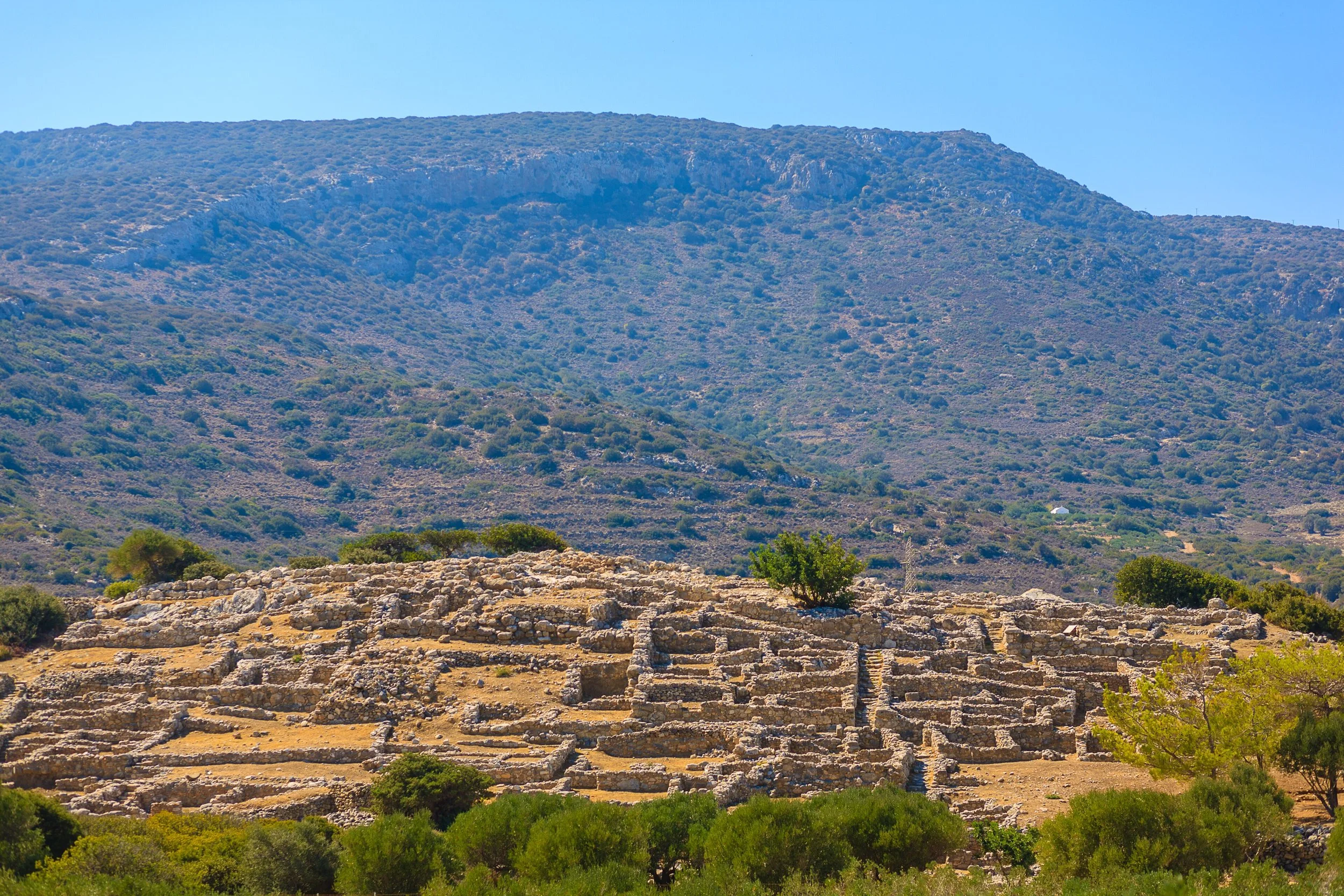
Gournia, Crete
Explore an Ancient Minoan Town
Gournia, Crete – Explore an Ancient Minoan Town
Gournia is one of the most important archaeological sites in Eastern Crete and one of the best-preserved examples of a Minoan town. Located near Pachia Ammos, on the northern side of the Isthmus of Ierapetra, approximately 20 minutes from Agios Nikolaos, the site offers a fascinating opportunity to discover how people lived during the Bronze Age.
Unlike the famous Minoan palace complexes of Knossos and Malia, Gournia reveals the everyday life of an entire community. Its narrow paved streets, houses, workshops, small palace and public spaces provide a remarkable picture of an organised Minoan settlement that flourished around 1550–1450 BC.
History of the Minoan Settlement
The settlement of Gournia developed over several periods of Minoan history, with evidence of occupation dating back to earlier phases of the Bronze Age. It reached its greatest prosperity during the Late Minoan period, particularly between approximately 1550 and 1450 BC.
During this time, Gournia became an important regional centre for administration, crafts, agriculture and trade. Its location near the coast and the narrow Isthmus of Ierapetra provided access to maritime routes and connections with other parts of Crete and the wider Aegean.
The ancient name of the settlement is unknown. Its modern name comes from the Greek word gourna, referring to the stone and wooden troughs found in the area.
The town was eventually destroyed around the middle of the 15th century BC, during a period of major changes across Minoan Crete. The archaeological remains preserve valuable evidence of the settlement before its decline.
Exploring the Ancient Town
One of the most fascinating aspects of Gournia is its well-preserved urban layout. Visitors can walk through the remains of narrow streets and stepped pathways that once connected the different neighbourhoods.
The houses were built close together, often sharing walls, and many included ground-floor storage areas and workshops, with living spaces on upper floors.
Among the most interesting features of the archaeological site are:
The Small Palace: Located on the highest part of the settlement, it served as an important administrative and public centre.
The Central Courtyard: An open space surrounded by important buildings, believed to have played a role in the public and social life of the town.
The Residential Houses: The remains of numerous homes reveal the organisation of domestic life in the Minoan period.
The Workshops: Archaeological finds indicate that residents produced pottery, bronze tools, weapons and other everyday objects.
The Streets and Stairways: The paved roads and stepped passages demonstrate how the settlement was adapted to the natural slope of the hill.
The Sanctuary: A small religious building associated with Minoan worship, where figurines and other ritual objects were discovered.
The arrangement of these buildings makes Gournia particularly interesting because visitors can explore not just a monumental structure, but the remains of a complete ancient community.
Everyday Life and Minoan Crafts
Gournia provides valuable insight into the daily activities and skills of the Minoans.
Archaeological discoveries include bronze tools, pottery, stone vessels, weaving equipment and objects associated with domestic and agricultural activities. These finds suggest that the inhabitants were involved in a variety of occupations, including farming, fishing, pottery production, metalworking and weaving.
The town was also connected to wider trade networks. Its coastal position and archaeological evidence of production indicate that Gournia played an important role in the economic life of the Mirabello region.
These discoveries make the site especially valuable for understanding how ordinary people lived, worked and organised their community during the Minoan civilisation.
The Ancient Harbour
Recent archaeological investigations have revealed that Gournia was connected to an important coastal complex.
Near the shoreline, researchers identified remains of fortification walls, towers, a cobbled road linking the harbour with the town and a monumental structure interpreted as a possible shipshed.
These discoveries provide further evidence of the settlement's maritime connections and show that its importance extended beyond the residential area on the hillside.
The harbour remains are particularly interesting because they help explain how Gournia participated in the maritime and commercial networks of Bronze Age Crete.
Archaeological Excavations
The first major excavations at Gournia began in 1901 under the direction of American archaeologist Harriet Boyd Hawes. She returned for further excavation seasons in 1903 and 1904, uncovering a large part of the settlement, including its houses, streets, central courtyard and small palace.
Her work was especially important because it revealed a well-preserved Minoan town rather than just an isolated palace or monumental building.
Further archaeological research and conservation work have taken place over the years, including investigations of the coastal harbour complex and additional studies of the settlement's development.
Visiting Gournia
Gournia is an excellent destination for visitors interested in ancient history and archaeology. The site is relatively easy to explore, with pathways connecting the remains of the houses, streets and public buildings.
Allow approximately 45–60 minutes for a visit, depending on your interest in the archaeological remains.
The terrain includes uneven ground, stone pathways and some slopes. Comfortable walking shoes, drinking water and sun protection are recommended, especially during summer.
Informative signs help visitors understand the different parts of the settlement and its historical importance.
Best Time to Visit
Spring and autumn are particularly pleasant seasons for exploring Gournia, when temperatures are generally comfortable for walking around the archaeological site.
During summer, an early morning visit is recommended to avoid the strongest midday heat. The site has limited shade, so bring water and sun protection.
Practical Information
Location: Near Pachia Ammos, on the Isthmus of Ierapetra, Eastern Crete.
Distance from Agios Nikolaos: Approximately 20 minutes by car.
Historical period: Mainly associated with the Minoan civilisation, especially 1550–1450 BC.
Main attractions: Ancient houses, paved streets, small palace, workshops, courtyard and sanctuary.
Visit duration: Approximately 45–60 minutes.
Terrain: Uneven archaeological paths and gentle slopes.
Facilities: Toilets are available at the archaeological site.
According to the official Hellenic Heritage visitor information, the published opening hours are 08:30–15:30, every day except Tuesday. The full ticket is €5 and the reduced ticket is €3. Last admission is 20 minutes before closing. Check the official website before visiting, as prices and opening arrangements may change.
How to Get to Gournia
Gournia is situated alongside the main northern road connecting Agios Nikolaos with Ierapetra, close to Pachia Ammos.
The drive from Agios Nikolaos takes approximately 20 minutes, while the journey from Ierapetra also takes around 20 minutes. The archaeological site is clearly accessible from the main road, with parking available nearby.
Its convenient location makes Gournia an excellent stop during a trip between Agios Nikolaos and the southern coast of Crete.
Places to Discover Nearby
Pachia Ammos: A small coastal settlement with a beach and traditional seaside atmosphere.
Vasiliki: A village known for its archaeological importance and its connection with an earlier Minoan settlement.
Mochlos: A beautiful coastal village opposite a small island with important Minoan archaeological remains.
Kavousi: A traditional village near the famous Ancient Olive Tree of Kavousi and several important archaeological sites.
Ierapetra: The southernmost town of Europe, known for its Venetian fortress, old town and beaches.
Agios Nikolaos: Discover Lake Voulismeni, the harbour, museums, restaurants and the lively waterfront.
Discover the Everyday Life of the Minoans
Gournia offers a rare opportunity to walk through the remains of a Minoan town and understand how an ancient community functioned. Its houses, workshops, streets and public buildings reveal a civilisation that was highly organised and connected to the wider Mediterranean world.
For visitors exploring the archaeological heritage of Eastern Crete, Gournia is an essential stop and one of the most rewarding places to discover the everyday life of the Minoans.