Discover Ierapetra, Crete – A Complete Guide to the Town
Discover Ierapetra
Ierapetra is the largest town on the southern coast of Crete and the only major urban centre on the island's Libyan Sea coastline. Its position at the narrowest part of Crete has historically made it an important point of communication between the northern and southern sides of the island.
The town is divided between its modern commercial centre and the older neighbourhood known as Kato Mera. The waterfront is one of its most attractive areas, with a long promenade, fishing boats, cafés and restaurants overlooking the sea. Walking through the older streets reveals a different atmosphere, with narrow lanes, traditional buildings and architectural traces of the Venetian and Ottoman periods.
Ierapetra is also closely connected to agriculture. The fertile surrounding plain, extensive olive groves and greenhouse cultivation play an important role in the local economy. This gives the town a strong year-round identity, beyond its popularity as a summer destination.
History and Cultural Heritage
The history of Ierapetra dates back to antiquity, when the important city of Ierapytna developed in this part of southeastern Crete. It was one of the most powerful ancient cities on the island, particularly during the Hellenistic and Roman periods.
Its strategic position, close to the narrowest part of Crete and facing the North African coast, contributed to its commercial and maritime importance. Ancient Ierapytna developed its own currency and maintained connections with other Mediterranean cities. During the Roman period, it continued to prosper as an important regional centre.
The town experienced significant changes during the Byzantine period, including destruction caused by earthquakes and raids. During Venetian rule, Ierapetra acquired much of its later historical character, while the Venetians strengthened the harbour's defences with the construction of the fortress of Kales.
The Ottoman conquest in the seventeenth century brought further changes to the town's architecture and urban landscape. Mosques, fountains and other buildings from this period remain part of the historic neighbourhood.
Today, Ierapetra combines its ancient heritage with Venetian and Ottoman monuments, offering visitors an interesting glimpse into the different civilisations that shaped southern Crete.
Things to See and Do in Ierapetra
Many of the town's principal attractions are concentrated around the harbour and the old neighbourhood of Kato Mera. They can be explored comfortably on foot.
Kales Venetian Fortress
The Fortress of Kales is the most recognisable historical monument in Ierapetra. Standing at the entrance to the old harbour, it was built during Venetian rule to protect the port and the town from attacks by sea.
The fortress was repaired and modified over the centuries, including during the Ottoman period. Its sturdy stone walls and strategic position reflect the importance of Ierapetra as a coastal settlement.
Today, Kales is an important landmark and a pleasant starting point for exploring the waterfront and historic quarter. It also hosts cultural activities and events on certain occasions.
Kato Mera – The Old Town
Kato Mera is the traditional old quarter of Ierapetra, located close to the harbour and the Fortress of Kales. Its narrow streets and historic buildings preserve much of the town's older character.
Walking through this neighbourhood, visitors can discover traditional houses, small squares, religious monuments and architectural details reflecting the Venetian and Ottoman periods.
It is one of the most interesting areas to explore at a relaxed pace, especially for visitors who want to experience the historic side of Ierapetra beyond its modern waterfront.
The House of Napoleon
One of the most unusual attractions in the old town is the house traditionally associated with Napoleon Bonaparte.
According to local tradition, Napoleon stayed in Ierapetra for one night in 1798, during his expedition to Egypt. The historic house is said to have hosted him, although the story has not been conclusively established.
The building remains an interesting part of local tradition and gives the old quarter an additional historical curiosity.
Archaeological Collection of Ierapetra
The Archaeological Collection of Ierapetra is an important destination for visitors interested in the ancient history of southeastern Crete.
It is housed in a former Ottoman School, built in 1899, and contains archaeological finds from ancient Ierapytna and the surrounding region. The collection covers a long historical period, from the Bronze Age to Late Antiquity.
Among the exhibits are pottery, sculptures, inscriptions, coins and funerary objects. One of the most notable pieces is a statue of Persephone, also known as Kore, dating from the second century AD.
A visit provides a useful introduction to the ancient history of Ierapetra and the wider Lasithi region.
The Old Mosque and Ottoman Fountain
The old mosque is one of the architectural reminders of the Ottoman period in Ierapetra. Located in the historic quarter, it reflects the cultural and religious changes that shaped the town after the Ottoman conquest.
Nearby, visitors can also discover an Ottoman fountain, another element of the historic urban landscape.
These monuments are particularly interesting when explored together with the traditional streets of Kato Mera, where several buildings preserve architectural features from earlier periods.
The Church of Afendi Christo
The Church of Afendi Christo is one of the religious landmarks associated with the historic centre of Ierapetra. Along with churches such as Agios Spyridon and Agios Ioannis, it forms part of the town's religious heritage.
Exploring these churches offers another way to understand the history and traditions of the local community.
The Waterfront and Harbour
The waterfront is one of the liveliest parts of modern Ierapetra. The long seaside promenade connects different sections of the town and offers attractive views across the Libyan Sea.
The harbour remains an important part of local life, with fishing boats and vessels serving the nearby islands and coastal destinations. Visitors can enjoy a walk beside the sea, stop at one of the cafés or restaurants, or simply watch the activity around the port.
The waterfront is particularly pleasant in the late afternoon and evening, when residents and visitors gather to enjoy the cooler temperatures.
Beaches in Ierapetra
Ierapetra has a long coastline with a variety of beaches, from convenient urban swimming spots to quieter coves and extensive sandy-pebble shores.
The town beach is easily accessible from the centre, while some of the region's most attractive coastal destinations are located a short drive east or west.
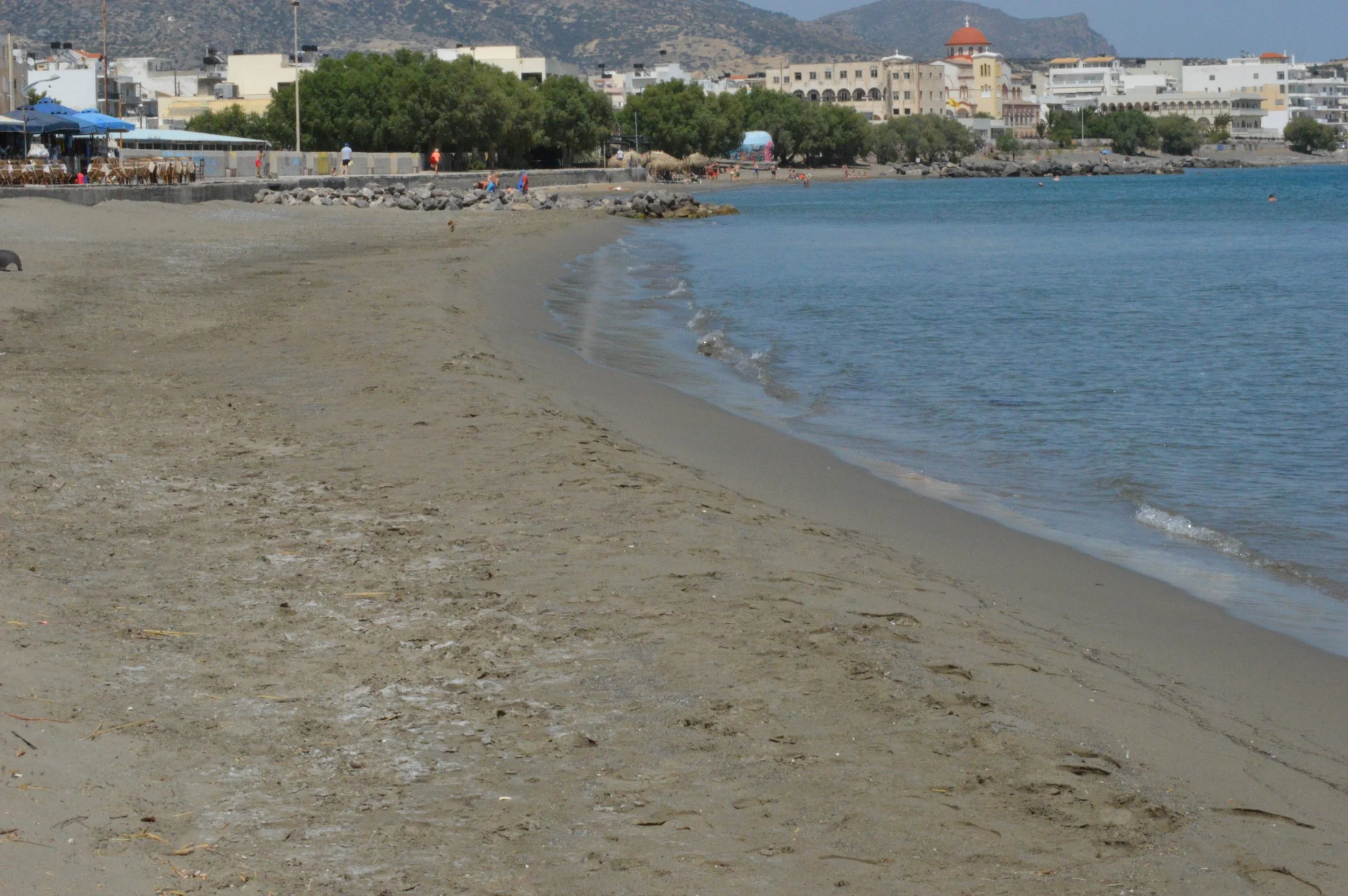
Ierapetra Town Beach
The town beach stretches along the coast close to the central waterfront. Its convenient location makes it a practical option for visitors who want to swim without travelling outside the town.
There are organised sections and nearby cafés, restaurants and other services, making it suitable for a short break by the sea.
Peristeras Beach
Located east of the town, Peristeras is a coastal area with a long shoreline and a mixture of sand and pebbles. It offers an alternative to the busier central beach and is accessible by road.
Koutsounari Beach
Koutsounari is famous for its extensive coastline, also known as Long Beach or Megali Paralia. Its grey sand, small pebbles and clear waters make it one of the best-known beaches in the Ierapetra region.
The long shoreline includes organised areas as well as quieter sections, giving visitors plenty of choice.
Agia Fotia Beach
Agia Fotia is a beautiful coastal destination east of Ierapetra, known for its sheltered bay, clear water and surrounding rocky landscape. It is particularly attractive for visitors looking for a smaller beach with a more intimate setting.
Achlia Beach
Achlia is a picturesque cove with clear blue water, rocky headlands and a sheltered setting. Its attractive natural landscape makes it one of the most popular smaller beaches along this part of the southern coastline.
Makry Gialos
Further east, Makry Gialos offers several beaches, including its main sandy beach, Kalamokanias and Lagoufa. The area combines attractive swimming spots with waterfront restaurants, accommodation and a relaxed seaside atmosphere.
Myrtos Beach
West of Ierapetra, Myrtos is a charming seaside village with a long beach of grey sand and fine pebbles. Its waterfront tavernas and relaxed atmosphere make it a worthwhile destination for a coastal excursion.
The wider Ierapetra coastline also includes Tertsa, Galini, Tholos and other smaller beaches, each offering a different experience.
Local Food and Gastronomy
Ierapetra has a strong connection with the agricultural traditions of southern Crete. Its fertile plain produces a wide variety of vegetables, fruits and other agricultural products, many of which are used in the kitchens of local restaurants and tavernas.
Olive oil is an essential part of local cooking, while fresh vegetables, herbs, legumes and cheeses form the basis of many traditional dishes.
Visitors should look out for:
Dakos: Barley rusks topped with tomato, olive oil and local cheese.
Cretan salads: Fresh seasonal vegetables combined with local olive oil, herbs and cheeses.
Kalitsounia: Traditional small pastries filled with cheese or herbs.
Antikristo: Lamb or goat slowly roasted around an open fire.
Fresh seafood: Fish, octopus, squid and other seafood served in waterfront tavernas.
Local cheeses: Traditional varieties such as graviera, mizithra and anthotyro.
The waterfront is a particularly pleasant place to enjoy fresh fish and seafood, while the traditional streets of Kato Mera offer opportunities to discover a more local dining atmosphere.
The surrounding villages are also worth exploring for traditional tavernas and local agricultural products.
Shopping and Local Life
Ierapetra is an important commercial centre for southeastern Crete. Its shopping streets offer a mixture of local businesses, clothing shops, supermarkets, cafés and stores selling traditional products.
Visitors can find Cretan olive oil, honey, herbs, wine, raki, local sweets and handmade souvenirs. The central streets are particularly suitable for a leisurely walk, with shops and cafés reflecting the everyday rhythm of the town.
Unlike destinations that depend almost entirely on seasonal tourism, Ierapetra remains active throughout the year. Agriculture, fishing, commerce and public services all contribute to its local identity.
In the evening, the waterfront becomes a popular meeting place. Residents and visitors gather for walks, coffee, dinner and drinks, giving the town a relaxed but lively atmosphere.
Excursions and Places to Visit Near Ierapetra
Ierapetra is an excellent base for discovering the southern and eastern parts of Lasithi. The surrounding region includes archaeological sites, traditional villages, impressive gorges, mountain landscapes and some of the most distinctive beaches in Crete.
Chrissi Island (Gaidouronisi)
Chrissi Island is one of the most famous destinations associated with Ierapetra. Located approximately 15 km south of the town in the Libyan Sea, it is known for its pale sandy shores, turquoise waters and protected juniper forest.
Boat excursions traditionally depart from Ierapetra during the tourist season. However, Chrissi is a protected natural area, and access arrangements have changed in recent years. Visitors should check the current regulations and designated visitor areas before booking a trip.
Gournia Archaeological Site
Gournia is one of the most important Minoan archaeological sites in eastern Crete. Located near the northern coast of the Ierapetra region, it preserves the remains of an ancient settlement dating mainly to the Late Bronze Age.
The site includes streets, houses, workshops and the remains of a central building often described as a small palace. It offers visitors a valuable opportunity to understand how an organised Minoan town functioned.
Myrtos and the Minoan Sites
The village of Myrtos is worth visiting for its seaside atmosphere, traditional character and nearby archaeological heritage.
Close to the village are the important Minoan sites of Fournou Korifi and Pyrgos, which provide evidence of early settlement in the region.
Sarakina Gorge
Sarakina Gorge, near the village of Mithi, is one of the most impressive natural attractions in the Ierapetra area.
The gorge is known for its dramatic limestone formations, narrow passages, rock walls and flowing water during suitable conditions. Its landscape offers a striking contrast to the open coastal scenery around Ierapetra.
Visitors should check the route conditions before setting out, particularly after heavy rainfall.
Selakano Forest
Selakano Forest is an extensive mountain forest on the southern slopes of the Dikti mountain range. It is known for its pine trees, rich biodiversity and traditional beekeeping activity.
The surrounding area offers opportunities for nature exploration, hiking and discovering the mountainous landscape of inland Lasithi.
Anatoli
Anatoli is a traditional mountain village located above Ierapetra, with beautiful views towards the Libyan Sea.
Its stone houses, narrow streets and traditional character make it an interesting destination for visitors who want to explore the inland villages of the region.
Makry Gialos
Makry Gialos is one of the most popular seaside destinations east of Ierapetra. It combines attractive beaches, a small harbour, traditional tavernas and a relaxed holiday atmosphere.
It is an excellent excursion for visitors interested in exploring the southeastern coastline.
Kato Chorio and Episkopi
The villages of Kato Chorio and Episkopi are among the traditional settlements of the Ierapetra hinterland. They offer a glimpse of rural life, local architecture and the agricultural character of the region.
The wider area is also interesting for its churches and historical monuments.
How to Get to Ierapetra
Ierapetra is located on the southeastern coast of Crete and is accessible by road from the island's main towns and transport hubs.
Approximate road distances include:
Agios Nikolaos: 36 km northwest
Sitia: Approximately 57 km east
Heraklion: Approximately 94 km northwest
Myrtos: Approximately 15 km west
Makry Gialos: Approximately 25 km east
Koutsounari: Approximately 6–7 km east
The main road connects Ierapetra with Agios Nikolaos and the northern coastal road network. Visitors travelling from Heraklion can reach the town by following the route through Agios Nikolaos and continuing south.
Public buses connect Ierapetra with Heraklion, Agios Nikolaos, Sitia and other destinations in the region. Bus schedules vary depending on the season, so it is advisable to check the latest information before travelling.
The nearest major international airport is Heraklion International Airport. Renting a car is particularly useful for exploring the beaches, mountain villages, gorges and archaeological sites around Ierapetra.
Best Time to Visit Ierapetra
Ierapetra is known for its warm, sunny climate and is one of the most pleasant parts of Crete for outdoor activities throughout much of the year.
Spring (March–May)
Spring is an excellent season for exploring the town and its surrounding countryside. The landscape becomes greener, temperatures are comfortable and the villages and natural attractions are particularly enjoyable for sightseeing and walking.
Summer (June–August)
Summer is the busiest season, with warm weather, lively waterfront areas and plenty of opportunities for swimming. Beach facilities and seasonal excursions operate during this period. It is also the main season for boat trips to Chrissi, subject to the island's current access regulations.
Autumn (September–October)
Autumn is one of the most attractive times to visit Ierapetra. The sea often remains warm enough for swimming, while the temperatures become more comfortable for exploring archaeological sites, villages and natural landscapes.
Winter (November–February)
Winter is relatively mild compared with many other parts of Greece. Ierapetra remains active as a year-round town, making it suitable for visitors interested in local life, gastronomy and the cultural heritage of southern Crete. Some seasonal tourist facilities and excursions may not operate.
Visitor Tips
Explore Kato Mera on foot: The old quarter, Kales Fortress and the main historical monuments are close to one another.
Visit the Archaeological Collection: It is one of the best places to understand the ancient history of Ierapetra and its surroundings.
Enjoy the waterfront: The promenade is particularly pleasant in the late afternoon and evening.
Discover the beaches beyond the town: Koutsounari, Agia Fotia, Achlia and Makry Gialos are all worthwhile coastal excursions.
Check Chrissi Island regulations: Boat trips and visitor access are subject to environmental restrictions, so confirm the current arrangements before travelling.
Explore the inland villages: Anatoli, Males and the surrounding mountain settlements offer a different perspective on the region.
Try local products: The agricultural traditions of the area are reflected in its food, olive oil, vegetables and traditional dishes.
Allow enough time: One day is enough to discover the main attractions in town, but two or three days will allow you to explore more of the surrounding coastline and countryside.