Katsikadara Gorge, Crete
Water, Nature & Hiking
Katsikadara Gorge, Crete – Water, Nature & Hiking
Discover Katsikadara Gorge
Katsikadara Gorge is a beautiful natural route in the Mirabello region of Eastern Crete, close to Agios Nikolaos. Located between the villages of Pyrgos and Prina, near Kalo Chorio, the gorge combines flowing water, lush vegetation, rocky passages and an old stone-paved path through the surrounding countryside.
The area offers a different kind of hiking experience from the larger and more demanding gorges of Crete. Visitors can follow sections of the stream, discover small natural pools and explore the historic paths that once connected the nearby villages. The route also provides lovely views across the Mirabello landscape and towards the sea.
The Natural Landscape
Katsikadara Gorge follows a small stream through a landscape shaped by water and limestone. Its riverbed features rocky formations, shaded sections and small pools, while plane trees and other vegetation create a green environment along parts of the route.
Water can often be found in the gorge even outside the winter months, although the amount varies depending on rainfall and seasonal conditions. During wetter periods, the stream becomes more active and the landscape takes on an especially fresh appearance.
The combination of water, trees and rocky terrain makes Katsikadara a distinctive natural spot in the countryside around Agios Nikolaos.
The Historic Watermill of Bentoura
One of the interesting features along the route is the old two-storey watermill of Bentoura, located in the area known as Marmaro.
The remains of the watermill reflect the traditional ways in which local communities made use of the area's water resources. Nearby, visitors can also encounter old architectural elements, including stone remains and fragments that have been associated with the ancient settlement of Istron.
These traces add a historical dimension to the walk, connecting the natural landscape with the agricultural and rural life of earlier generations.
Hiking Through Katsikadara Gorge
The walk through Katsikadara offers a pleasant combination of natural scenery and traditional paths. Some sections follow the stream through rocky passages, where visitors can encounter small pools, shaded areas and interesting rock formations.
The route is generally considered relatively easy, although the terrain changes along the way. Certain parts of the riverbed become narrower and more difficult to cross, particularly when water levels are higher or the rocks are slippery.
For this reason, walkers can choose to leave the streambed at the more challenging sections and continue along the old path running parallel to the gorge.
The overall walking experience depends on the route selected. Shorter walks can explore part of the gorge, while longer itineraries connect Pyrgos with Prina and include the surrounding countryside.
The Old Stone Path to Prina
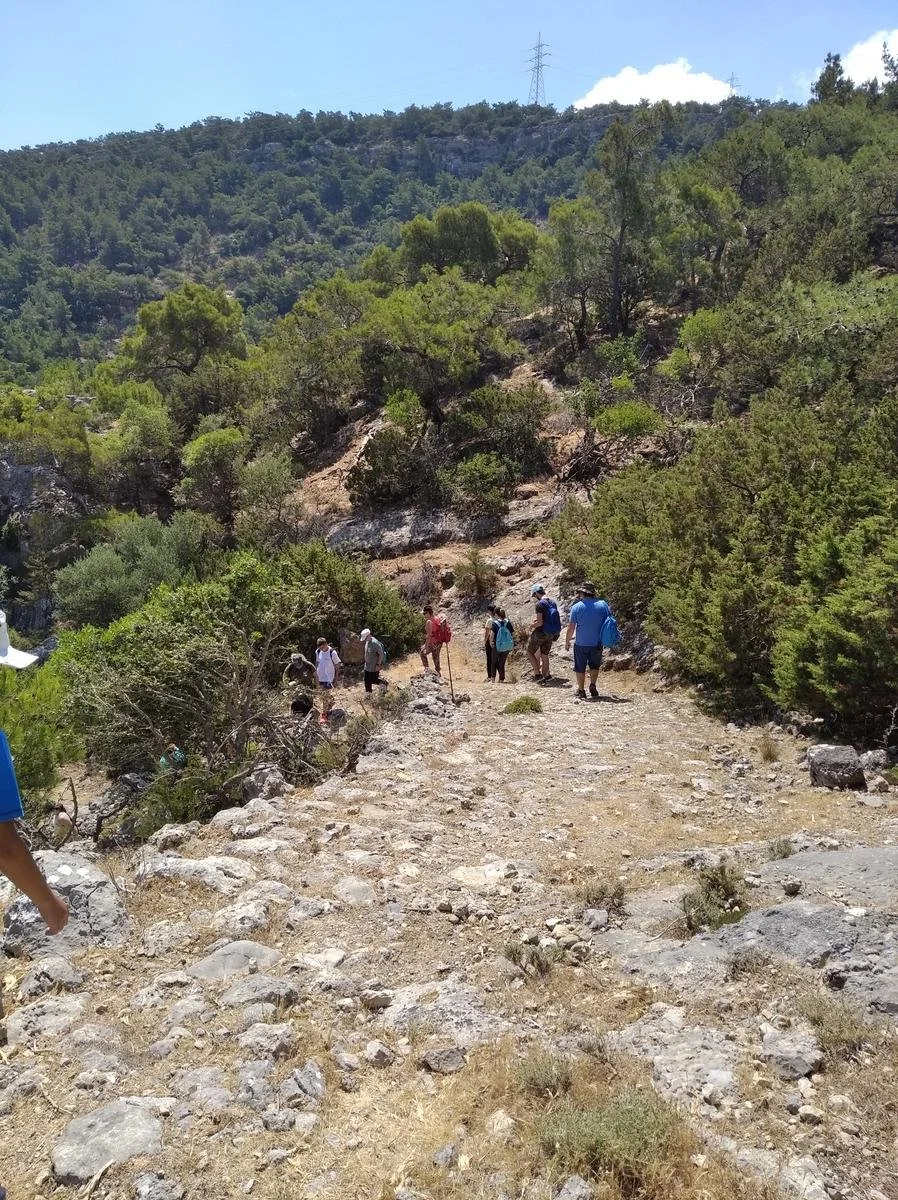
A particularly interesting part of the area is the old stone-paved path, known locally as a kalderimi, which historically connected Pyrgos with Prina.
The path runs parallel to the gorge for sections of the route and provides an alternative to walking directly through the streambed. It passes through a landscape of pine trees, rocky slopes and traditional rural surroundings.
Along the way, hikers can enjoy open views towards Mirabello Bay and the surrounding coastline. The combination of the gorge and the historic path makes this route an appealing way to discover the countryside between the two villages.
Prina Village and the Surrounding Landscape
The walk can continue towards Prina, a traditional village surrounded by hills and Mediterranean vegetation.
Above the village, Xivouni Hill offers an attractive viewpoint over the wider area. The chapel of Timios Stavros, located on the hill, is another point of interest for visitors exploring the surrounding landscape.
Prina provides a peaceful setting to experience a quieter side of Eastern Crete, away from the busier coastal areas.
Flora and Wildlife
The vegetation around Katsikadara changes according to the terrain and availability of water. Plane trees grow along parts of the stream, while pine trees, shrubs and typical Mediterranean plants cover the surrounding slopes.
The shaded riverbed creates a cooler environment during warmer months, and the presence of water supports a variety of small animals and birds. In spring, the surrounding countryside becomes particularly green, with seasonal flowers adding colour to the landscape.
Best Time to Visit Katsikadara Gorge
Spring and autumn are generally the most pleasant seasons for walking in Katsikadara Gorge. During spring, the vegetation is fresh and water is more likely to be present along the stream. Autumn offers milder temperatures and comfortable conditions for exploring the surrounding paths.
Summer walks are also possible, particularly along the shaded sections, but it is advisable to avoid the hottest hours of the day and carry sufficient drinking water.
After heavy rainfall, the streambed may become slippery or difficult to cross. Visitors should check local conditions before setting out.
Practical Information
Location: Between Pyrgos and Prina, near Kalo Chorio, Eastern Crete.
Distance: Route lengths vary. Some itineraries cover approximately 8–12 km, depending on the starting point and whether the walk includes a return section.
Duration: Around 2–4 hours for common walking itineraries, depending on the selected route and walking pace.
Difficulty: Generally easy, with some uneven and rocky sections.
Terrain: Streambed, rocky passages, natural pools and old stone-paved paths.
Recommended equipment: Comfortable hiking shoes with good grip, drinking water and suitable clothing.
Water conditions: The stream may contain water for much of the year, but levels vary seasonally.
The gorge is not uniformly easy to walk through. Some sections of the riverbed can become more challenging, so visitors should use the parallel stone path where necessary and avoid crossing the stream when water levels are high.
How to Get to Katsikadara Gorge
Katsikadara Gorge is located in the countryside between Pyrgos and Prina, close to Kalo Chorio and the coastal area of Istron.
A convenient starting point for exploring the route is the village of Pyrgos. From there, visitors can reach the gorge and the old watermill area before continuing towards Prina along the stream or the historic stone path.
The area can be reached by car from Agios Nikolaos, with the journey taking approximately 15–25 minutes depending on the starting point and route.
Places to Discover Nearby
The location of Katsikadara Gorge makes it possible to combine a walk with visits to several interesting places in the surrounding region.
Pyrgos: A small traditional settlement and a convenient starting point for exploring the gorge.
Prina: A quiet village surrounded by hills, pine trees and traditional countryside.
Kalo Chorio and Istron: A coastal area known for its beaches and beautiful bays.
Kritsa: One of the best-known traditional villages in the region, with narrow streets and local character.
Ancient Lato: An important ancient Dorian city located in the hills above Kritsa.
Agios Nikolaos: The main town of the Mirabello region, with its harbour, Lake Voulismeni, restaurants and shops.
Discover the Natural Side of Eastern Crete
Katsikadara Gorge is a rewarding destination for visitors who want to explore the natural and rural landscapes around Agios Nikolaos. Its combination of flowing water, shaded vegetation, historic watermill remains and traditional stone paths offers an enjoyable opportunity to discover a quieter side of Crete.