Lake Voulismeni, Agios Nikolaos – A Place of Myths, Legends and Underwater Mysteries
Lake Voulismeni, Agios Nikolaos – A Place of Myths, Legends and Underwater Mysteries
Lake Voulismeni is one of the most recognisable landmarks of Agios Nikolaos and a natural feature that gives the town its distinctive character. Located in the heart of the town, this almost circular lake is surrounded by steep reddish cliffs, pine trees, cafés and traditional tavernas. Its calm waters, picturesque setting and fascinating stories make it one of the most visited places in eastern Crete.
Although often called a lake, Voulismeni is technically a small lagoon connected to the sea through a narrow channel leading to the harbour. It measures approximately 137 metres in diameter and is remarkably deep for its size. Over the centuries, its unusual shape and depth have inspired myths, local traditions and stories about its mysterious underwater world.
The Myth of Athena and Artemis
According to local tradition, the goddesses Athena and Artemis used to bathe in the waters of Lake Voulismeni. The story has contributed to the lake's mythical atmosphere, giving it a special place in the folklore of Agios Nikolaos.
The lake was once believed to be bottomless, and stories about its hidden depths circulated for generations. Its steep sides and dark waters helped create an image of a mysterious place, while other local legends connected it with underground passages and distant volcanic activity.
These stories are part of the cultural identity of the town and continue to add an element of mystery to the lake.
Jacques-Yves Cousteau and the Underwater Exploration
One of the most fascinating chapters in the modern history of Lake Voulismeni is connected with the famous French ocean explorer Jacques-Yves Cousteau. In 1978, Cousteau and his diving team visited Agios Nikolaos to explore the lake's underwater environment. According to the account of a later research expedition, the divers encountered extremely dark and cold conditions, which made further exploration difficult.
More extensive investigations followed in September 2000, when a Greek team from Hellas Underwater Explorers carried out a major underwater exploration and mapping project. The expedition involved around 30 people, including technical divers, cave divers, oceanographers, geologists, photographers and other specialists.
The researchers explored the lake's depths, mapped its underwater shape and carried out scientific measurements. During the dives, they reached the lakebed at approximately 51 metres at the point explored. They also recovered military objects believed to date from the Second World War, including weapons, ammunition and a German military motorcycle.
The research helped put an end to the old belief that the lake had no bottom. It also contributed to a better understanding of its geological formation and underwater environment. The lake is described by the researchers as a doline, a natural depression formed through limestone erosion and processes associated with underground water and cave systems.
It is worth clarifying that the documented Cousteau visit was by Jacques-Yves Cousteau himself, not his son. The 2000 expedition was a separate Greek research project. Although the area's geology is associated with underground cave formations, the available expedition account specifically documents the exploration and mapping of the lake, rather than a complete exploration of an underwater cave network.
The Channel Connecting the Lake to the Harbour
Originally, Lake Voulismeni was separated from the sea and contained freshwater. In the nineteenth century, a channel was opened to connect it with the harbour of Agios Nikolaos, allowing seawater to enter and changing the lake's natural character.
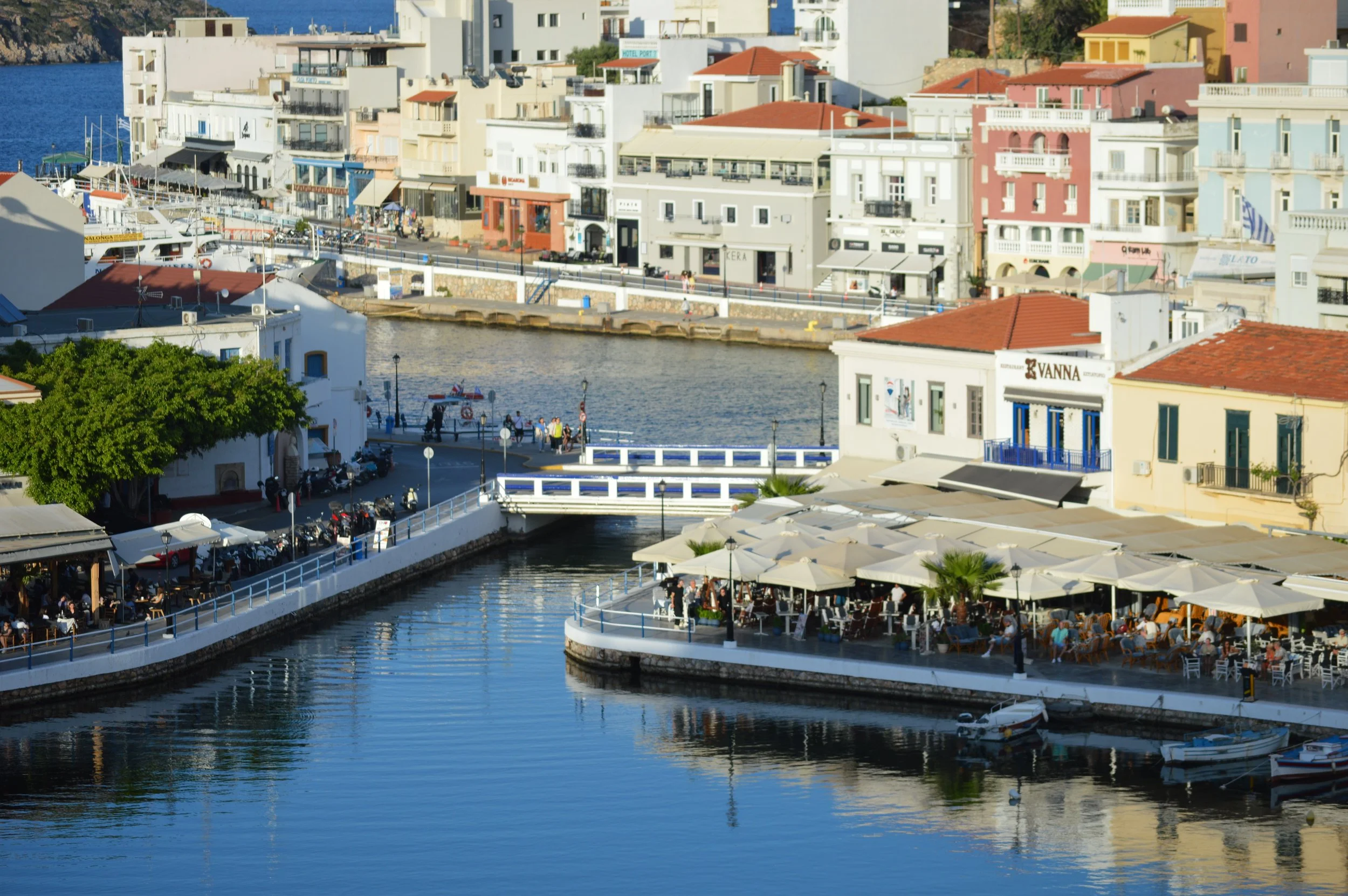
The channel and its small bridge create a picturesque connection between the lake and the waterfront. Today, small fishing boats and other vessels can be seen around the lake and along the channel, making the area an important part of the town's maritime life.
What to See Around Lake Voulismeni
The lake is one of the best places to experience the atmosphere of Agios Nikolaos. Visitors can walk around its waterfront, enjoy a coffee or meal at one of the many cafés and restaurants, and watch the boats resting on the water.
For a different perspective, visitors can climb to the small park above the lake. From here, there is a beautiful panoramic view over Voulismeni, the harbour, the rooftops of Agios Nikolaos and Mirabello Bay. It is particularly attractive in the late afternoon and evening, when the surrounding buildings and lights are reflected on the water.
The lake is also an important gathering place during the Orthodox Easter celebrations. At midnight on Easter Saturday, residents and visitors gather around it to celebrate the Resurrection with fireworks and traditional festivities. The burning of an effigy of Judas has also been part of the local Easter tradition.
Visiting Lake Voulismeni
Lake Voulismeni is located in the centre of Agios Nikolaos and is easy to reach on foot from the main shopping streets, the marina and the town's waterfront. It is an ideal starting point for exploring the town, as many of its attractions, restaurants and cafés are within walking distance.
Visitors should take time to see the lake from both the waterfront and the viewpoint above it. Each offers a different perspective of this remarkable natural landmark.
Is Lake Voulismeni Worth Visiting?
Absolutely. Lake Voulismeni is much more than a picturesque spot in the centre of Agios Nikolaos. Its natural formation, ancient legends, underwater explorations and connection with local traditions make it one of the most interesting places to visit in the town.
Whether you stop for a coffee beside the water, enjoy the panoramic view from above or simply walk around its shores, the lake offers a memorable introduction to the character and history of Agios Nikolaos.