Phaistos, Crete
Explore One of the Greatest Minoan Palaces
Phaistos, Crete – Explore One of the Greatest Minoan Palaces
Overlooking the fertile Messara Plain in southern Crete, the Palace of Phaistos is one of the most important archaeological sites on the island. Once a major administrative and cultural centre of the Minoan civilisation, it offers visitors an opportunity to explore impressive ancient architecture, monumental courtyards and the remains of a city that played an important role in Cretan history.
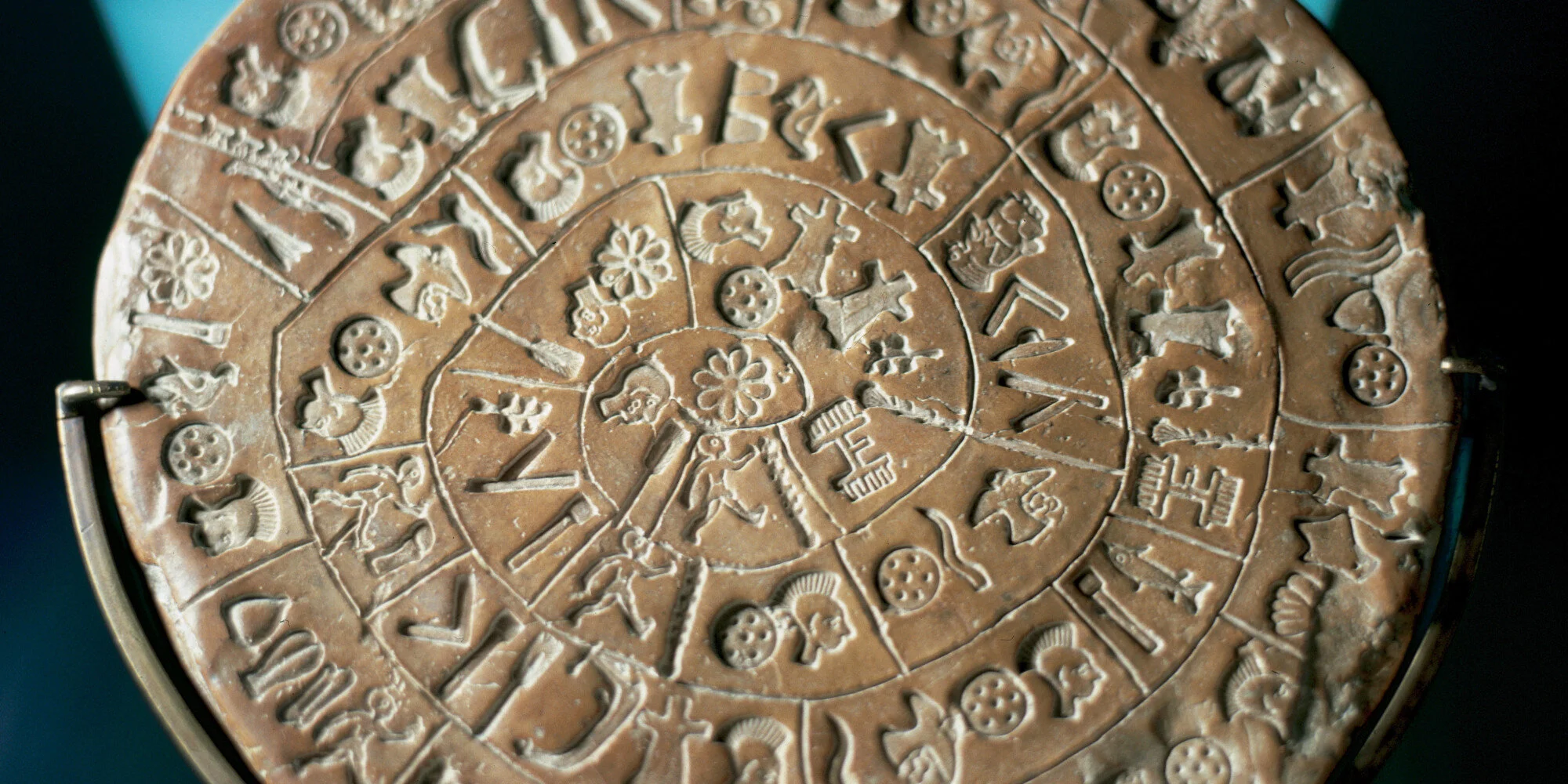
Phaistos is particularly famous for the discovery of the mysterious Phaistos Disc, one of the most remarkable archaeological objects of the Bronze Age. Its combination of ancient history, impressive architecture and panoramic views makes it an essential destination for anyone interested in the history of Crete.
The History of Ancient Phaistos
The area of Phaistos was inhabited from the middle of the 3rd millennium BC, while the first palace was constructed around 1900 BC, during the Protopalatial period.
According to ancient tradition, Phaistos was founded by King Minos and ruled by his brother Rhadamanthus. The city became one of the most powerful centres of Minoan Crete, controlling a large territory across the fertile Messara Plain and maintaining connections with important coastal settlements and harbours.
The first palace was destroyed around 1700 BC, probably following a major earthquake. A larger and more impressive palace was subsequently constructed over its remains.
The new palace flourished during the Neopalatial period, until it was destroyed around 1450 BC, along with several other major Minoan centres. Unlike some other palaces, it was never rebuilt in its original form.
However, the history of Phaistos did not end with the decline of the Minoan civilisation. The settlement continued to develop during the Mycenaean and later Greek periods. During the Archaic period, a sanctuary dedicated to the goddess Rhea was established in the area, while Hellenistic buildings demonstrate the city's continued importance.
Phaistos remained an important independent city-state until the 2nd century BC, when it was conquered by neighbouring Gortyna around 160 BC.
What to See at the Palace of Phaistos
The archaeological site is spread across a hillside overlooking the Messara Plain. Its architectural remains reveal the organisation and sophistication of Minoan palace construction.
Some of the most interesting features include:
The West Court: A large paved area outside the palace, believed to have been used for public gatherings and ceremonial activities.
The Theatral Area: A stepped architectural arrangement that may have provided space for people to watch ceremonies and other public events.
The Grand Staircase: One of the most impressive architectural features of the palace, connecting different levels of the complex.
The Central Court: The principal open space of the palace, around which important buildings and rooms were organised.
The Royal Apartments: Rooms associated with the residential and ceremonial functions of the palace, illustrating the complexity of Minoan architecture.
The Storerooms: Large storage areas where enormous clay vessels, known as pithoi, were used to store agricultural products and other goods.
The Archaic Sanctuary of Rhea: Later religious remains that demonstrate the continued importance of the area after the Minoan period.
One of the most impressive aspects of Phaistos is that much of the palace remains in its excavated state. Unlike Knossos, which underwent extensive reconstruction during the early 20th century, Phaistos allows visitors to experience the archaeological architecture with relatively little modern reconstruction.
The Famous Phaistos Disc
One of the most remarkable discoveries at Phaistos is the famous Phaistos Disc, found in 1908 by Italian archaeologist Luigi Pernier.
The small clay disc is decorated on both sides with symbols arranged in a spiral pattern. Its 241 impressed signs include representations of people, animals, plants and objects. The symbols were stamped into the clay before it was fired, using individual seals.
Despite extensive research and numerous attempts at interpretation, the meaning of the inscription remains undeciphered.
The Phaistos Disc is considered one of the most mysterious objects of the Minoan world and an important example of an ancient writing system.
Important for visitors: The original Phaistos Disc is not displayed at the archaeological site. It is preserved at the Heraklion Archaeological Museum, where visitors can see the original artefact.
Archaeological Excavations
The first systematic investigations at Phaistos began in the late 19th century. Excavations were initially carried out by Italian archaeologists Federico Halbherr and Antonio Taramelli.
Following the establishment of the Cretan State, further excavations took place between 1900 and 1904, when Luigi Pernier discovered the famous Phaistos Disc.
Archaeological research continued under Doro Levi between 1950 and 1971, with additional investigations and conservation work carried out in subsequent decades.
The excavations revealed not only the palace but also residential areas, religious buildings and other structures that demonstrate the long history of the settlement.
Visiting the Palace of Phaistos
The archaeological site is located near the modern village of Agios Ioannis, approximately 10 km from Moires, in the Messara region of southern Crete.
Visitors can reach Phaistos by car from Heraklion, following the route towards Moires and the Messara Plain. The journey takes approximately one hour, depending on traffic and the starting point.
The archaeological site is organised for visitors, with designated paths connecting the main areas of the palace. However, the terrain includes ancient paving, steps and uneven surfaces, so comfortable footwear is recommended.
The site is exposed to the sun, particularly during summer, and shade is limited in several areas. Bringing water, a hat and sun protection is advisable.
According to the official Hellenic Heritage information, the published admission fee is €15 for a full ticket and €8 for a reduced ticket. Opening hours vary by season, with the site generally open daily. Last admission is 20 minutes before closing. Check the official visitor information before your visit for the latest schedule and ticket details.
Places to Visit Near Phaistos
The Messara region offers several important archaeological, historical and natural attractions that can be combined with a visit to Phaistos.
Agia Triada: A remarkable Minoan settlement and royal villa, traditionally associated with the rulers of Phaistos.
Ancient Gortyna: One of the most important ancient cities of Crete, famous for its Roman monuments and the Gortyna Law Code.
Kommos: An important Minoan coastal settlement and ancient harbour, located near the southern coastline.
Matala: A famous seaside village known for its impressive sandstone caves and beautiful beach.
Kamilari: A traditional village near Phaistos, known for its archaeological heritage and views across the Messara Plain.
Discover the Minoan Heritage of Phaistos
The Palace of Phaistos is one of the most impressive archaeological destinations in Crete. Its monumental architecture, historical importance and connection with the mysterious Phaistos Disc make it an essential stop for visitors interested in the island's ancient past.
Combined with Agia Triada, Gortyna and the southern coastline, a visit to Phaistos offers an excellent opportunity to explore the history and cultural heritage of the Messara region.