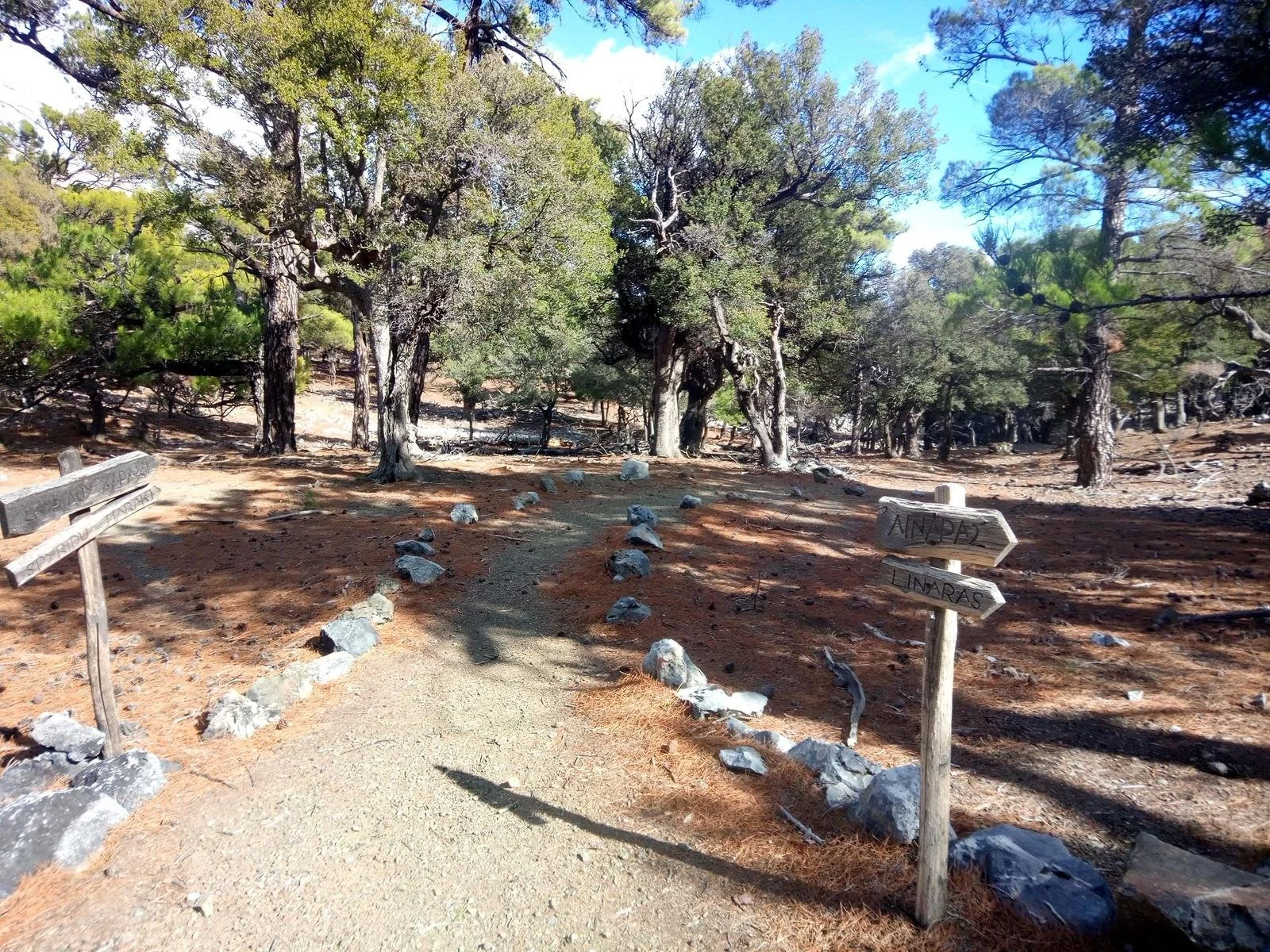
Selakano forest Crete
Pine Woodland, Beekeeping & Mountain Hiking
Selakano Forest, Crete – Pine Woodland, Beekeeping & Mountain Hiking
Introduction
Selakano Forest is one of the most important natural landscapes in Eastern Crete. Located on the southern slopes of the Dikti Mountains, approximately 35 kilometres northwest of Ierapetra, this extensive pine forest is known for its rich biodiversity, traditional beekeeping and network of mountain trails.
Unlike the open agricultural plateaus of the Dikti range, Selakano offers a landscape dominated by tall pine trees, wooded valleys, mountain streams and secluded clearings. It is also an important part of Crete's traditional rural life, particularly through its long association with honey production.
The forest is included in the Natura 2000 protected network and is considered one of the island's most significant woodland ecosystems. For visitors interested in hiking, nature and discovering a quieter side of Crete, Selakano is an excellent destination.
A Natural Forest in the Dikti Mountains
Selakano Forest extends across a mountain basin on the southern slopes of the Dikti range, beneath the impressive peaks of Afendis Christos and Spathi.
The forest is dominated by Calabrian pine (Pinus brutia), a Mediterranean species well adapted to the island's dry summers and rocky mountain soils. Alongside the pine trees, the wider ecosystem includes oaks, cypresses, maples, plane trees and other Mediterranean vegetation.
The landscape is particularly varied. Dense woodland alternates with open clearings, steep slopes, small valleys, ravines and streams. In some areas, the trees grow close together, creating shaded passages, while elsewhere the forest opens up to reveal impressive views across the surrounding mountains.
The altitude and changing terrain give Selakano a different atmosphere from the coastal countryside of southern Crete. Even during the warmer months, the woodland provides shaded areas that make exploring the forest a pleasant experience.
The combination of vegetation, geology and mountain habitats makes Selakano an important natural environment for the region.
Selakano and the Tradition of Beekeeping
One of the most distinctive characteristics of Selakano Forest is its long-standing connection with beekeeping.
The area around Melissokipos, whose name means Bee Garden, is particularly associated with honey production. Beekeepers from different parts of Crete bring their beehives to the forest, taking advantage of its natural vegetation and the seasonal flowering of the pine woodland.
Selakano is considered one of the most important beekeeping areas on the island and a major centre of pine honey production. The forest's ecological conditions and extensive pine coverage provide an important environment for this traditional activity.
Pine honey is a characteristic Cretan product, valued for its distinctive flavour and its connection with the island's mountain landscapes.
Beekeeping is not simply a modern agricultural activity here. It forms part of the local identity and has helped maintain a relationship between the forest and the communities that use it.
Visitors exploring the area may notice beehives positioned along forest roads and clearings. These are working apiaries, so it is important to keep a respectful distance and avoid disturbing the bees or approaching the hives.
Traditional Activities – Resin Collection and Logging
Before becoming widely recognised for its ecological and beekeeping importance, Selakano also supported traditional forest activities such as resin collection and logging.
Resin was collected from pine trees and used in various traditional products, while timber provided material for local needs and economic activity.
These practices were part of the historical relationship between mountain communities and the surrounding woodland. The forest provided resources and opportunities for people living in the nearby villages, while seasonal work shaped the way the area was used.
Today, Selakano is valued primarily for its natural environment, biodiversity and traditional beekeeping. Its protected status highlights the importance of conserving the woodland and managing human activities responsibly.
Hiking Through Selakano Forest
Selakano is an excellent destination for visitors who enjoy walking and exploring mountain landscapes. A network of forest roads and hiking paths crosses the woodland, offering different ways to experience the area.
Some routes follow relatively gentle sections of the forest, while others climb through steeper terrain, cross streams or connect with neighbouring villages and mountain plateaus.
The European E4 long-distance hiking trail also passes through Selakano. One of its established sections connects Selakano with Prina, passing through pine woodland, small agricultural areas, forest roads and mountain slopes.
The Selakano–Prina route is approximately 18 kilometres long and takes around five and a half hours to complete, according to the published route description. It is a substantial hike rather than a short woodland walk, and hikers should prepare accordingly.
Other routes connect the forest with Katharo Plateau and the wider Dikti mountain area. These paths offer opportunities for longer mountain excursions and exploration of some of the less-visited landscapes of Eastern Crete.
Visitors unfamiliar with the forest should be careful when choosing a route. The network of forest roads has many junctions, and not every road leads to a marked hiking path. For longer or more remote walks, an experienced local guide or reliable navigation information is recommended.
Selakano Gorge and the Surrounding Landscape
Beyond the woodland itself, the wider Selakano area includes a varied mountain landscape with ravines, streams, springs and rocky slopes.
Selakano Gorge is one of the natural features of the area, adding another dimension to the region's landscape. The surrounding terrain alternates between forested slopes and more exposed limestone formations, creating an environment that changes considerably over relatively short distances.
The streams and springs are particularly interesting during and after the wetter months, when water can be found flowing through parts of the mountain landscape.
The combination of forest, gorge and open mountain scenery makes the wider Selakano basin suitable for a range of outdoor activities, including hiking, mountain biking and nature observation.
Visitors planning to explore the gorge or less familiar mountain routes should check the route conditions beforehand, as the terrain can be uneven and navigation may be difficult in some sections.
Flora and Wildlife
Selakano Forest is important not only for its pine woodland but also for the wider variety of habitats found throughout the area.
The combination of dense trees, open clearings, rocky slopes and seasonal streams supports a range of Mediterranean plant and animal species.
The forest is home to several tree species, including Calabrian pine, oak, cypress, maple and plane trees. Aromatic plants and shrubs also grow throughout the woodland and surrounding slopes.
The higher mountain areas provide habitat for birds of prey, including hawks and vultures. These birds can sometimes be seen circling above the forest and the surrounding mountain peaks.
The forest's ecological value is recognised through its inclusion in the Natura 2000 network, which aims to protect important natural habitats and species across Europe.
Visitors should help preserve this environment by staying on suitable routes, avoiding unnecessary disturbance to wildlife and taking all rubbish away with them.
The Settlement of Selakano and the Church of Agia Paraskevi
Within the forest area lies the small settlement of Selakano, a scattered mountain hamlet surrounded by woodland and the slopes of the Dikti Mountains.
The settlement is closely connected with the agricultural communities of Christos and Males. Traditionally, it has been used more intensively during the warmer months, when local farmers and families spend time in the mountain countryside.
The small church of Agia Paraskevi is one of the area's familiar landmarks. Located in the nearby settlement of the same name, it is associated with a setting of trees and flowing water, providing a peaceful place to stop while exploring the forest.
The surrounding area reflects the traditional character of the mountain communities, where small settlements, agricultural properties and religious landmarks remain closely connected with the natural environment.
Ancient Traces Around Selakano
The Selakano basin has a history of human settlement extending back to antiquity.
At the location known as Patella, traces of an ancient settlement have been identified, thought to be associated with ancient Malla, an ancient Cretan settlement connected with the wider region.
Although the archaeological remains are not a developed visitor site, they add historical interest to the area and demonstrate that the mountain basin was not isolated from human activity in earlier periods.
The landscape provided natural resources, grazing areas and connections between settlements, making it an important part of the wider history of the Dikti region.
For visitors interested in the relationship between ancient communities and the Cretan countryside, Selakano offers an opportunity to explore a landscape where natural and cultural heritage meet.
Mountain Biking and Outdoor Activities
The extensive network of forest roads makes Selakano suitable for more than walking.
Mountain biking is another way to explore the woodland, with routes passing through forest clearings, mountain slopes and open countryside. Depending on the chosen route, cyclists can enjoy relatively gentle forest tracks or more demanding uphill and downhill sections.
The area is also attractive for birdwatching and nature observation. The variety of habitats and the presence of birds of prey make the forest particularly interesting for visitors who enjoy watching wildlife.
Outdoor activities should always take account of local conditions. Forest roads are also used by beekeepers, farmers and other local workers, so visitors should be aware of vehicles and agricultural activity.
Best Time to Visit Selakano Forest
Selakano can be explored throughout much of the year, although each season offers a different experience.
Spring is one of the most attractive periods to visit. The forest and surrounding countryside become greener after the winter rains, and wild vegetation adds colour to the landscape. Beekeeping activity also increases during this period as hives are brought into the forest.
Summer offers warm, generally dry weather and shaded walking conditions beneath the pine trees. However, visitors should be particularly careful during periods of high fire risk. Smoking, open fires and any activity that could cause a fire should be avoided.
Autumn brings cooler temperatures and a quieter atmosphere, making it a pleasant season for hiking and exploring the surrounding villages.
Winter can be cold and wet, particularly at higher elevations. Forest roads may become muddy or difficult to use after rainfall, so visitors should check conditions before travelling.
Practical Information Before Visiting
Selakano is a natural mountain forest rather than an organised visitor attraction. There is no single entrance or developed visitor centre, and facilities are limited in the woodland itself.
Before exploring the area, consider the following:
Wear suitable walking shoes or hiking boots.
Carry enough drinking water and food, particularly for longer walks.
Download an offline map or use reliable navigation information.
Check the weather and forest-road conditions before setting out.
Keep a safe distance from beehives and avoid disturbing beekeepers.
Respect local agricultural activities and any livestock in the area.
Take all rubbish with you and avoid damaging vegetation.
Follow any fire-prevention restrictions and never light a fire in the forest.
The network of forest roads can be confusing, especially for visitors unfamiliar with the area. Some routes also connect to remote mountain terrain, where mobile coverage may be limited.
For longer hikes or routes towards Katharo and the higher Dikti Mountains, it is advisable to plan carefully and consider exploring with an experienced local guide.
How to Get to Selakano Forest
Selakano Forest is located approximately 35 kilometres northwest of Ierapetra, on the southern slopes of the Dikti Mountains.
There are several approaches to the forest, with access through nearby villages and mountain roads.
From Ierapetra: The route heads inland towards the villages of Kalamafka, Males and Christos before climbing towards Selakano. This is one of the main approaches from the southern side of the region.
From Agios Nikolaos: Visitors can travel through the villages of Prina, Kalamafka and Males before continuing towards Christos and Selakano. The journey passes through olive-growing countryside and traditional settlements before reaching the mountain forest.
From Katharo Plateau: A mountain dirt road connects the wider Katharo area with Selakano through the settlement of Mathokotsana. This is a challenging route and is not suitable for conventional vehicles. A suitable off-road vehicle is recommended, and visitors should check local conditions before attempting it.
The main approaches to Selakano include paved roads, although the internal forest network consists largely of unpaved tracks. Conditions can deteriorate after heavy rain or during winter and spring.
A car is the most practical way to reach the forest. Visitors planning to explore the more remote sections should not rely solely on standard navigation applications.
Places to Discover Near Selakano Forest
Selakano is ideally located for exploring the traditional villages, mountain landscapes and natural attractions of southern Lasithi.
Christos Village
A traditional mountain settlement near Selakano, surrounded by olive groves and woodland. Christos is one of the main access points to the forest and provides a glimpse of rural life in the Dikti Mountains.
Males Village
A traditional settlement known for its agricultural character and historic churches. It is also an important stop along the route connecting Ierapetra with Selakano.
Kalamafka
A village set among impressive rocky hills and olive-growing countryside. Its prominent Kastelo hill, with a chapel and cave, offers interesting views over the surrounding landscape.
Katharo Plateau
A beautiful high-altitude plateau above Kritsa, surrounded by the mountains of the Dikti range. Its rural character, open landscapes and traditional agricultural activities make it an excellent destination to combine with a wider mountain excursion.
Limnakaros Plateau
Another impressive mountain landscape of the Dikti range, known for its traditional shepherding, walnut trees and connection with the E4 hiking network.
Agios Nikolaos
The coastal town of Agios Nikolaos offers a contrast to the mountain environment of Selakano, with its harbour, Lake Voulismeni, waterfront restaurants and access to the wider Mirabello region.
Discover the Natural Beauty of Selakano
Selakano Forest is one of the most remarkable natural landscapes in Eastern Crete. Its extensive pine woodland, traditional beekeeping activity, mountain trails and rich biodiversity make it a destination with a character very different from the island's coastal attractions.
Beyond its natural beauty, the forest preserves an important connection with the traditional life of the surrounding villages. Beekeeping, agriculture and the historic use of forest resources remain part of the area's identity.
Whether visiting for a walk beneath the pine trees, a mountain hike along the E4, birdwatching or simply to experience the peaceful atmosphere of the Dikti Mountains, Selakano offers a rewarding opportunity to discover another side of Crete.