Kritsa Gorge
A Dramatic Natural Canyon Near Agios Nikolaos
Kritsa Gorge – A Dramatic Natural Canyon Near Agios Nikolaos
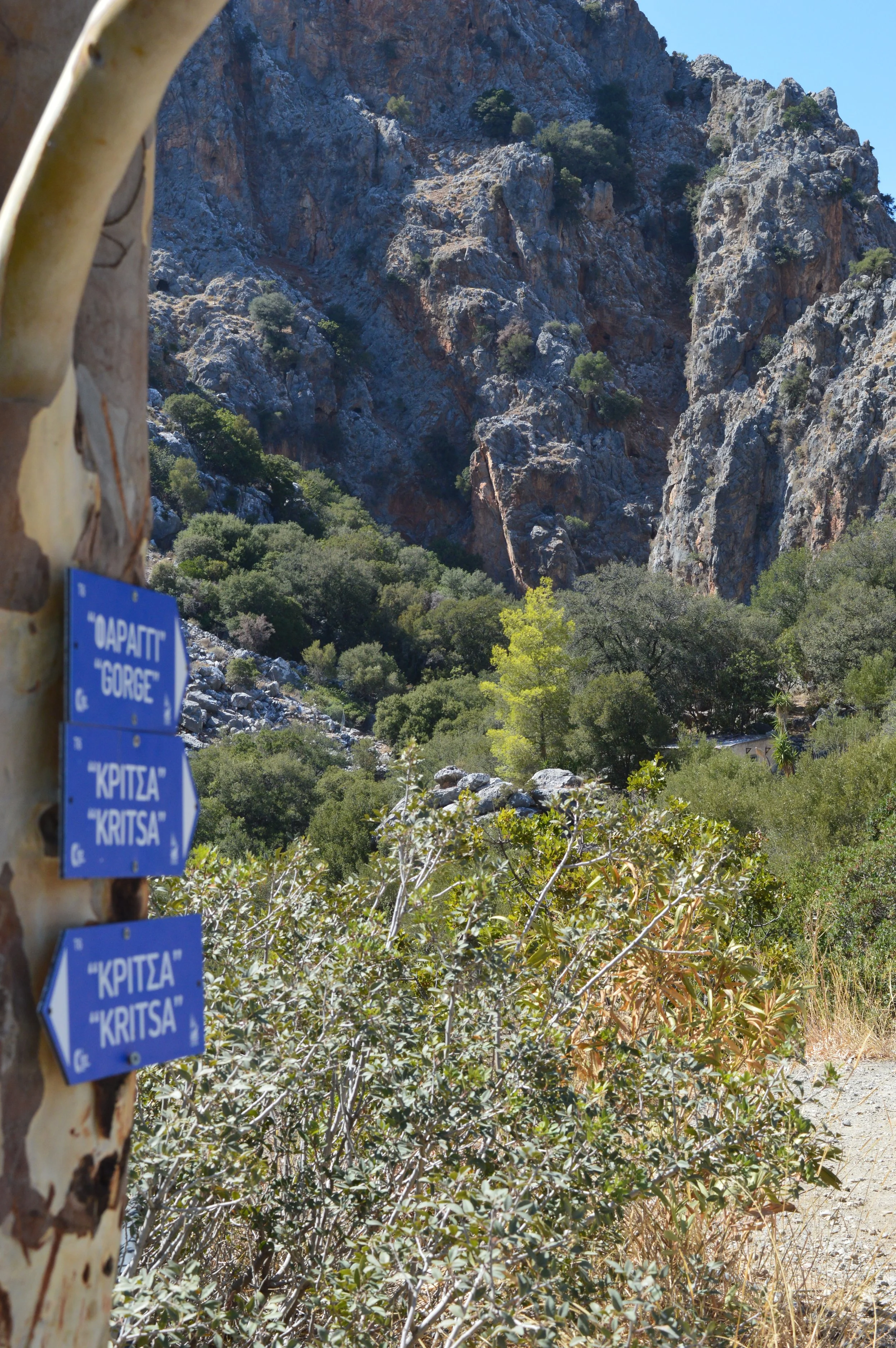
Kritsa Gorge is one of the most accessible and impressive natural attractions in the area surrounding Agios Nikolaos. Located just outside the traditional village of Kritsa, this spectacular canyon offers visitors the opportunity to explore a landscape of towering limestone walls, narrow rocky passages, native vegetation and fascinating geological formations.
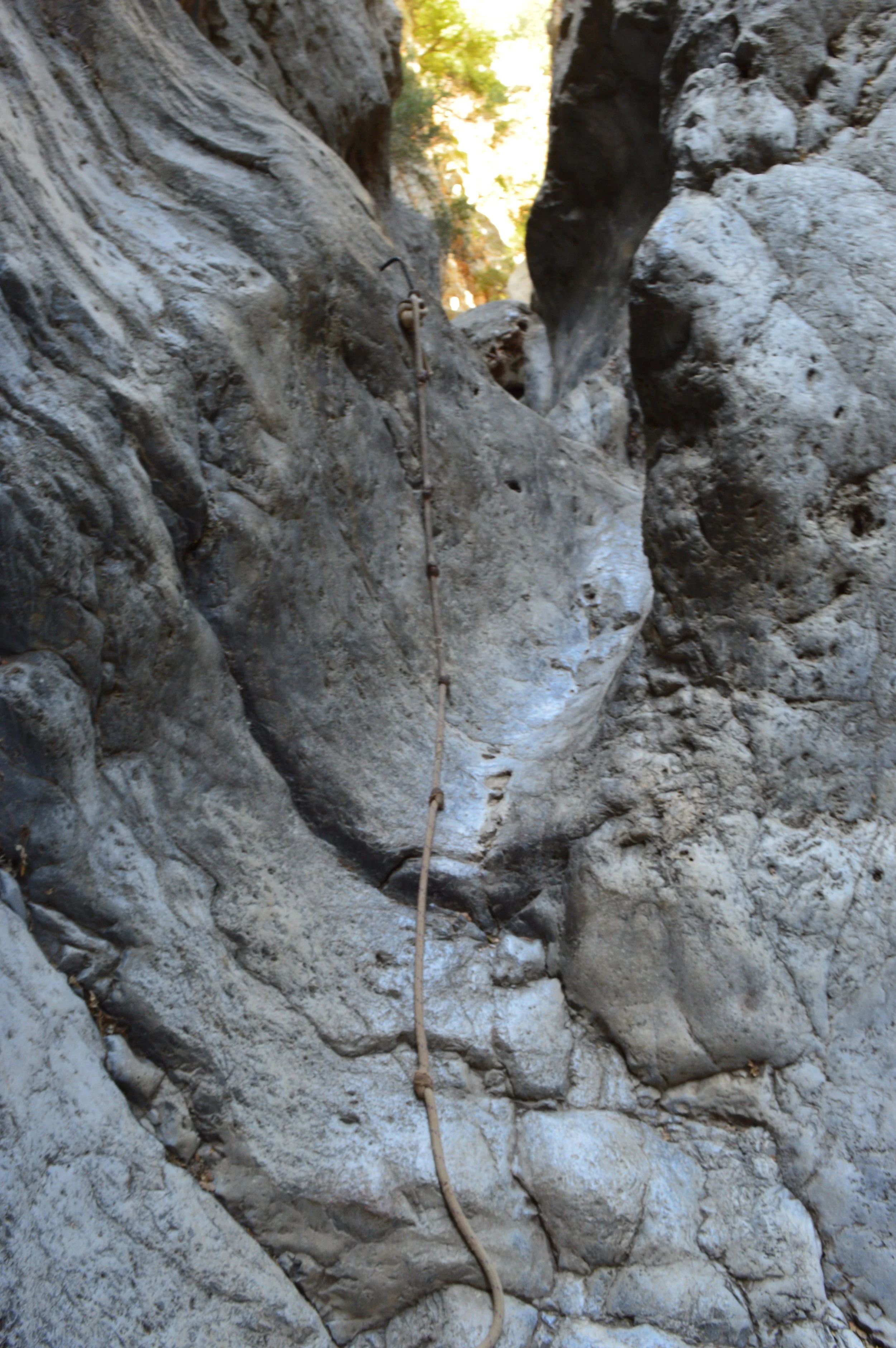
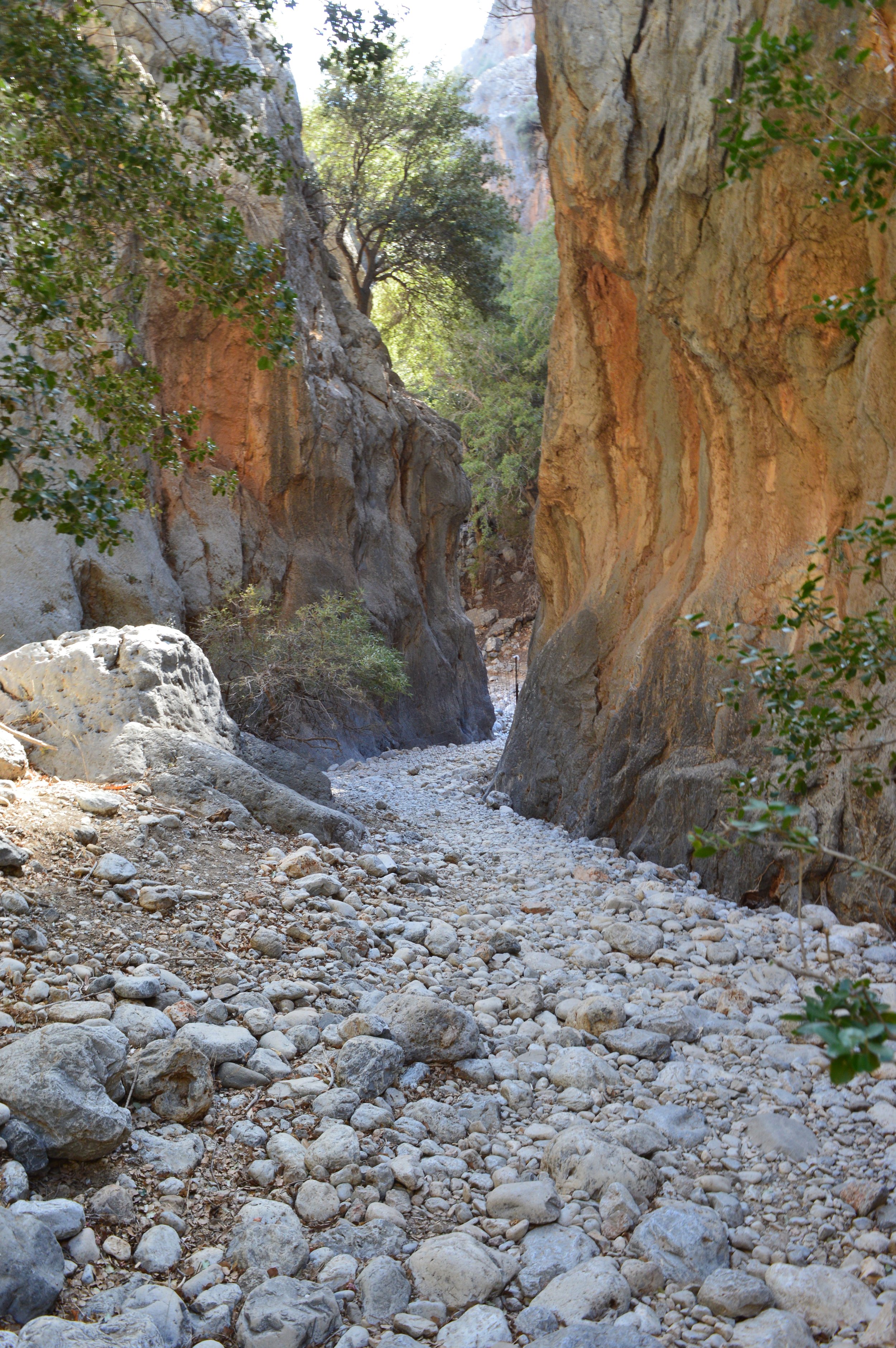
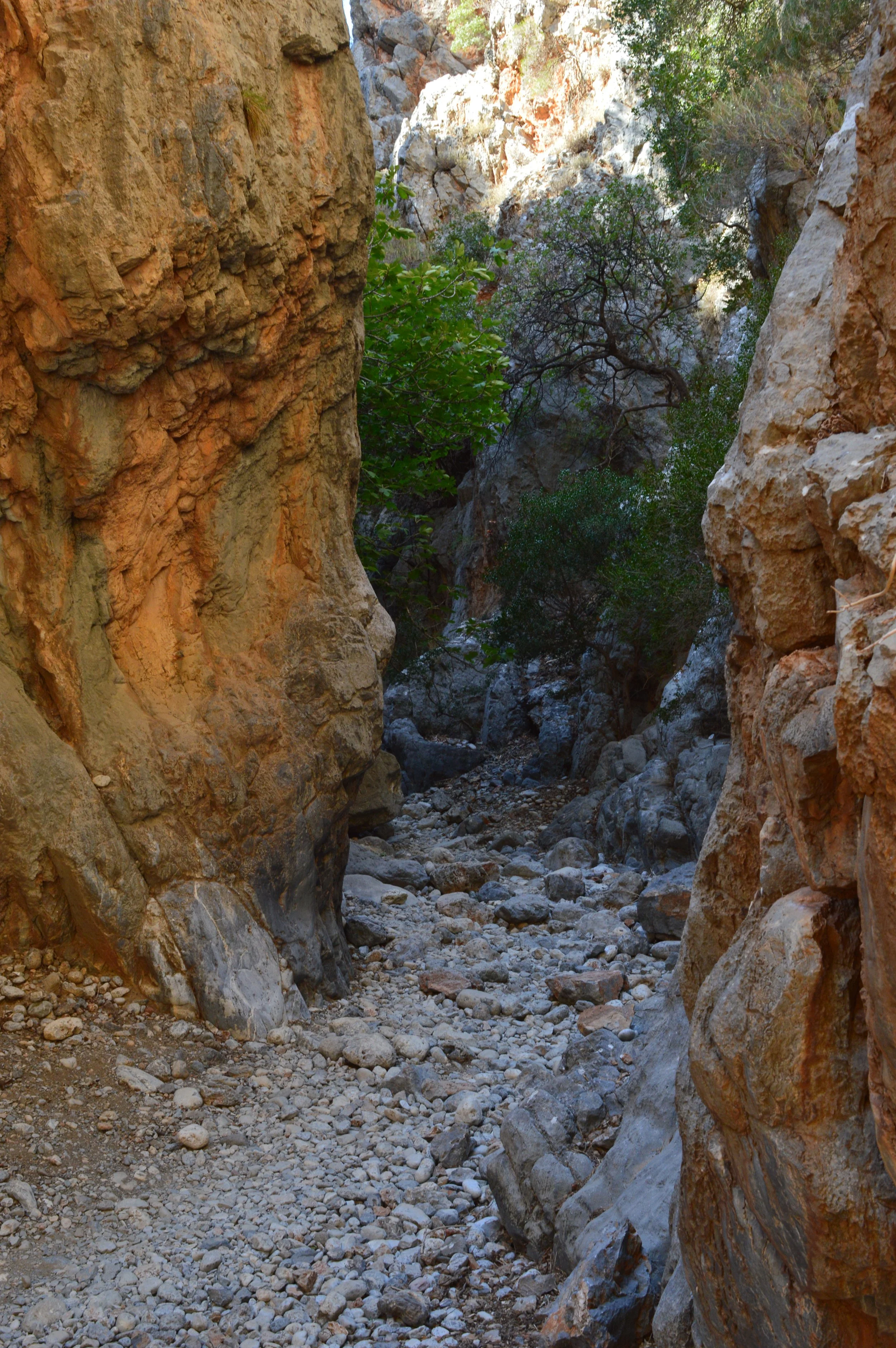
What makes Kritsa Gorge particularly interesting is the contrast between its narrow sections, where the rock walls rise dramatically on either side, and the wider landscapes that open up along the route. In some places, the passage becomes remarkably narrow, creating an adventurous hiking experience in the heart of the Cretan countryside.
Its convenient location, close to Agios Nikolaos and Kritsa, makes it an excellent destination for travellers interested in hiking, nature and outdoor activities. The gorge can also be combined with a visit to Kritsa village and the nearby archaeological site of Ancient Lato, creating an excursion that brings together the natural and cultural heritage of Eastern Crete.
The Natural Landscape of Kritsa Gorge
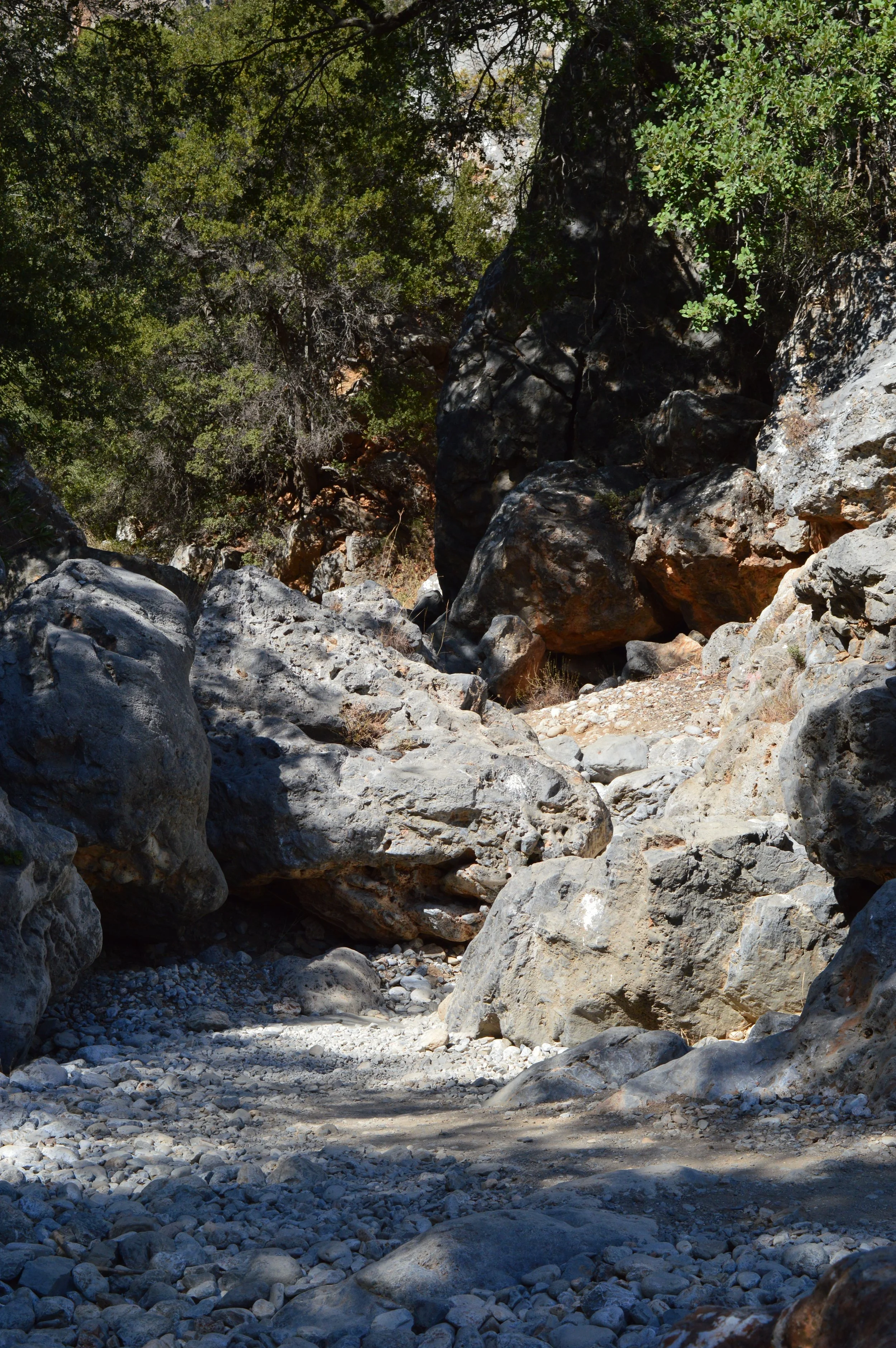
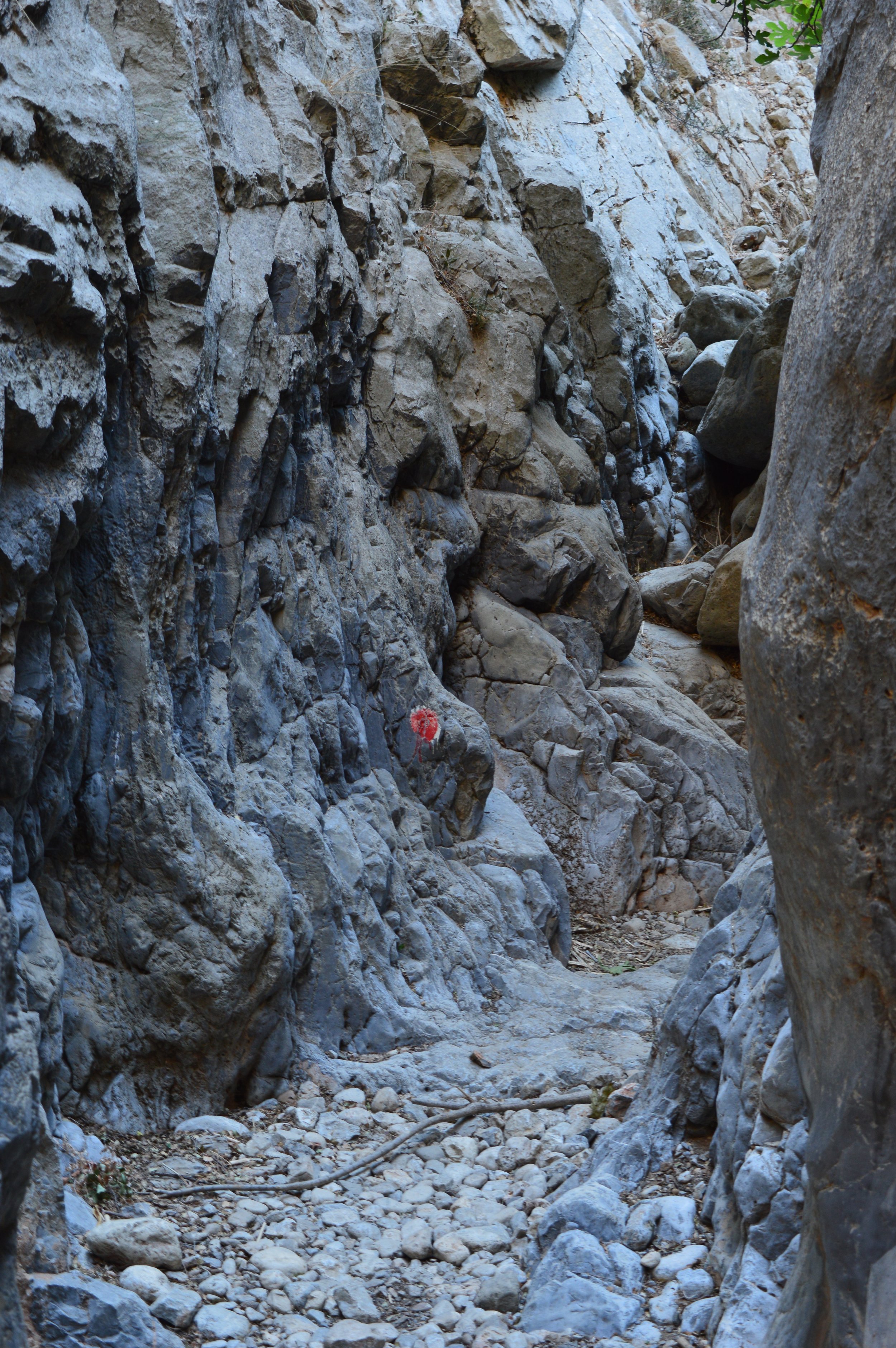
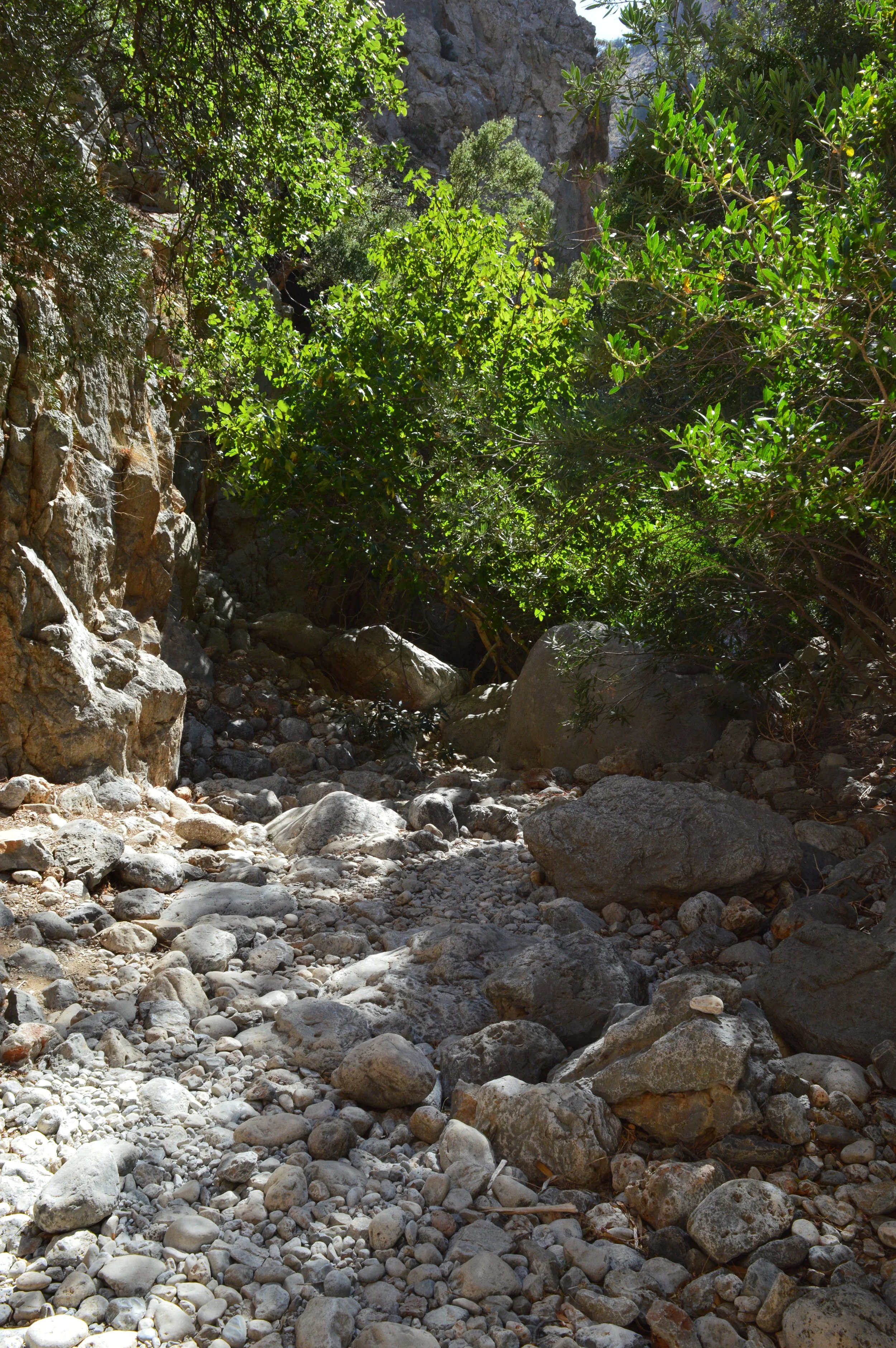
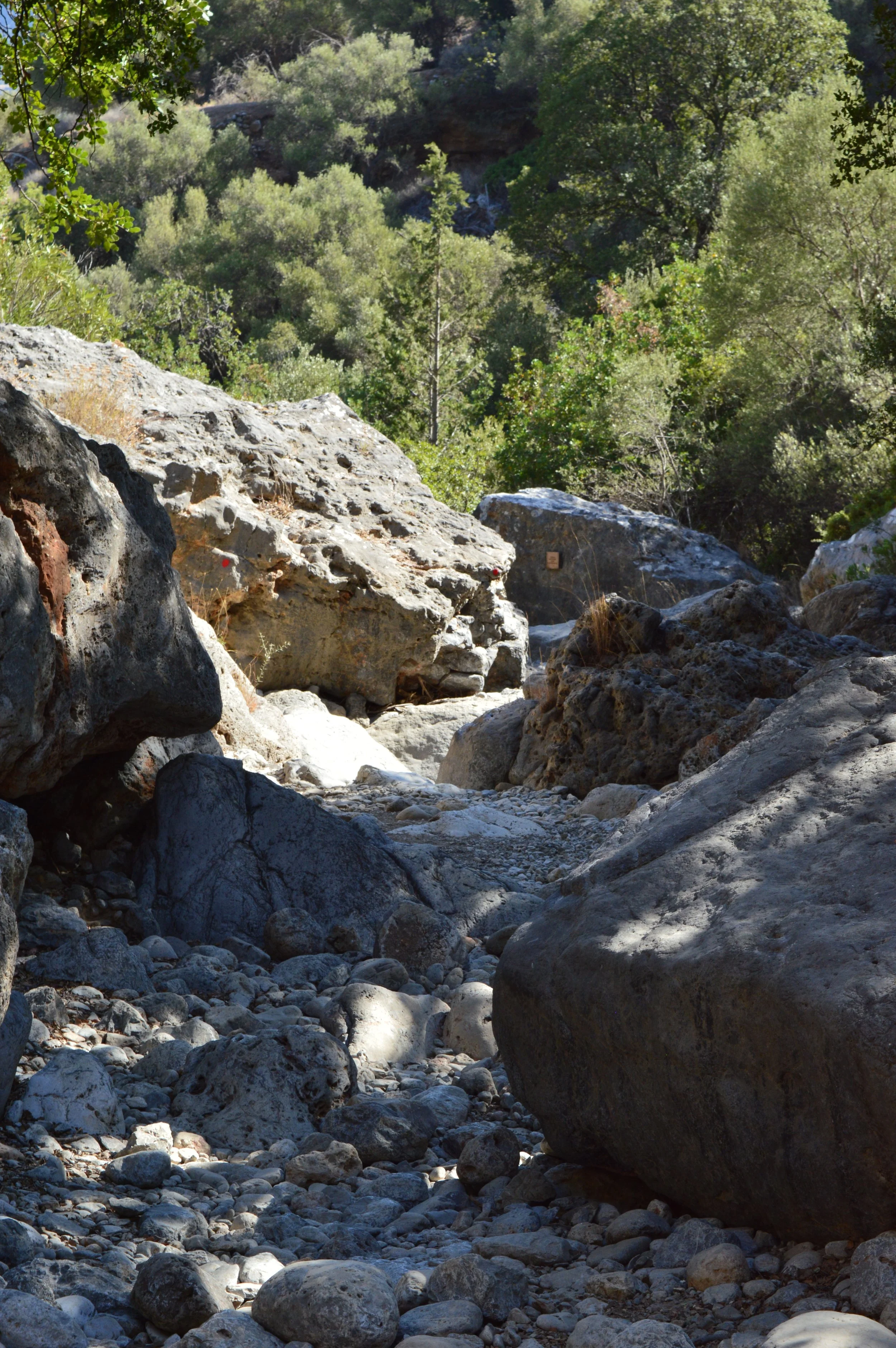
Kritsa Gorge is characterised by impressive limestone formations, steep rocky walls and a natural landscape shaped over thousands of years by water and erosion. The canyon begins near the northeastern exit of Kritsa village and follows a natural watercourse through the surrounding countryside.
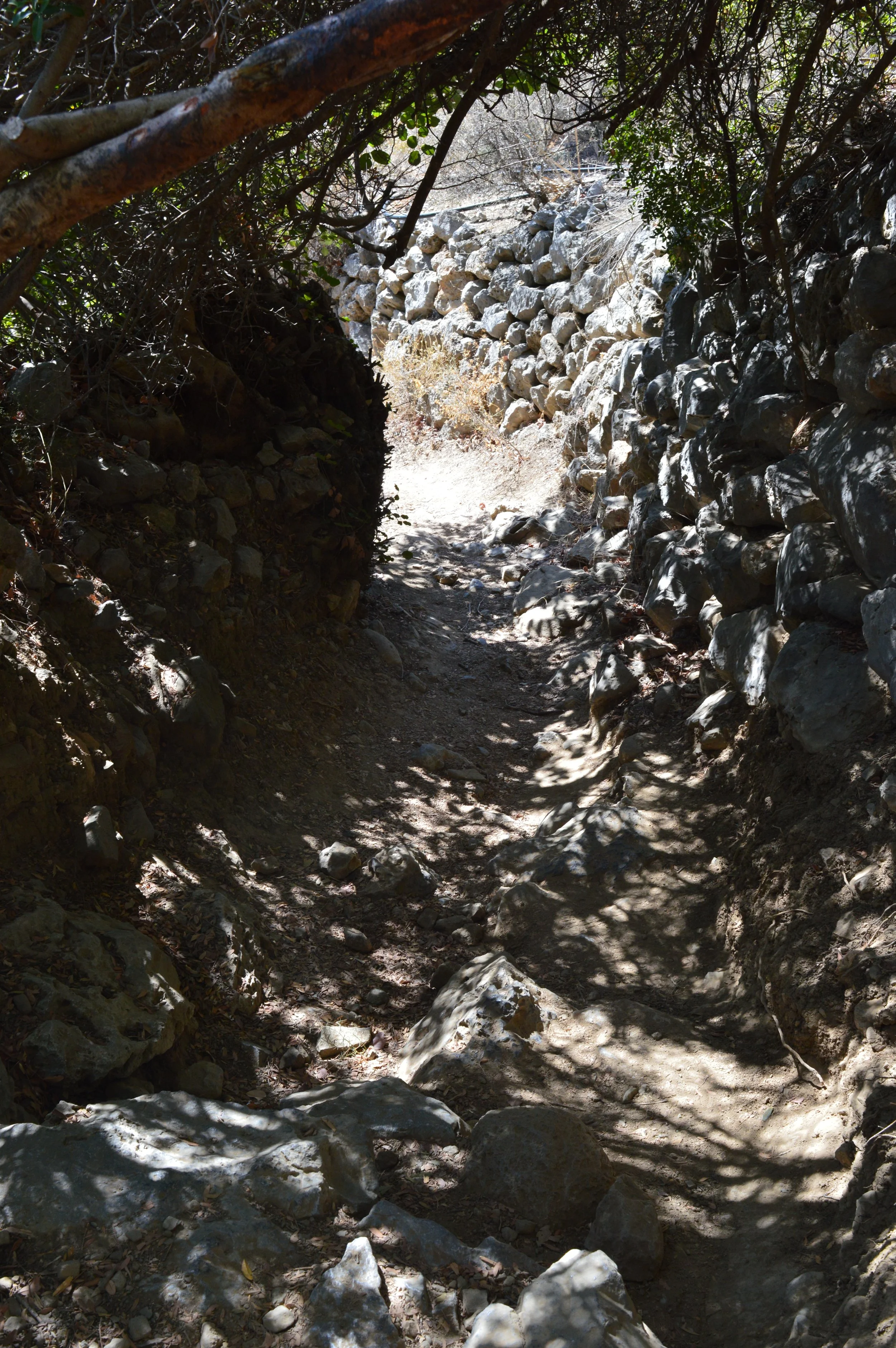
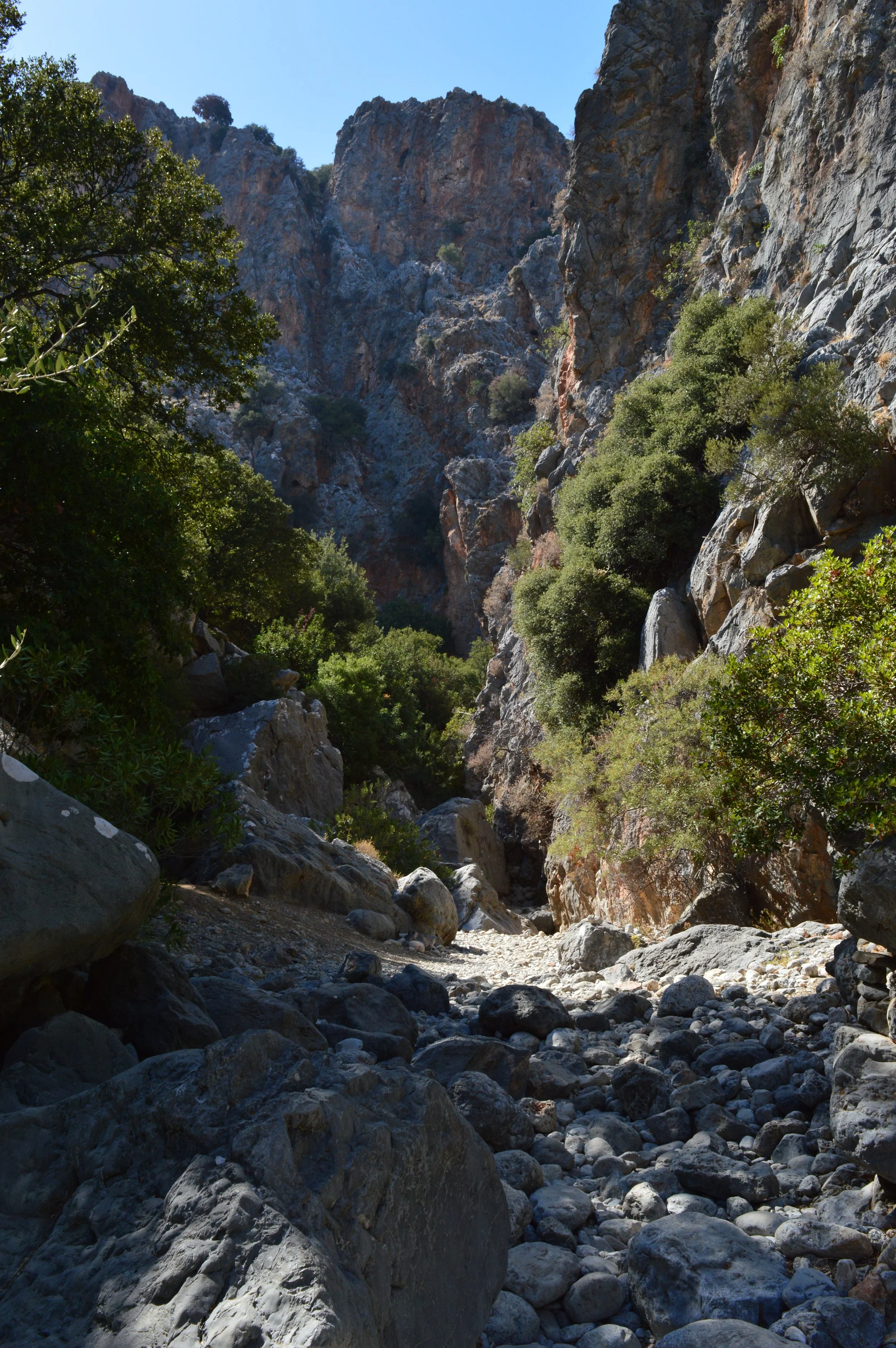
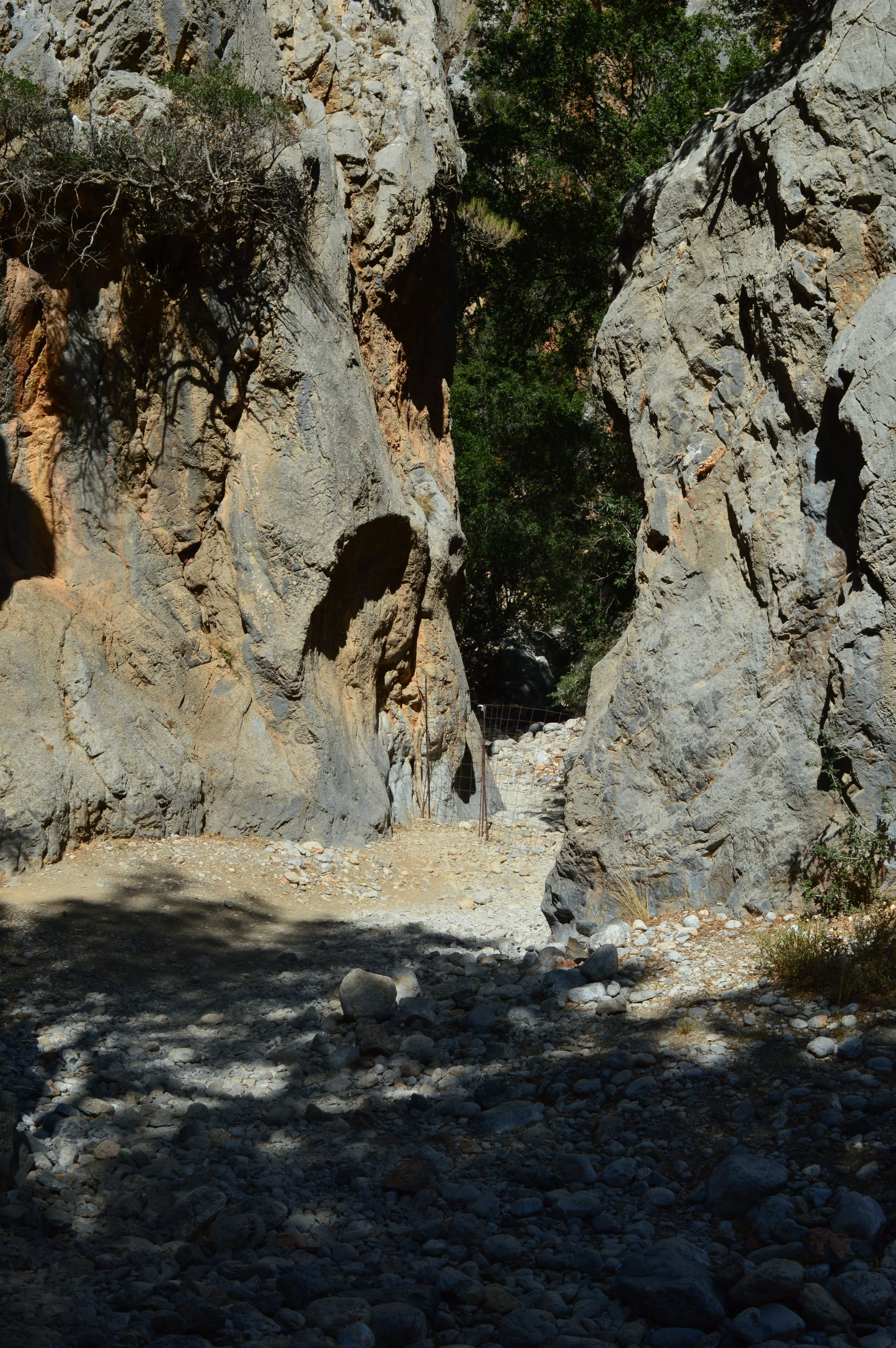
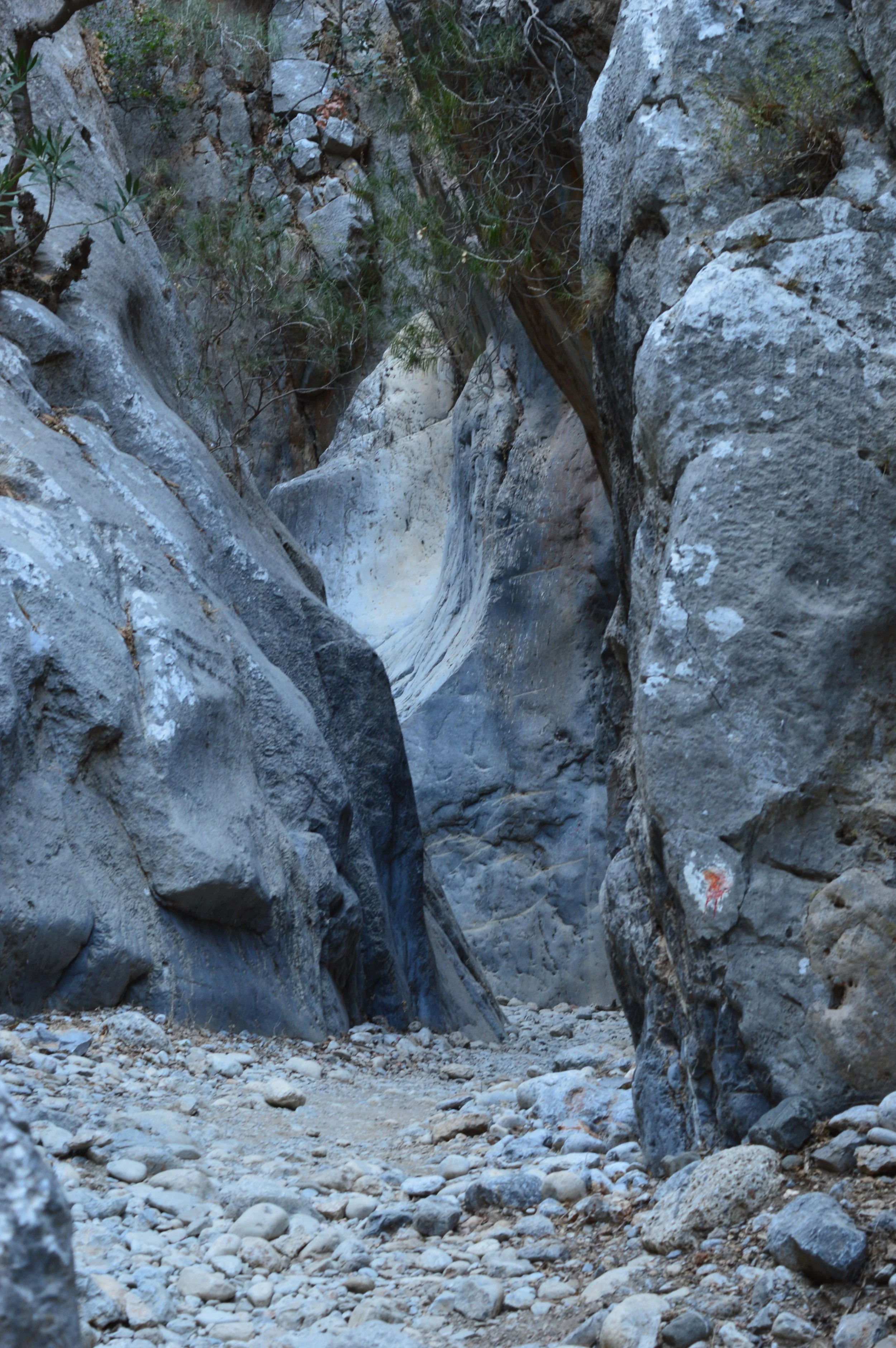
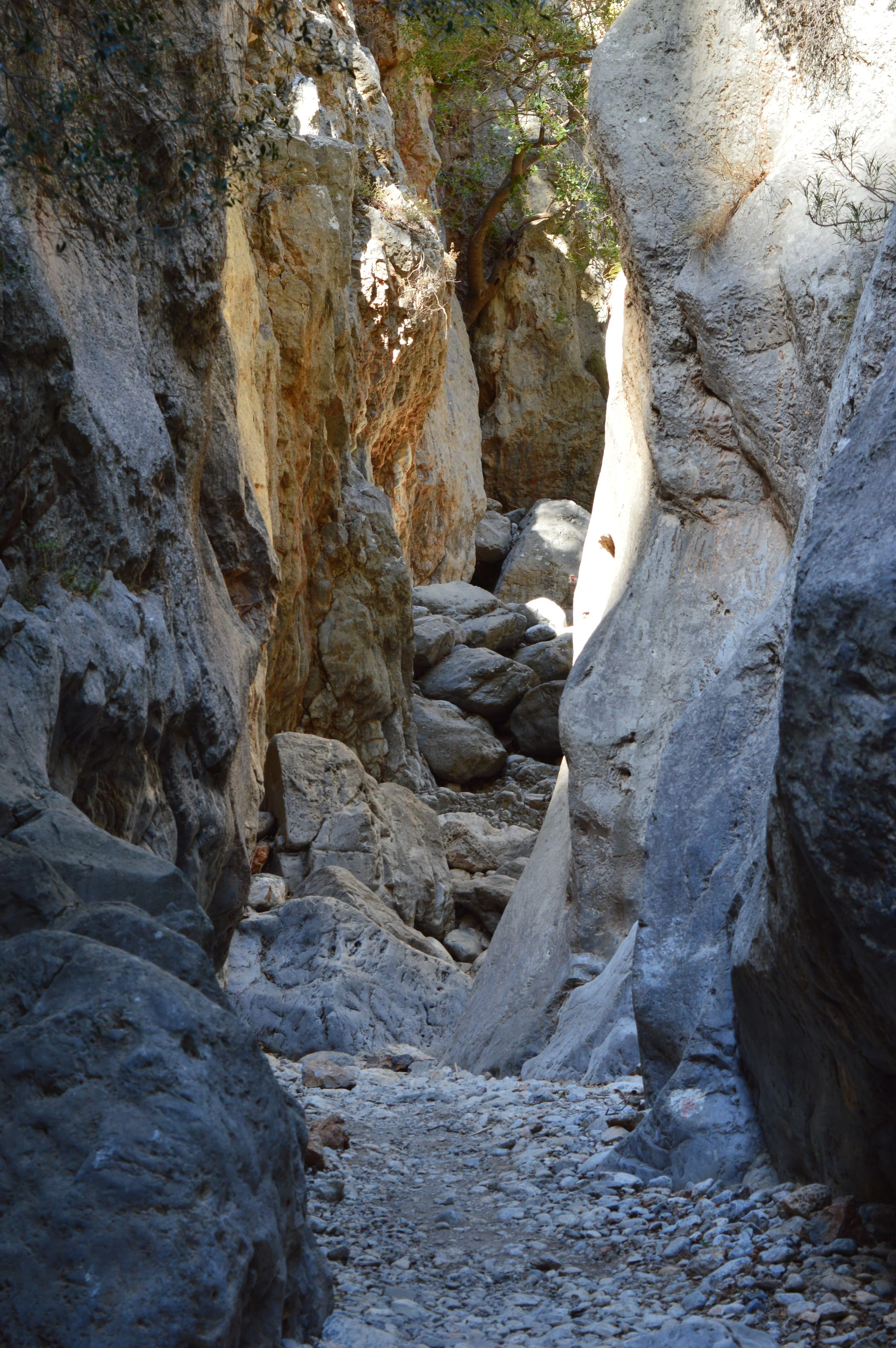
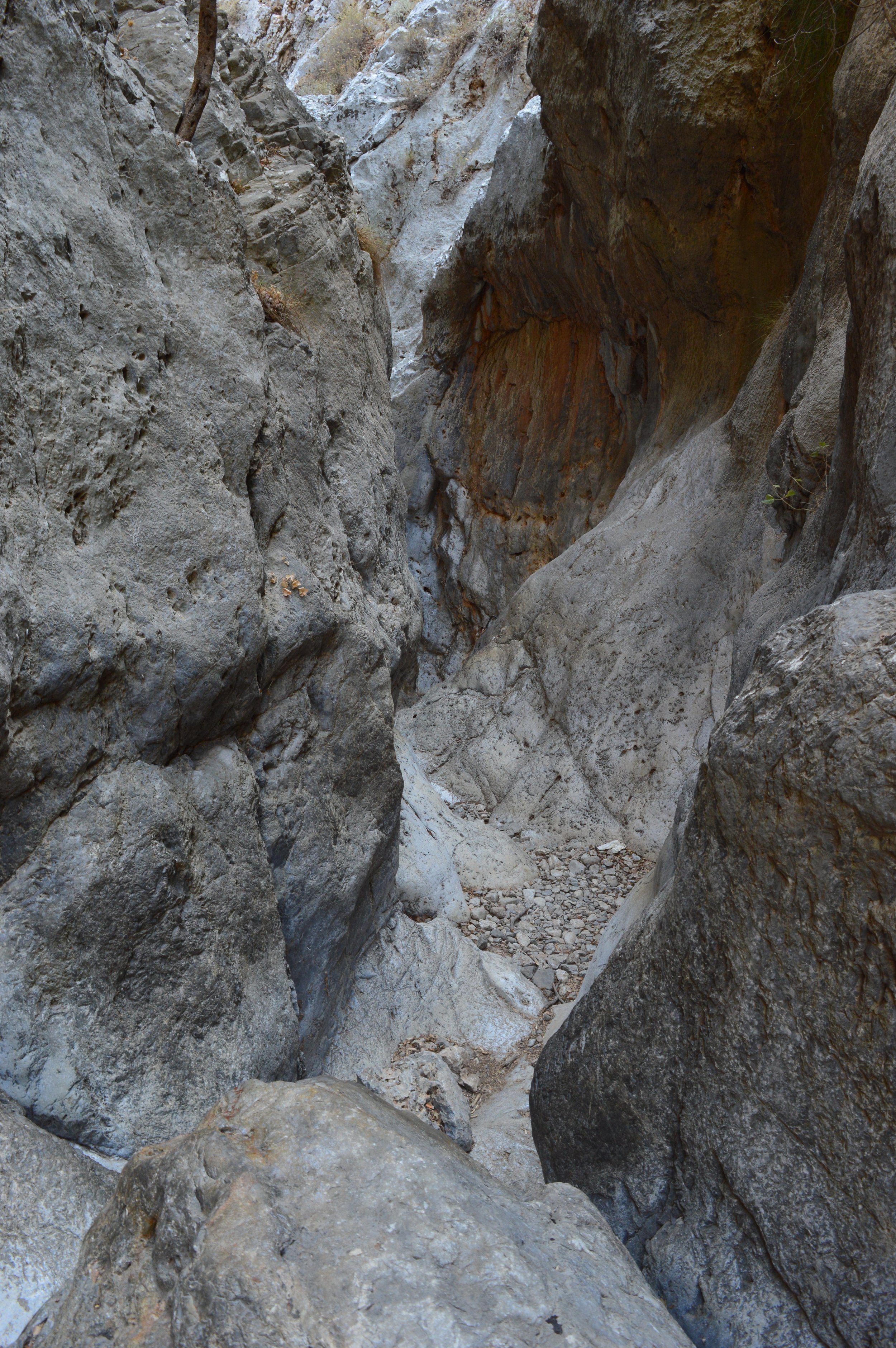
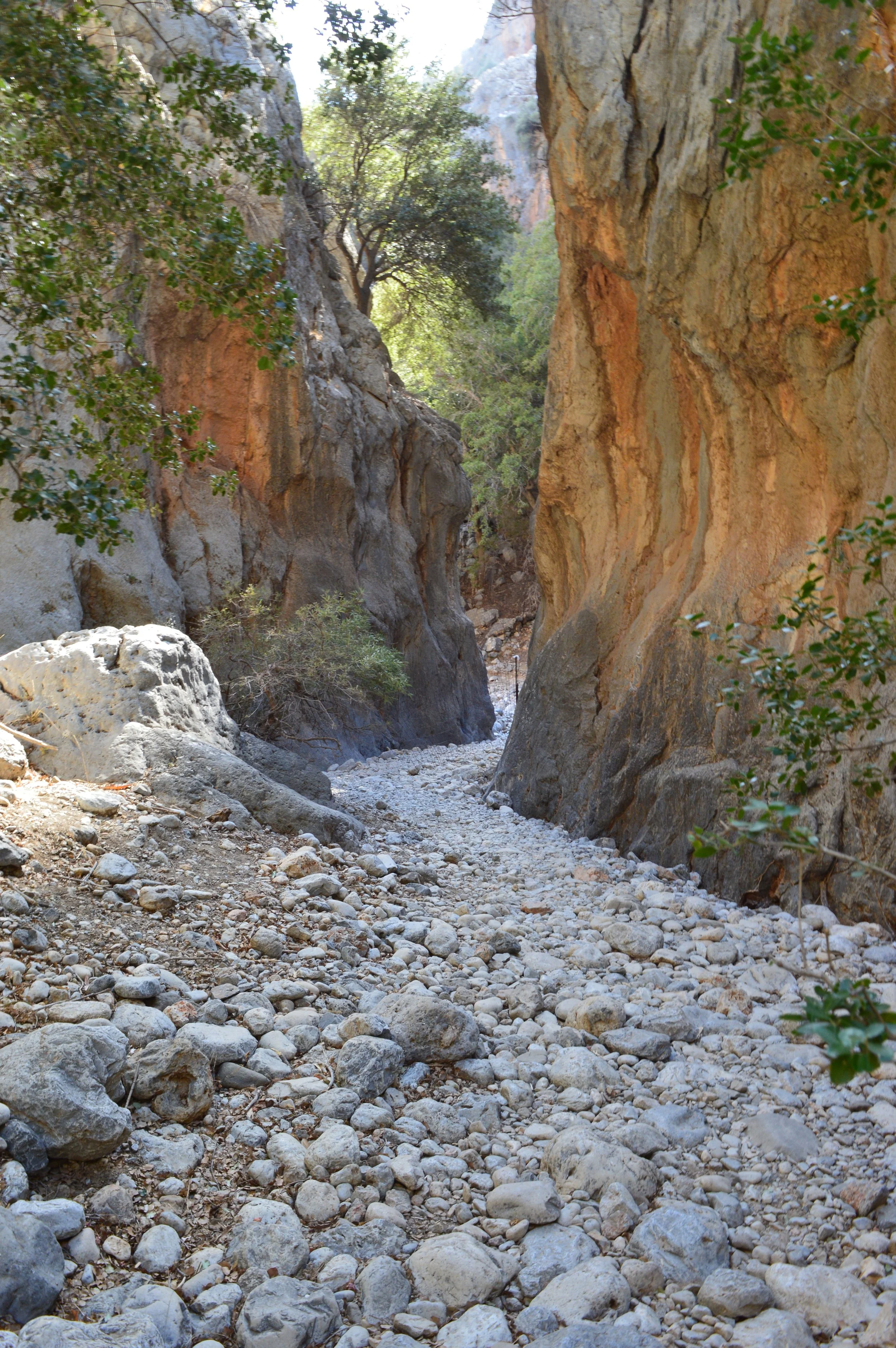
In its narrowest sections, the gorge creates a dramatic passage between high rock formations, with some sections becoming only a few metres wide. The contrast between sunlight and shade, together with the impressive scale of the surrounding rocks, makes this one of the most distinctive hiking landscapes in the Agios Nikolaos area.
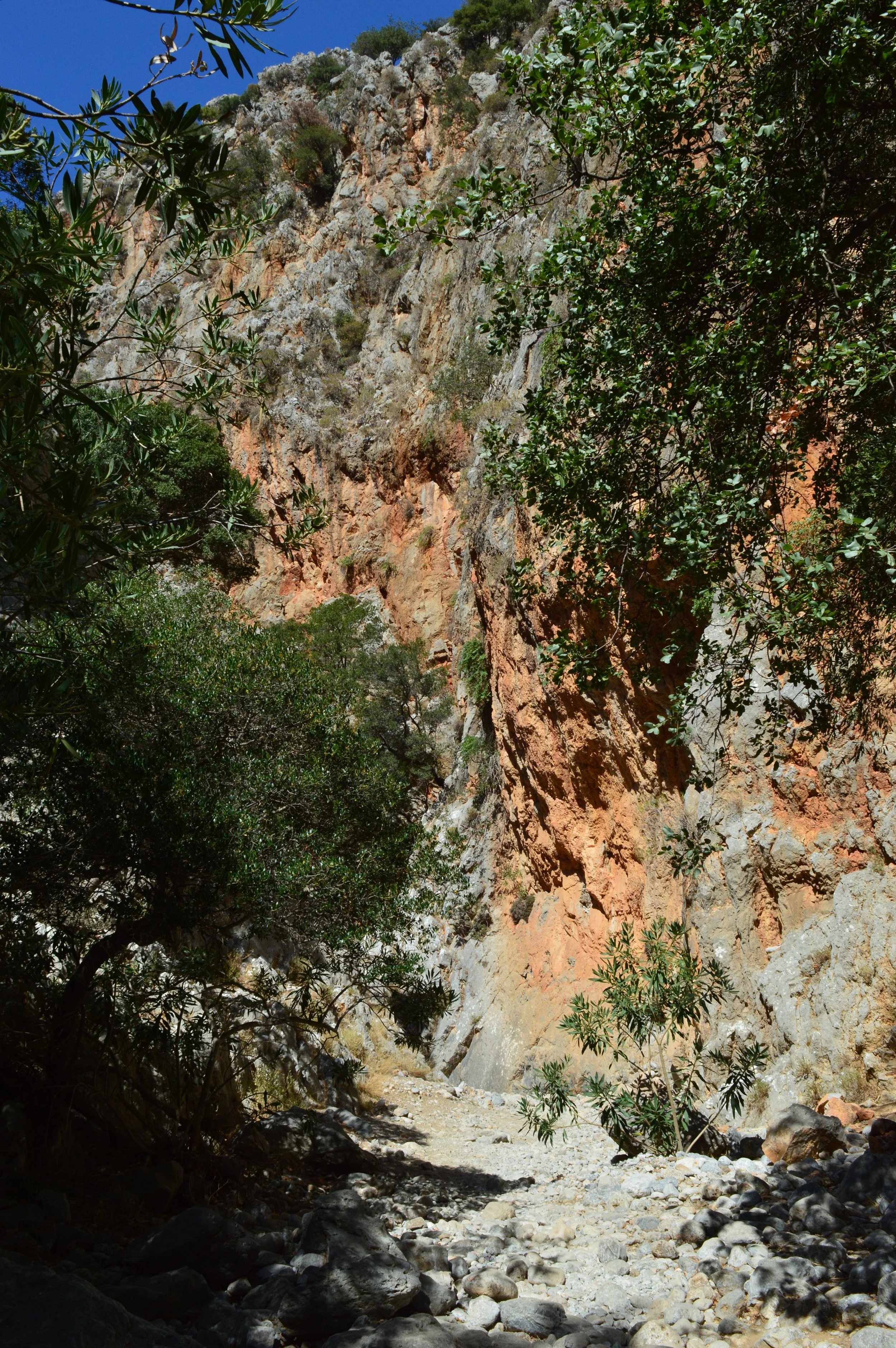
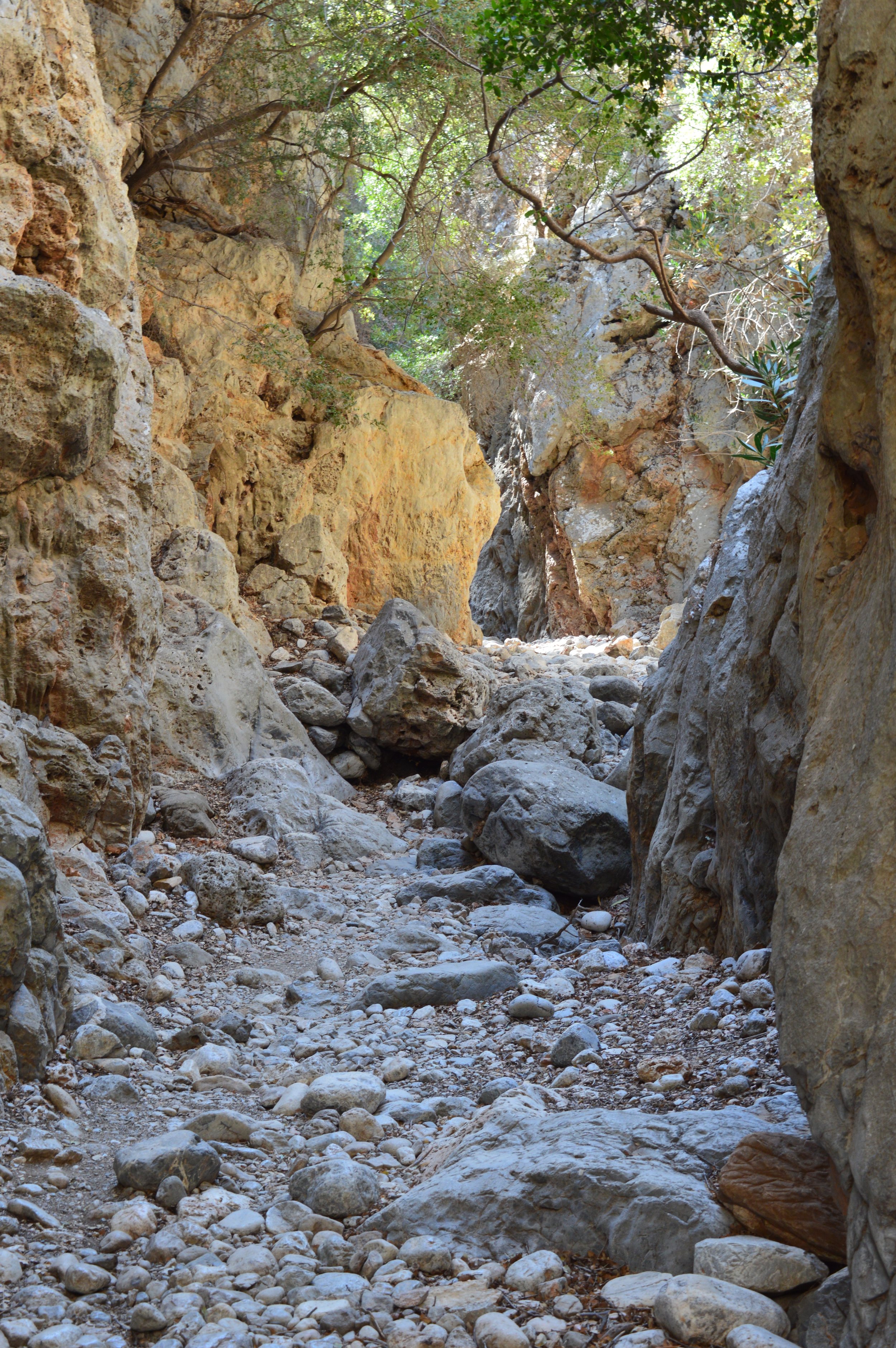
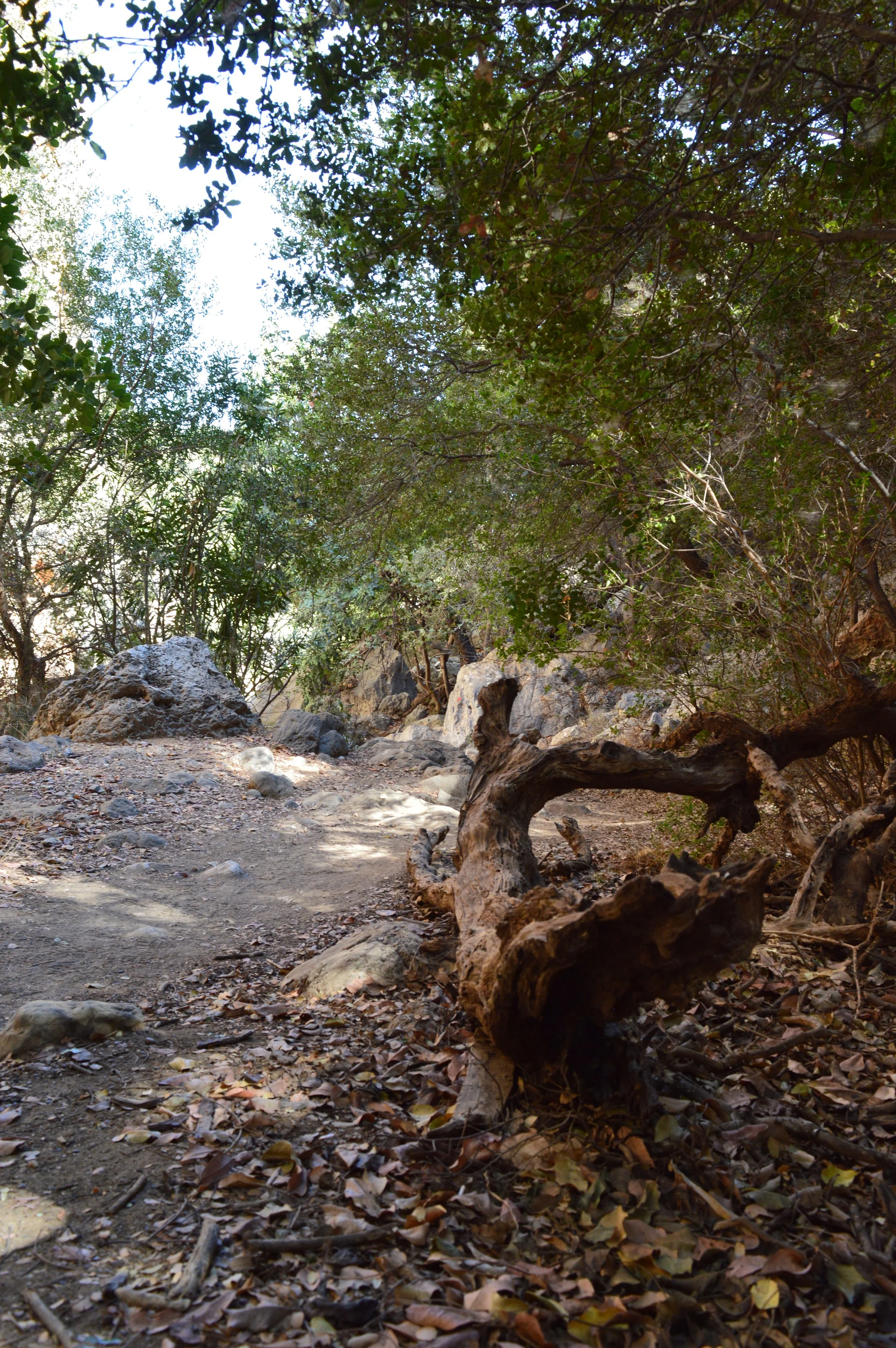
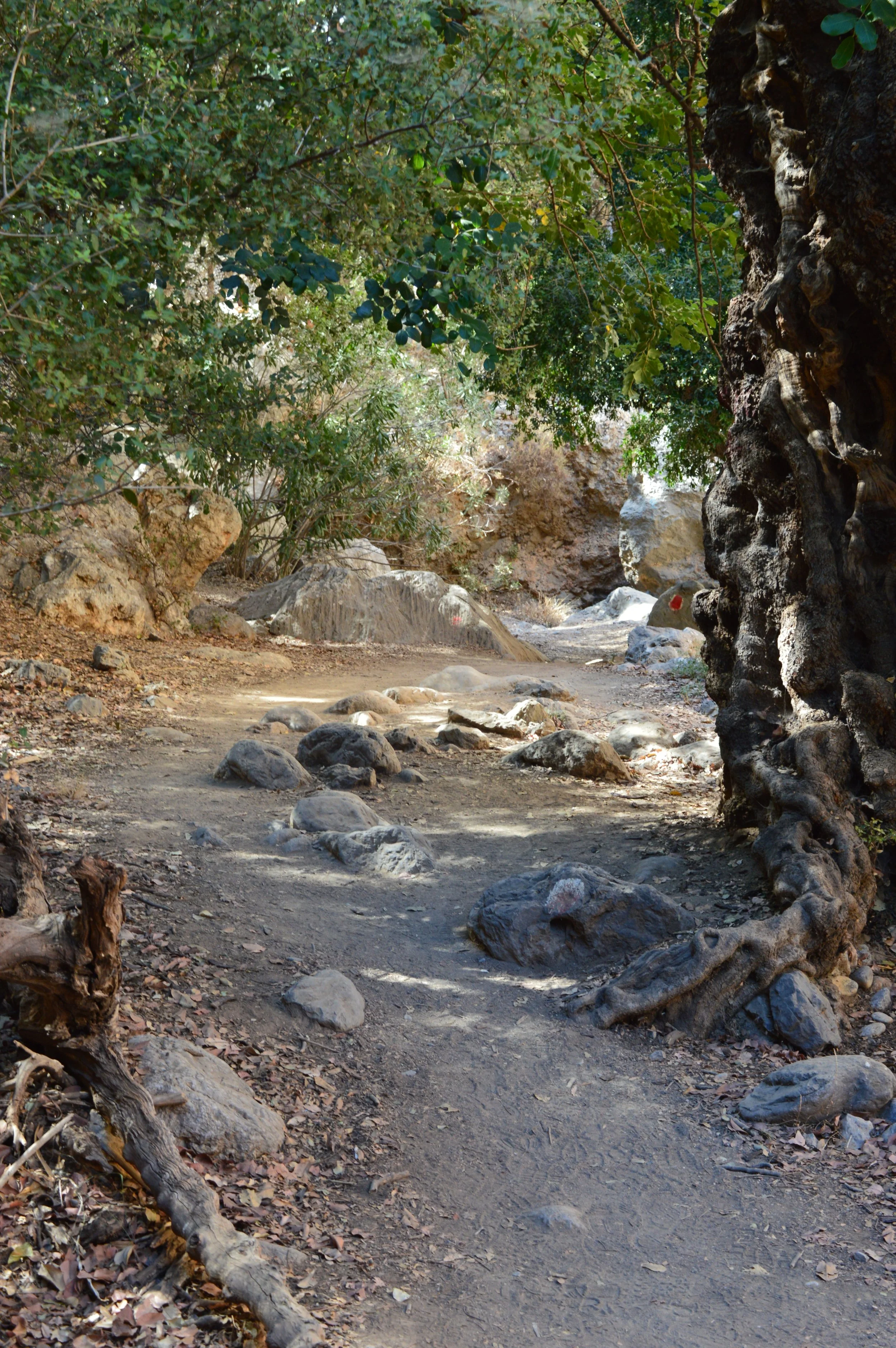
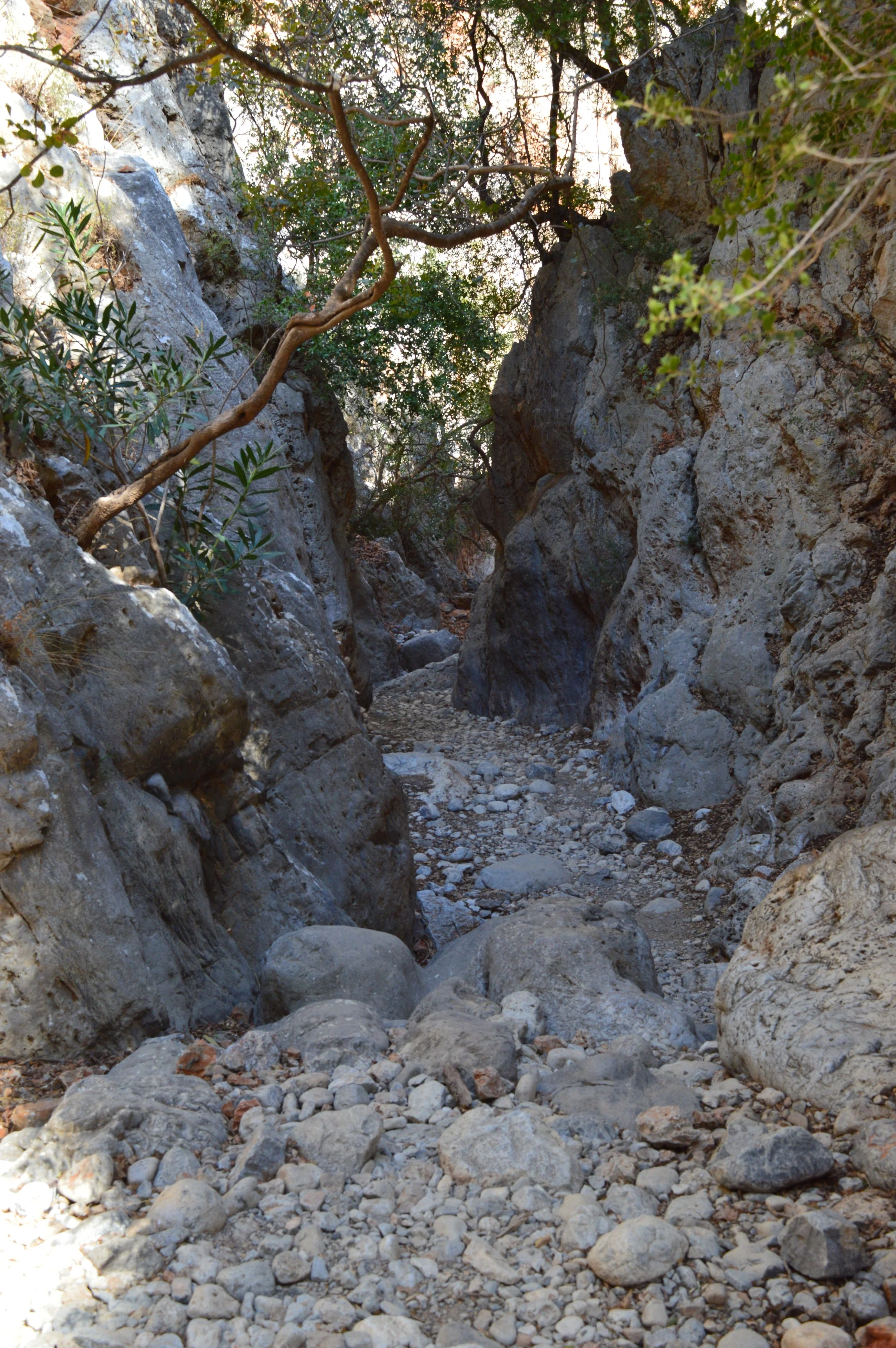
The vegetation changes along the route, with plane trees, oak trees, oleanders and various native plants adding colour to the rocky environment. The gorge also provides shelter for local birdlife, making it an interesting place for visitors who appreciate the natural environment and biodiversity of Crete.
During spring, the landscape becomes particularly attractive as wildflowers appear and seasonal water may flow through parts of the gorge.
Hiking Through Kritsa Gorge
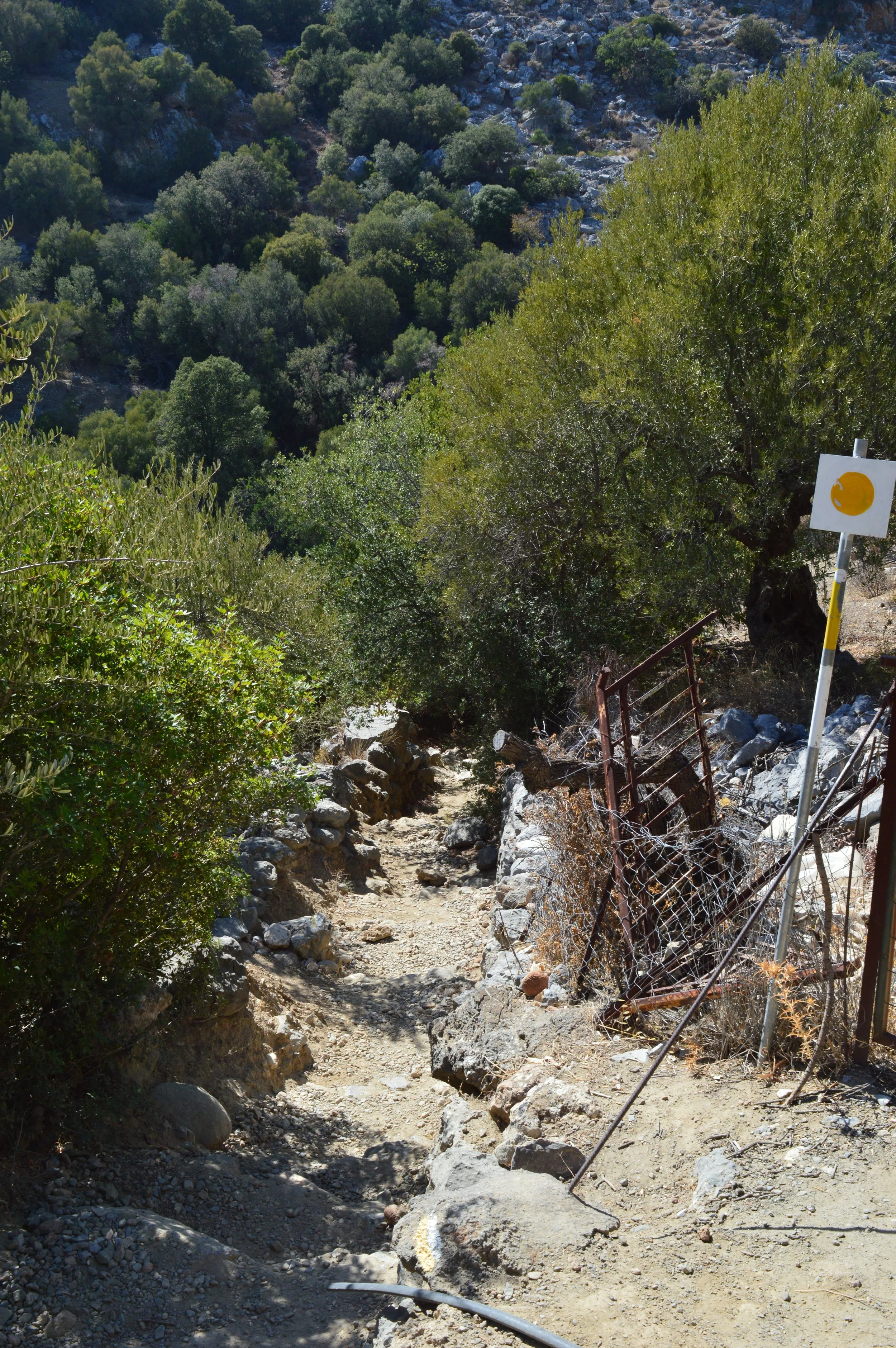
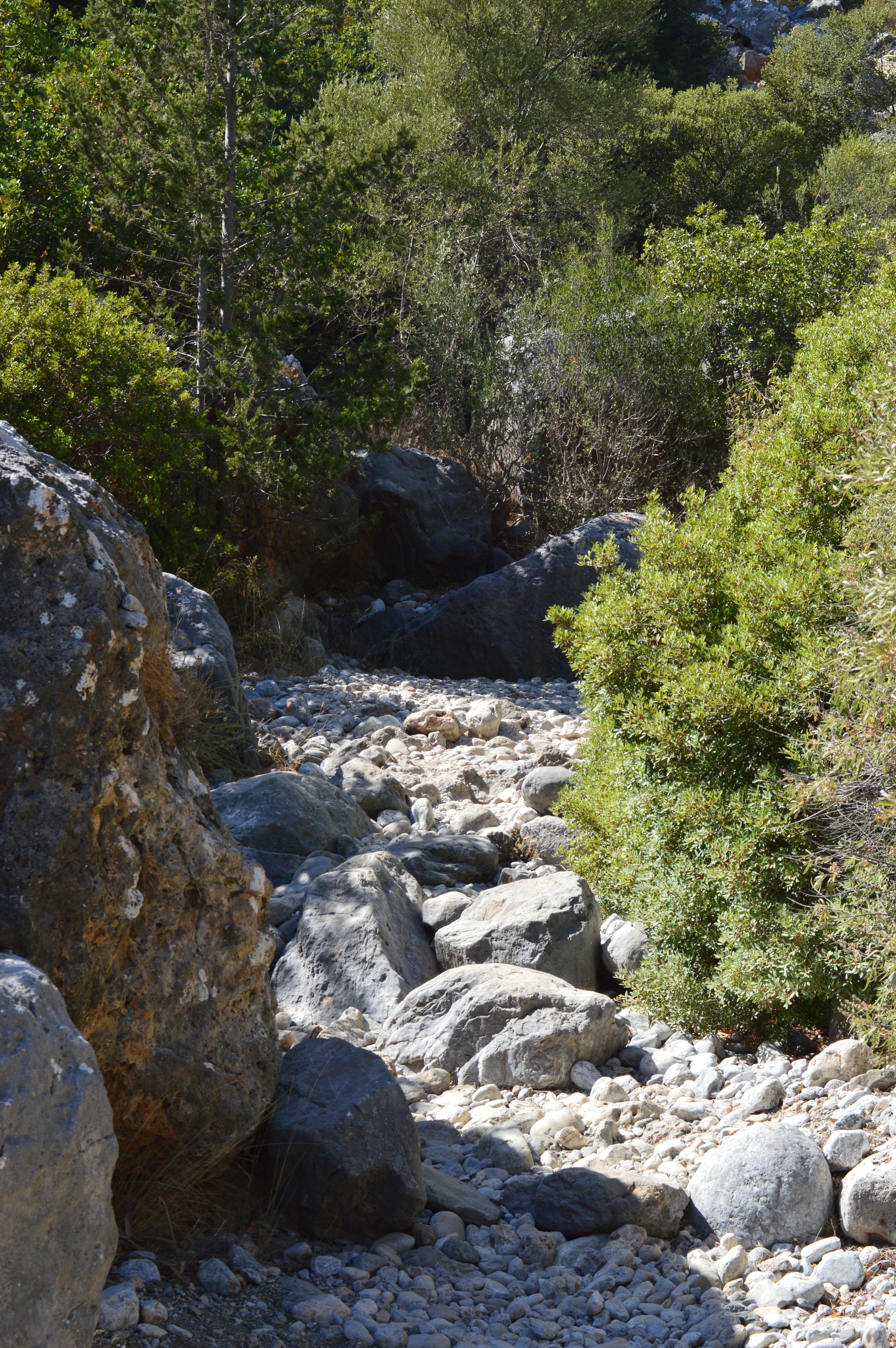
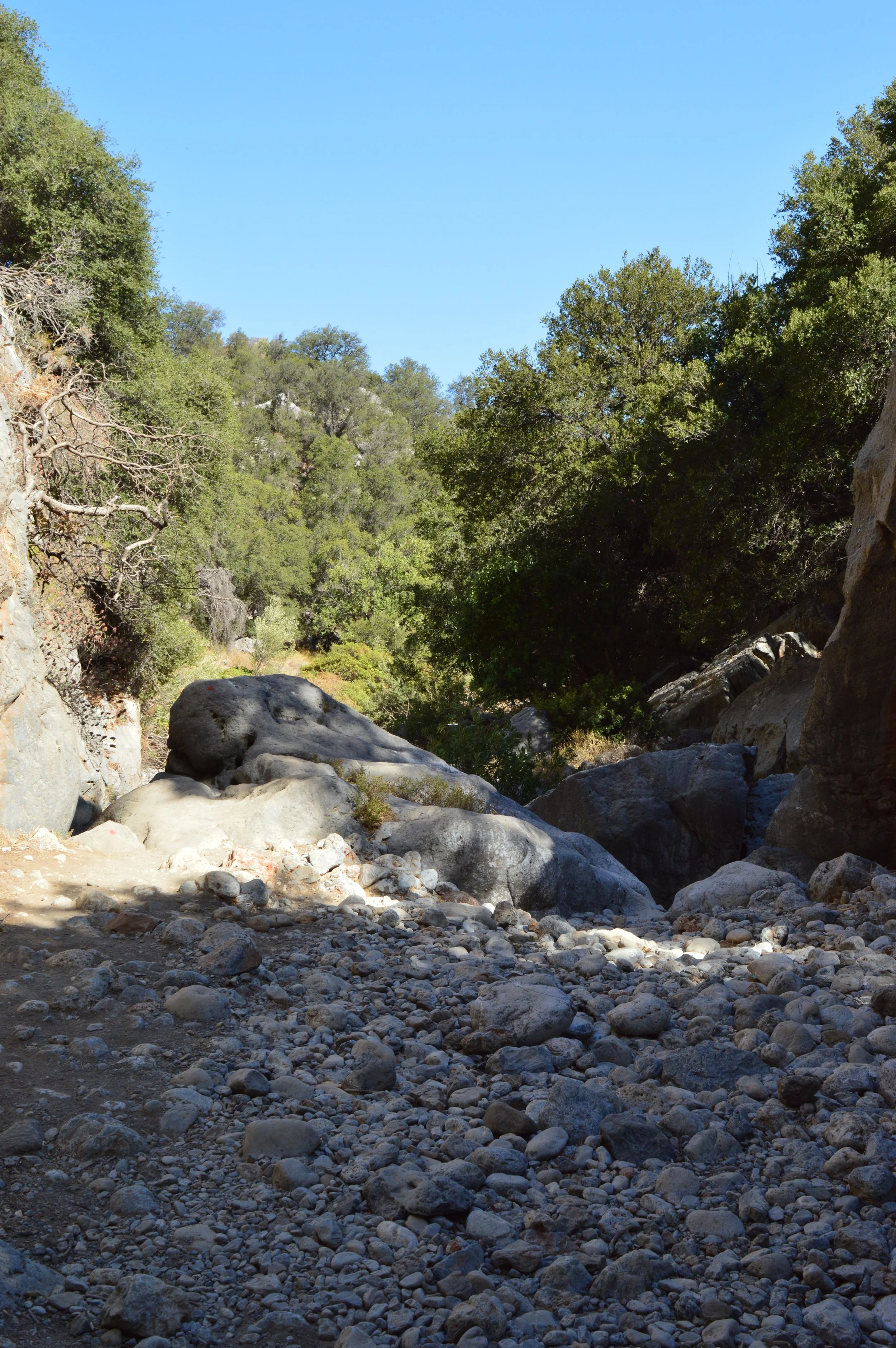
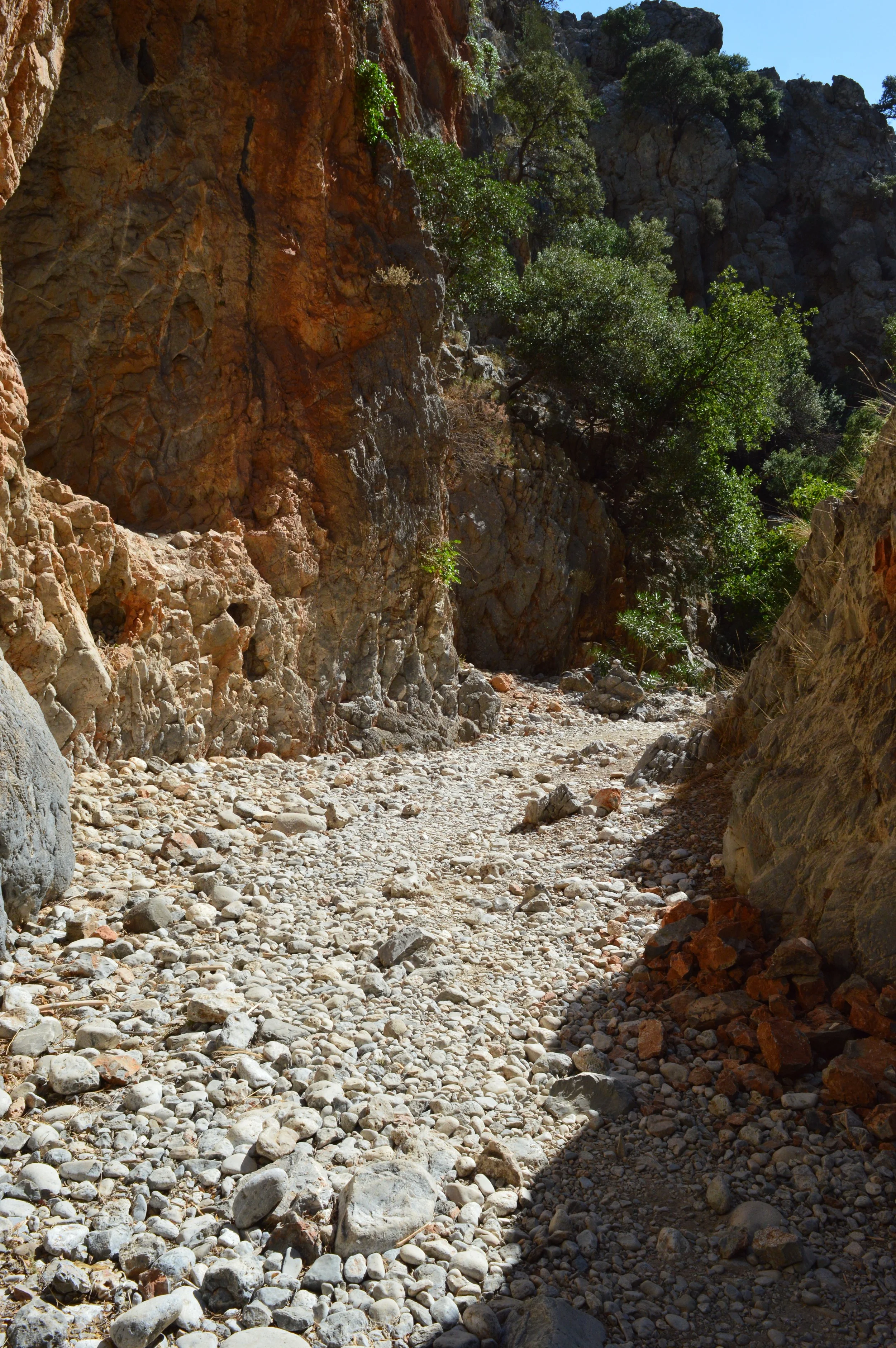
Walking through Kritsa Gorge is an opportunity to experience the natural landscape of Eastern Crete from a different perspective. The route follows the rocky bed of the canyon, passing between impressive limestone formations and through sections where the surrounding walls create narrow natural corridors.
The initial section of the gorge is generally the most accessible and is suitable for visitors with a reasonable level of fitness and appropriate footwear. According to regional route information, this first section extends for approximately 2.5 kilometres, and the walk combined with the return journey to Kritsa can take around two hours.
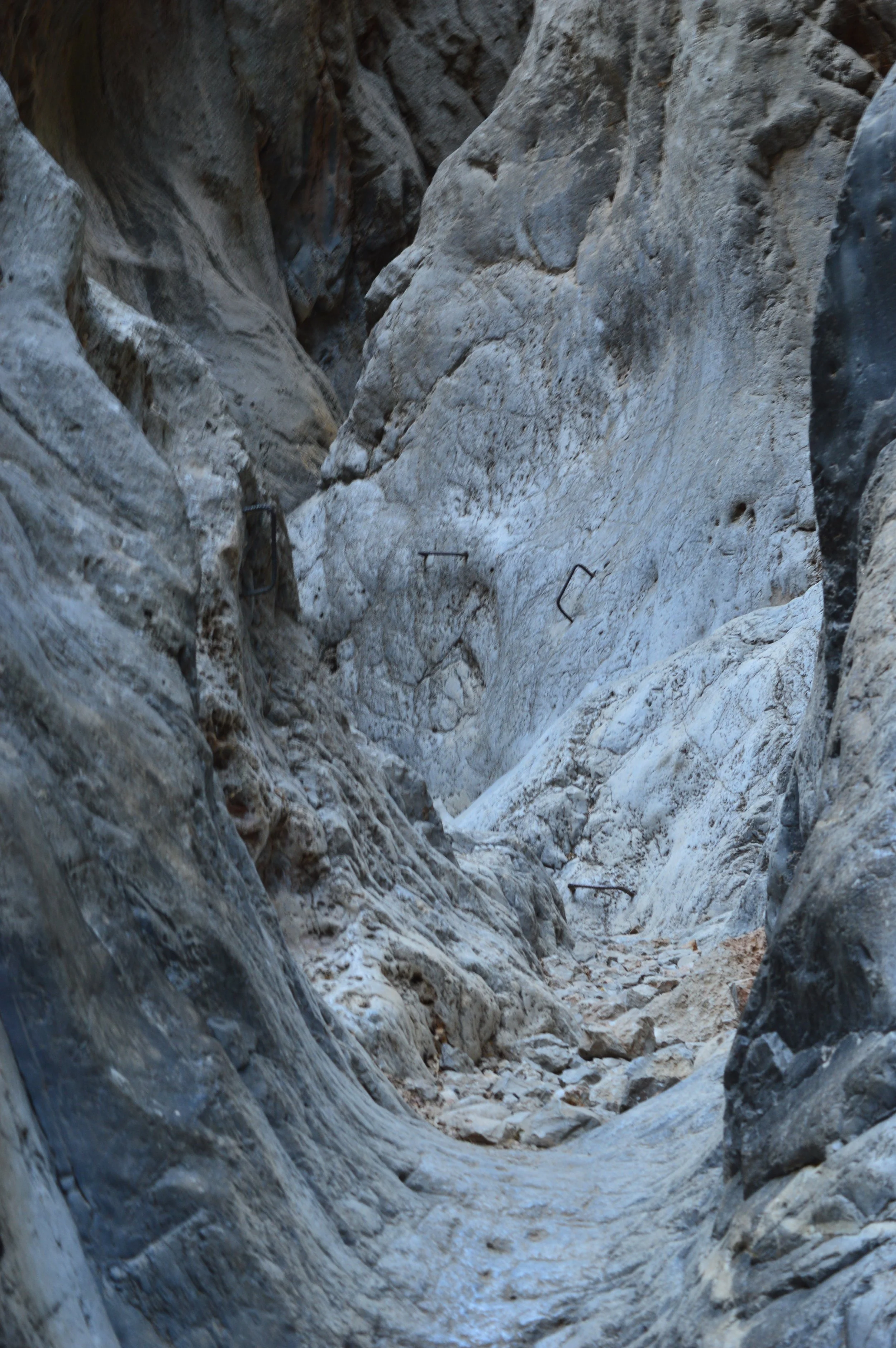
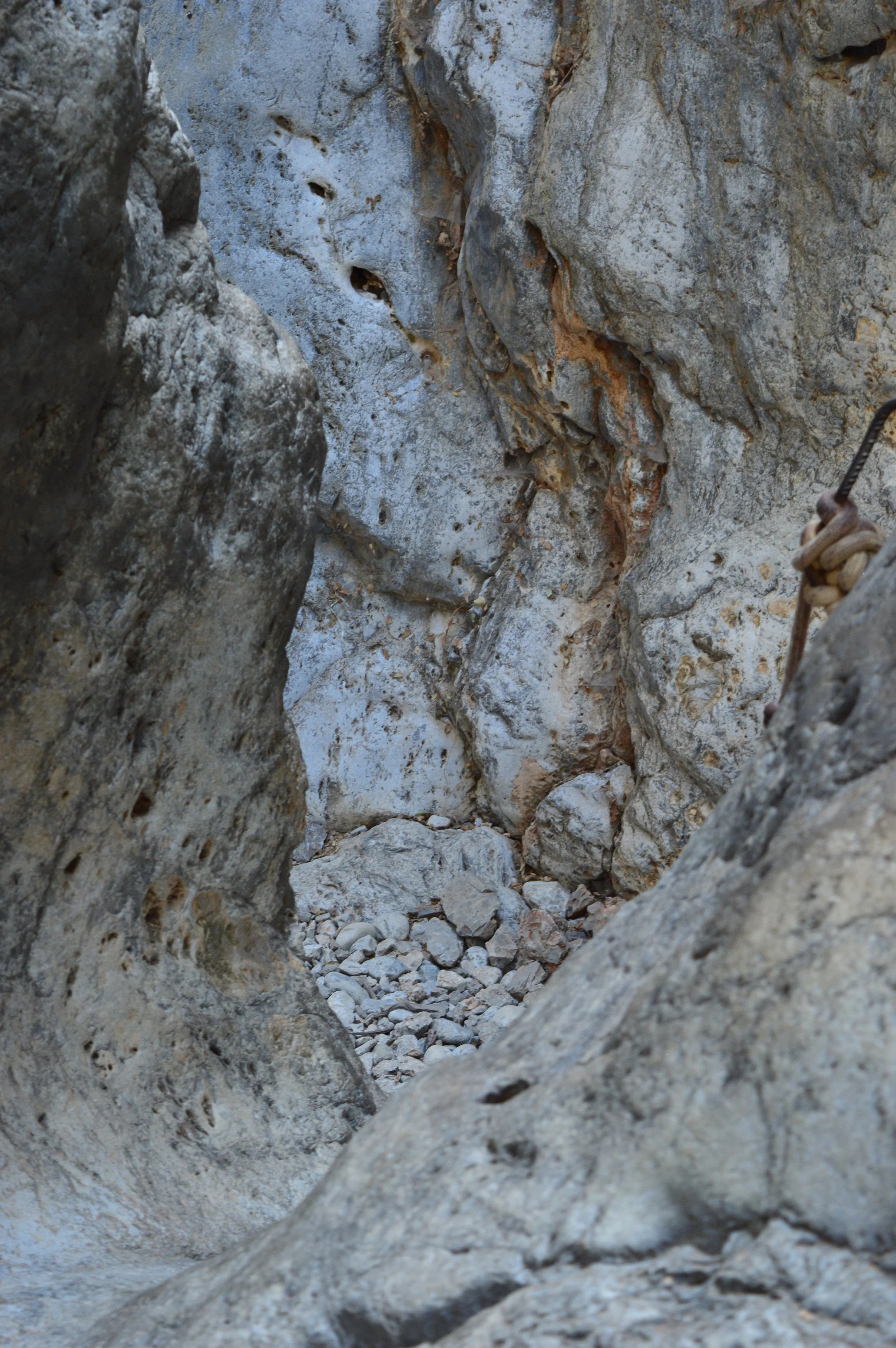
Further into the gorge, the terrain becomes more demanding in places. Hikers may encounter large rocks, uneven surfaces and sections requiring careful movement over natural obstacles.
The longer route continues towards the wider valley and the countryside around Tapes village. This extended walk requires more preparation and should not be confused with the shorter introductory section near Kritsa.
For visitors who prefer a shorter outdoor experience, exploring the first part of the gorge provides an excellent introduction to the area's natural beauty without committing to a longer hike.
The Gorge's Unique Rock Formations
One of the most memorable features of Kritsa Gorge is its impressive geological structure. The canyon has been shaped by natural erosion, creating dramatic limestone walls, unusual rock formations and narrow passages.
The entrance is particularly striking, where the mountain landscape appears to open into a deep natural corridor. As visitors continue along the route, the gorge changes character, with sections that become wider and more open before narrowing again.
The combination of geological formations, changing light and natural vegetation makes Kritsa Gorge an interesting destination for nature enthusiasts, hikers and visitors interested in the geology of Crete.
Flora and Wildlife
Despite its rocky appearance, Kritsa Gorge supports a variety of plant life. Plane trees and oaks grow in parts of the canyon, while oleanders and other native species add colour to the surrounding landscape.
The vegetation is particularly noticeable in areas where seasonal water and natural shade create more favourable growing conditions. These greener sections provide an interesting contrast with the exposed limestone walls and dry mountain vegetation typical of much of Eastern Crete.
The gorge also offers suitable habitats for birds and smaller wildlife. Its rocky formations and natural vegetation contribute to the ecological diversity of the wider Kritsa countryside.
Visitors are encouraged to respect the natural environment, avoid disturbing wildlife and leave no litter along the hiking route.
Best Time to Visit Kritsa Gorge
Kritsa Gorge can be explored during several seasons, although weather and water conditions are important considerations when planning a visit.
Spring: One of the best periods for hiking. The vegetation becomes greener, wildflowers appear and seasonal water may enhance the natural scenery. Temperatures are generally comfortable for walking.
Summer: The gorge offers shaded sections that can provide some relief from the heat. However, temperatures in Crete can become very high, so early morning visits are recommended. Carry sufficient drinking water and avoid hiking during the hottest hours.
Autumn: A pleasant period for exploring the canyon, particularly when temperatures become milder. It is important to check weather forecasts, as autumn rainfall can affect the watercourse and trail conditions.
Winter: The gorge can be more difficult to explore during periods of rainfall. Water accumulation and slippery rocks can make some passages unsafe.
The gorge should not be entered during or immediately after heavy rainfall because water can collect in the narrow passages and make sections of the route difficult or dangerous to cross.
Practical Information for Visitors
Kritsa Gorge is a natural hiking destination without the facilities of a developed tourist attraction. Visitors should plan accordingly and arrive prepared for walking over uneven rocky terrain.
Comfortable hiking shoes with good grip are recommended, as the ground can be rough and slippery in certain sections. Carry drinking water, particularly during the warmer months, and consider bringing a hat, sunscreen and a small backpack.
The difficulty of the experience depends on how far visitors choose to walk. The initial section is generally more accessible, while the longer route requires better physical preparation and experience with uneven terrain.
There is no formal entrance ticket for the gorge, and access is generally free. However, visitors should check local conditions before setting out, particularly after rainfall, as the condition of natural trails can change.
For those unfamiliar with the area, exploring with an experienced local guide can provide a safer and more informative experience.
How to Get to Kritsa Gorge
Kritsa Gorge is located approximately 10 kilometres from Agios Nikolaos, close to the traditional village of Kritsa.
The easiest way to reach the gorge is by car. From Agios Nikolaos, follow the road towards Kritsa village. The entrance to the gorge is situated near the northeastern exit of the settlement, with access from the area around the stone bridge.
Visitors travelling by public transport can take a bus from Agios Nikolaos to Kritsa and continue on foot towards the gorge entrance.
The short distance from Agios Nikolaos makes Kritsa Gorge an excellent option for a half-day excursion, especially when combined with exploring the village and the surrounding countryside.
Places to Discover Nearby
A visit to Kritsa Gorge can easily become part of a wider excursion through the historical and natural landscapes surrounding Agios Nikolaos.
Kritsa Village: Explore one of the most traditional villages in Eastern Crete, known for its narrow streets, local handicrafts, traditional architecture and strong cultural identity.
Panagia Kera Church: Visit an important Byzantine monument near Kritsa, renowned for its remarkable frescoes dating mainly from the 13th and 14th centuries.
Ancient Lato: Discover the remains of one of the most important ancient Doric city-states of Crete, situated on an elevated site with impressive views across Mirabello Bay.
Katharo Plateau: Continue into the Dikti Mountains and discover a secluded mountain landscape with traditional agricultural activity and impressive natural scenery.
Kroustas Forest: Explore a woodland area with walking opportunities and a different natural environment within the wider Kritsa region.
Kritsa Gorge is much more than a hiking route. It is a remarkable example of the natural landscapes surrounding Agios Nikolaos, where geological formations, native vegetation and traditional rural surroundings come together.
For visitors who want to discover more than the scenery, the wider Kritsa area also offers opportunities to explore the history, traditions and local character of Eastern Crete. Agios Nikolaos Travel Guide also organises cultural tours in the region, offering visitors a chance to discover its heritage, traditional villages and lesser-known stories through local experiences.
If you want hike through Kritsa Gorge visit Explore Agios Nikolaos with a visit to the village for a rewarding hiking excursion into one of the most interesting areas of the Cretan countryside.