Kroustas Minoan Forest, Crete
Ancient Trails, Woodland & Minoan History
Kroustas Minoan Forest, Crete – Ancient Trails, Woodland & Minoan History
Introduction
High above the Mirabello Bay, between the traditional villages of Kroustas and Prina, lies one of the most remarkable natural and historical landscapes of Eastern Crete: Kroustas Minoan Forest.
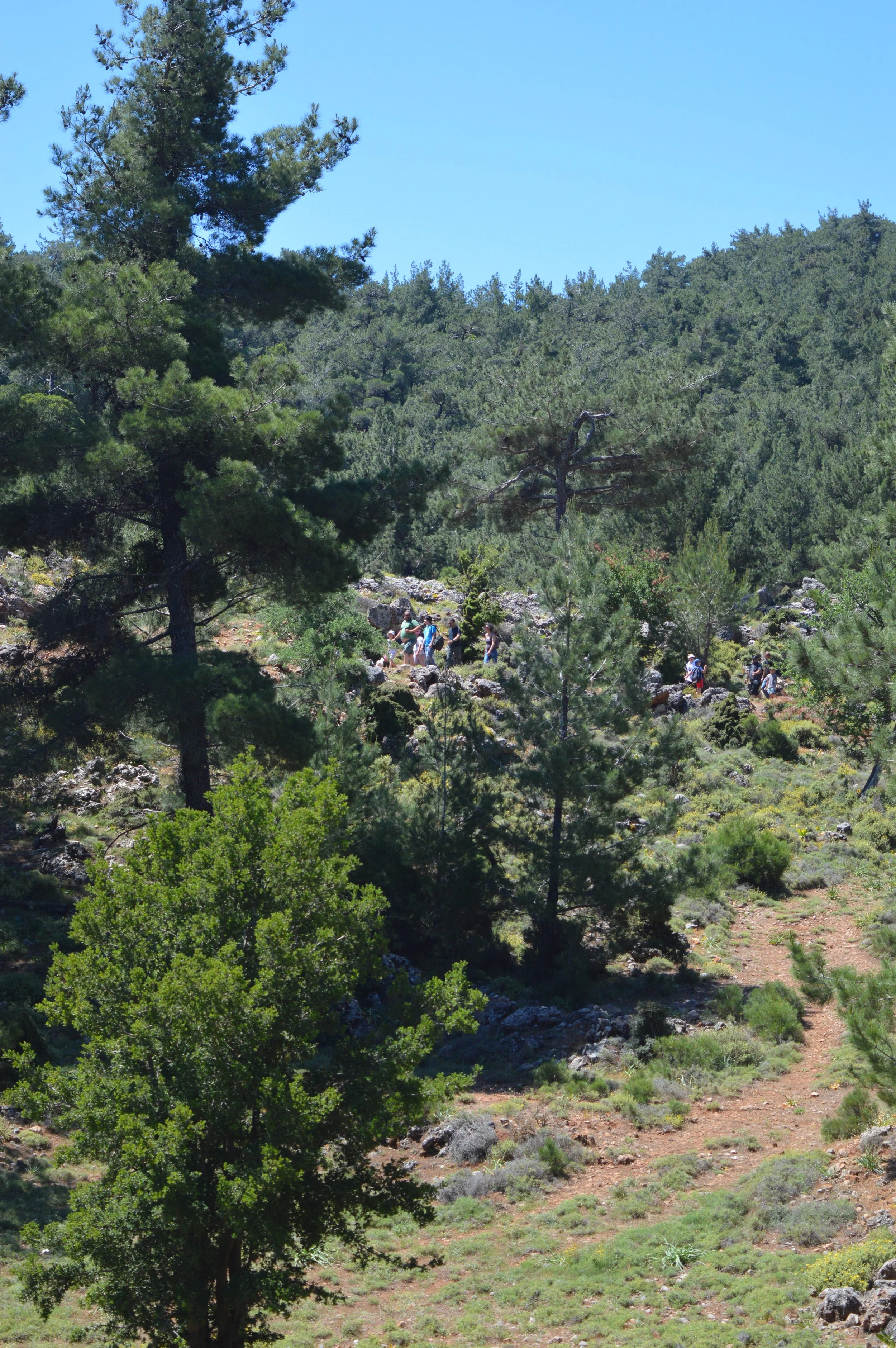
Situated at an altitude of approximately 800–1,000 metres, this mountain forest is known for its combination of Mediterranean woodland, marked hiking paths and archaeological remains dating back around 4,000 years. Beneath the trees and among the rocky slopes, visitors can discover traces of ancient settlements, stone enclosures, agricultural installations and old structures that reveal how people once lived and worked in this mountainous environment.
Kroustas is more than a forest walk. It is a place where nature and archaeology come together, offering an opportunity to explore a landscape shaped by both human activity and the natural environment over thousands of years.
A Forest with a Minoan Past
One of the most fascinating aspects of Kroustas Forest is its long history of human occupation.
Archaeological research has identified remains of ancient rural settlements and agricultural installations throughout the forest. Evidence indicates that the area was systematically occupied and used from around 4,000 years ago, particularly during the Minoan period.
During the Old Palace period, approximately 1900–1650 BC, people constructed agricultural installations using large stone blocks. These included animal enclosures, boundary walls, terraces and the foundations of buildings.
Many of these structures remain visible on the surface today. Unlike the monumental palaces and urban centres usually associated with Minoan Crete, the remains at Kroustas provide a different perspective on the civilisation: its agricultural activities, rural settlements and use of mountainous landscapes.
The forest therefore preserves an important archaeological record of everyday life beyond the major Minoan centres.
Ancient Stone Structures and Rural Settlements
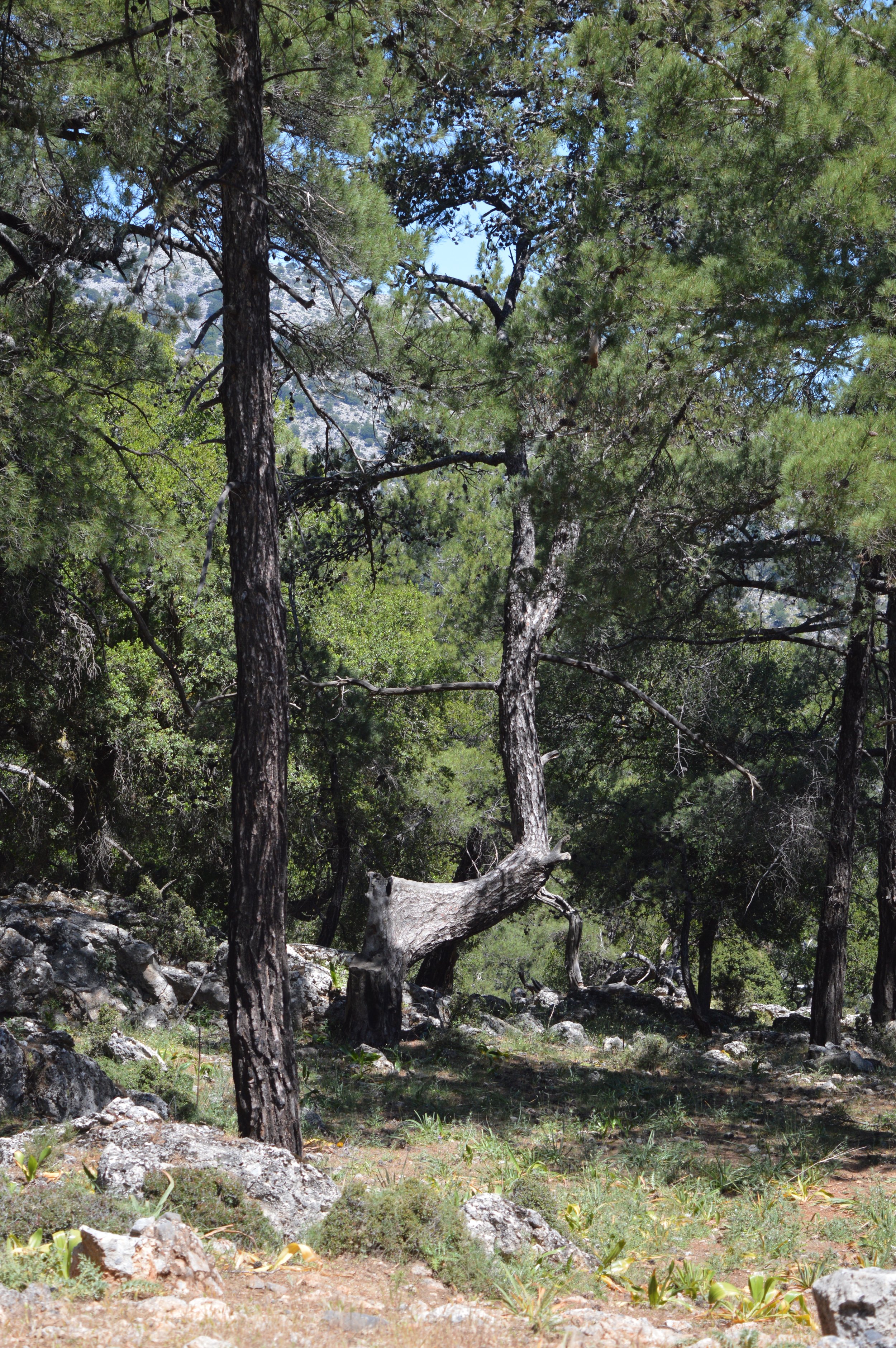
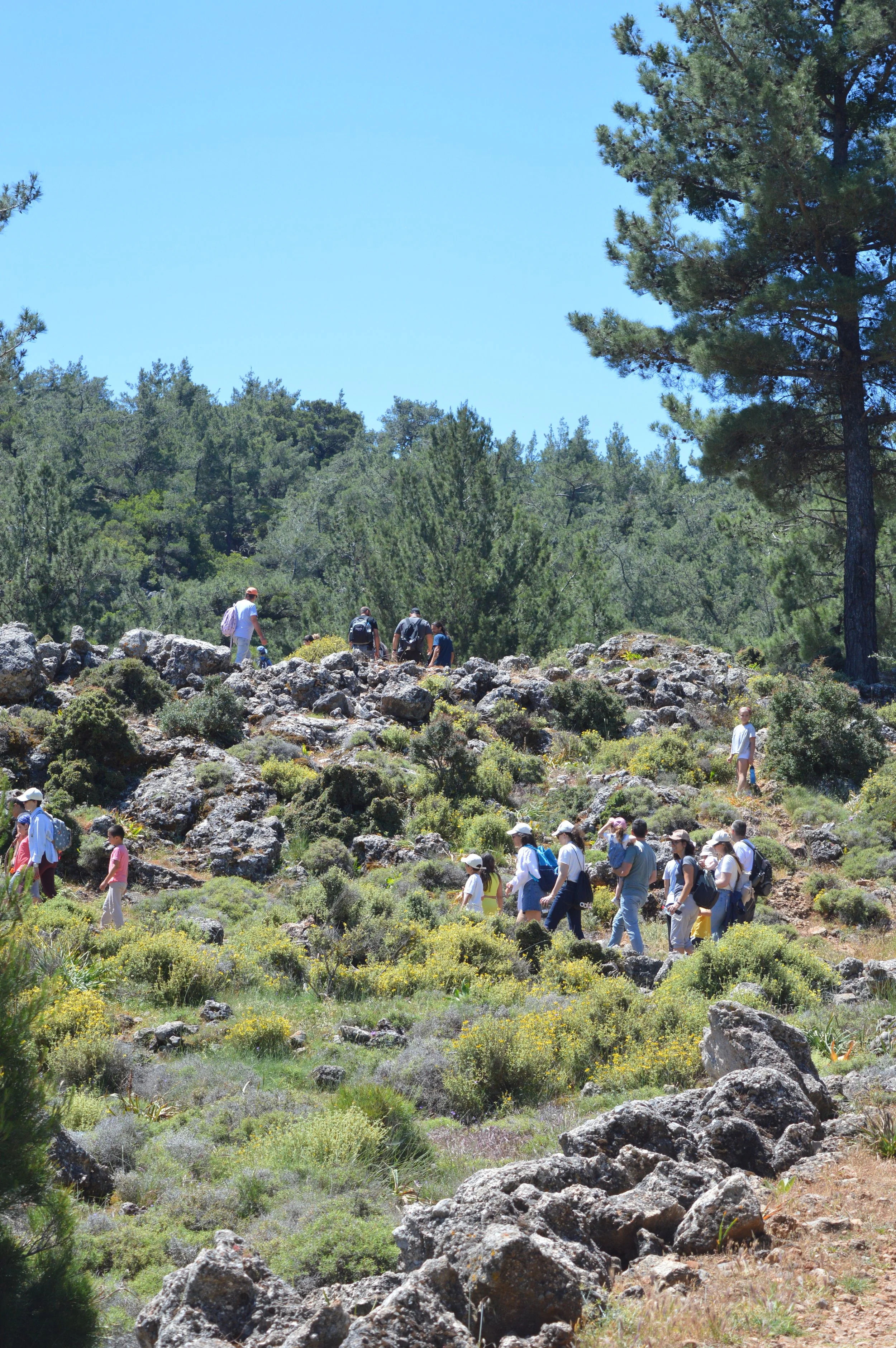
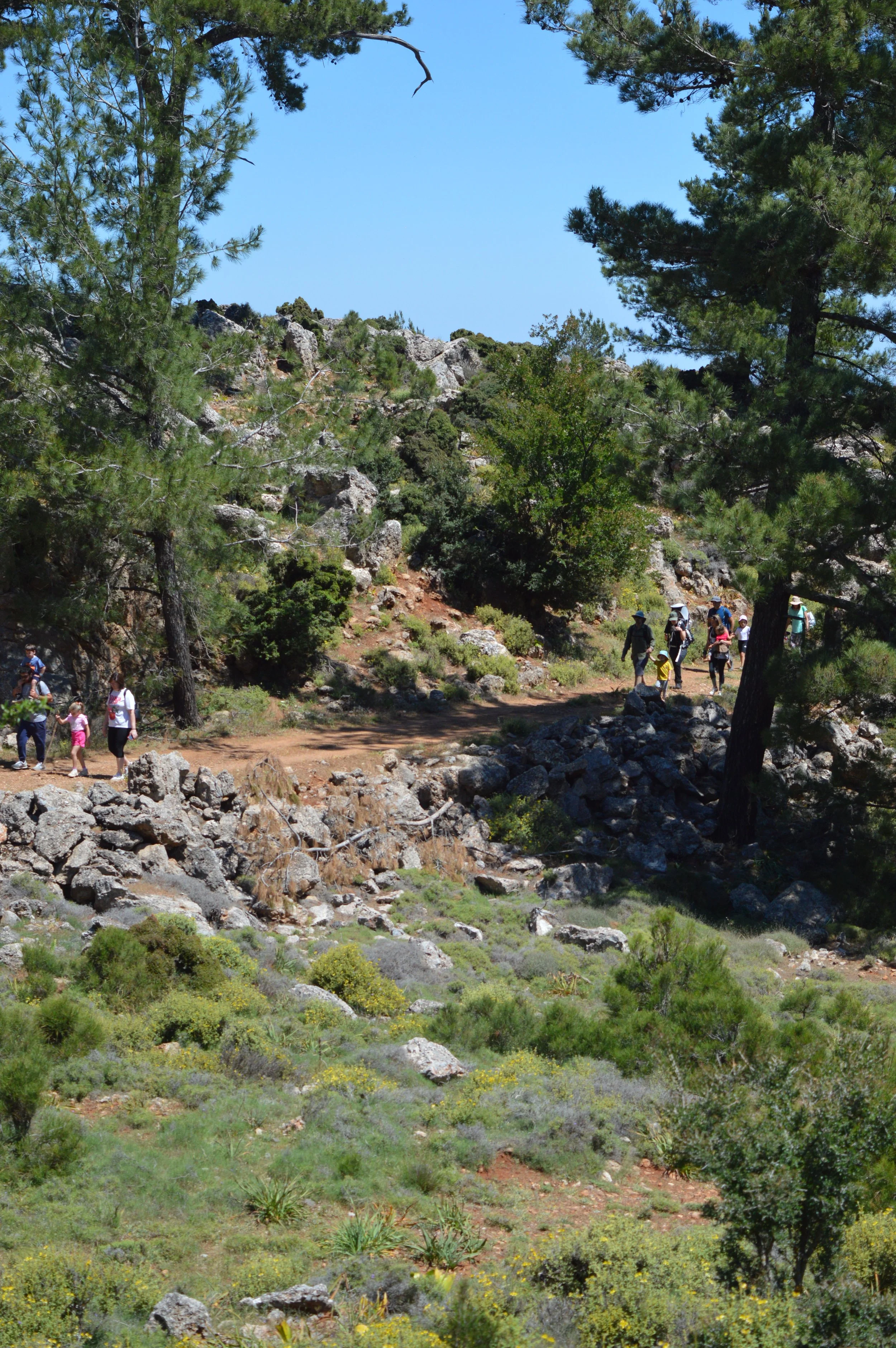
Walking along the paths of Kroustas Forest, visitors may encounter impressive stone constructions scattered throughout the woodland.
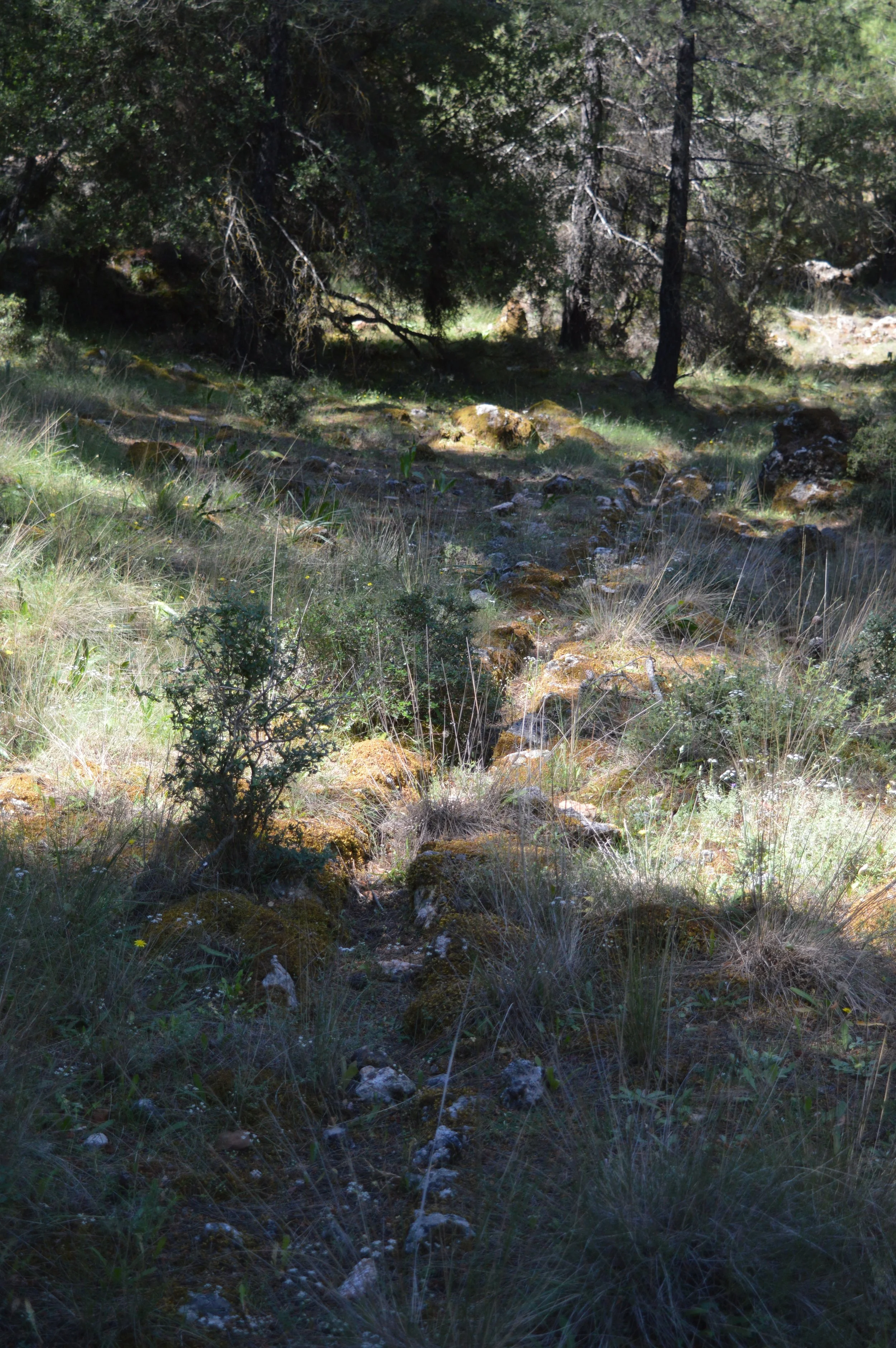
Some of the remains are believed to have served as animal enclosures and agricultural boundaries, while others are associated with ancient rural buildings. Their construction using large stones reflects the practical architecture of communities that depended on farming and animal husbandry.
The archaeological remains are particularly interesting because many have not been fully excavated. They remain part of the natural landscape, surrounded by trees and vegetation rather than presented as a conventional archaeological site.
Later generations also used the forest for agriculture and livestock farming. From the nineteenth century onwards, the area once again became an important place for small-scale cultivation and the keeping of sheep and goats.
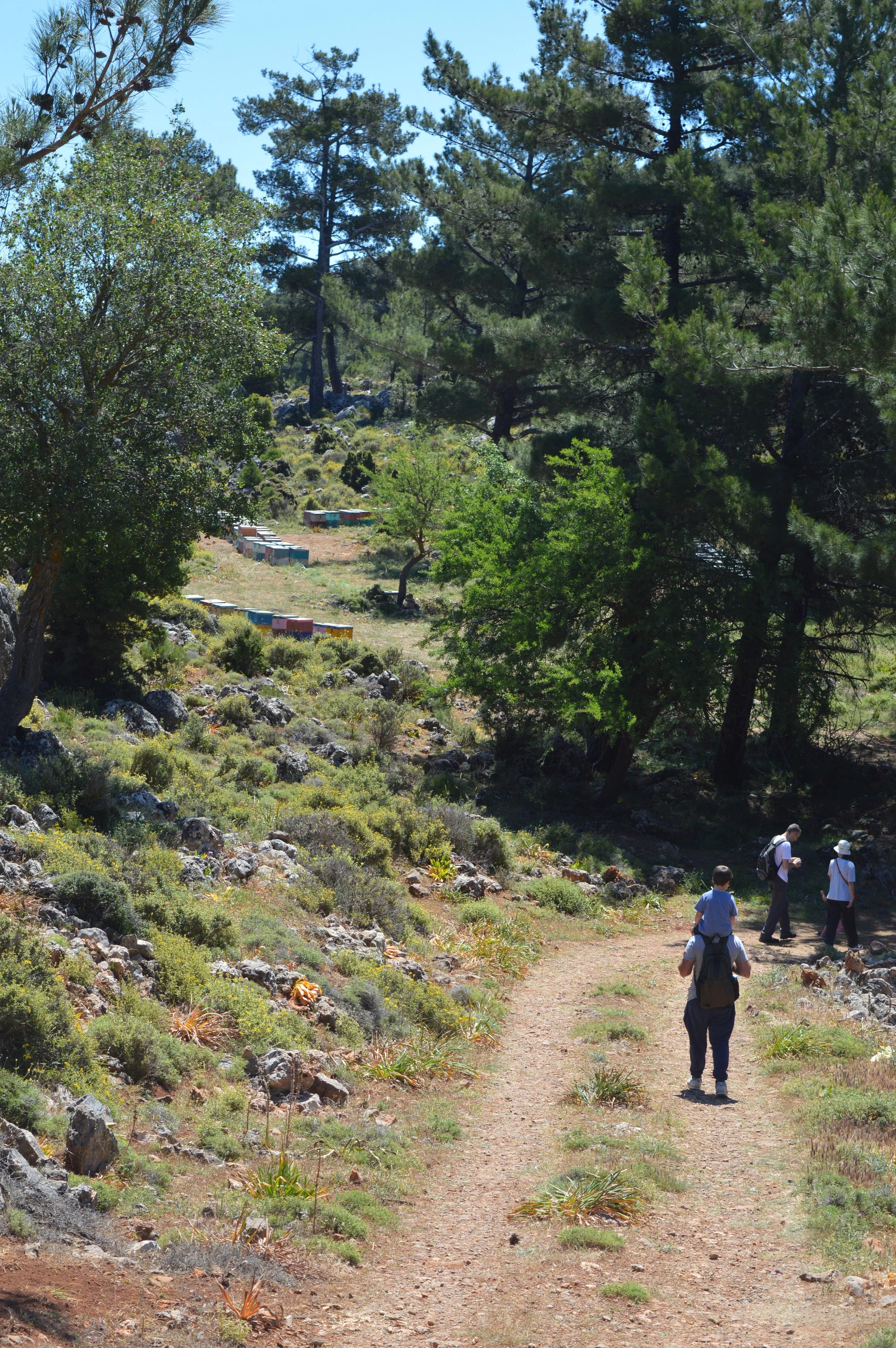
Alongside the ancient remains, visitors can find traces of more recent shepherding activity, including traditional stone structures that illustrate the continuity of rural life in the mountains of Crete.
The Natural Environment of Kroustas Forest
Kroustas is one of the distinctive woodland areas of Eastern Crete. Its elevation and mountainous position create a cooler environment than the coastal areas around Agios Nikolaos.
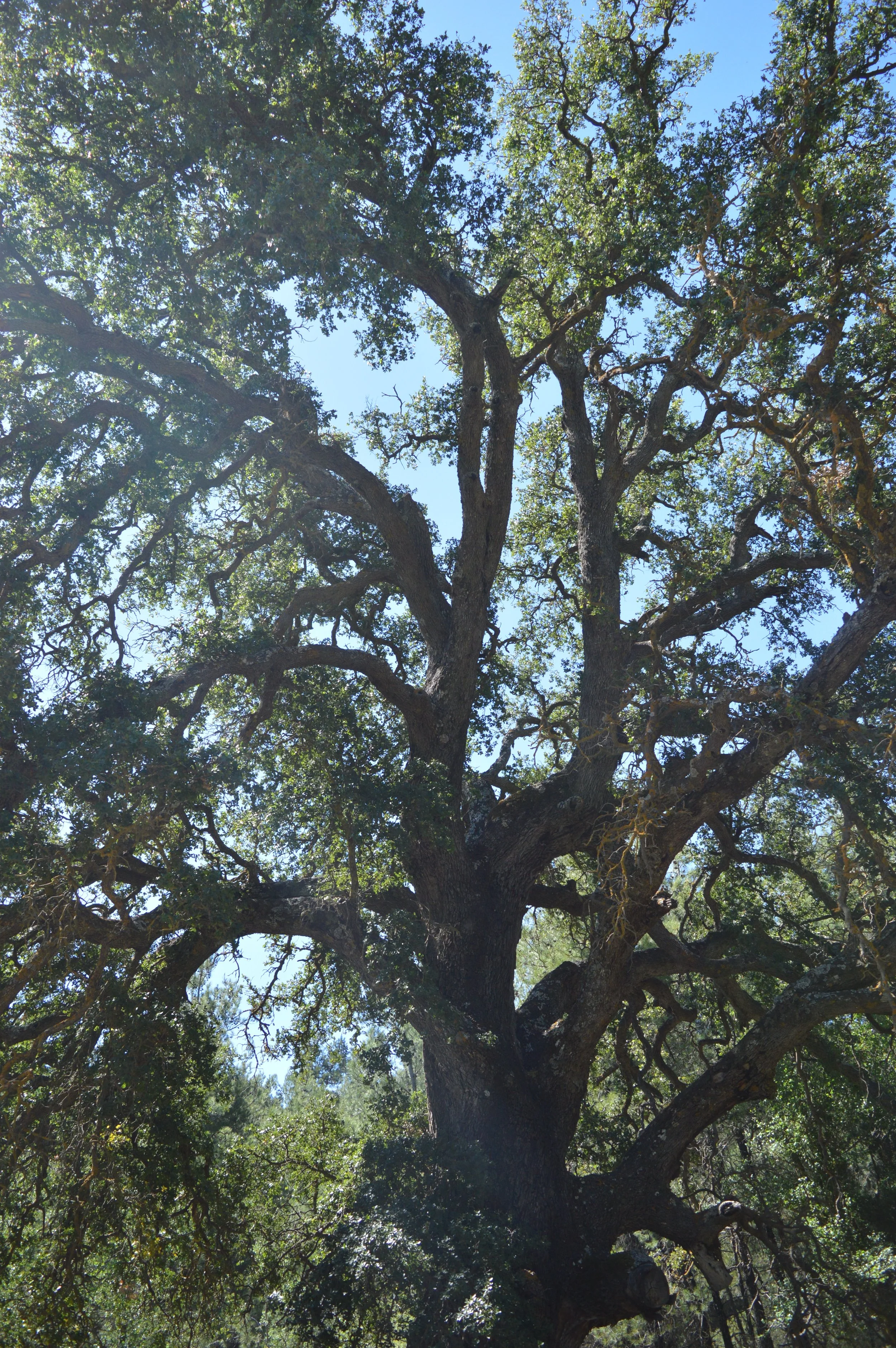
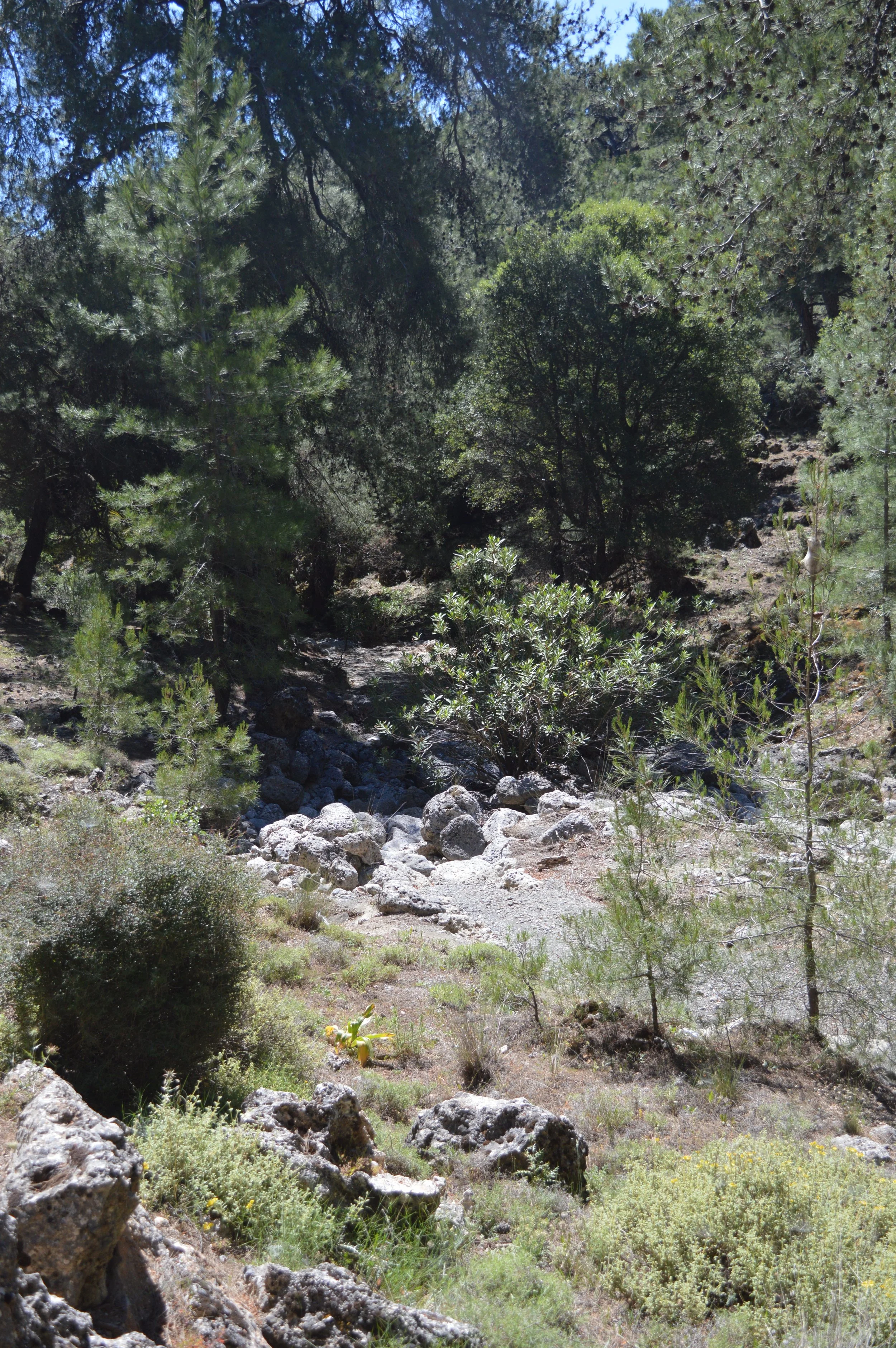
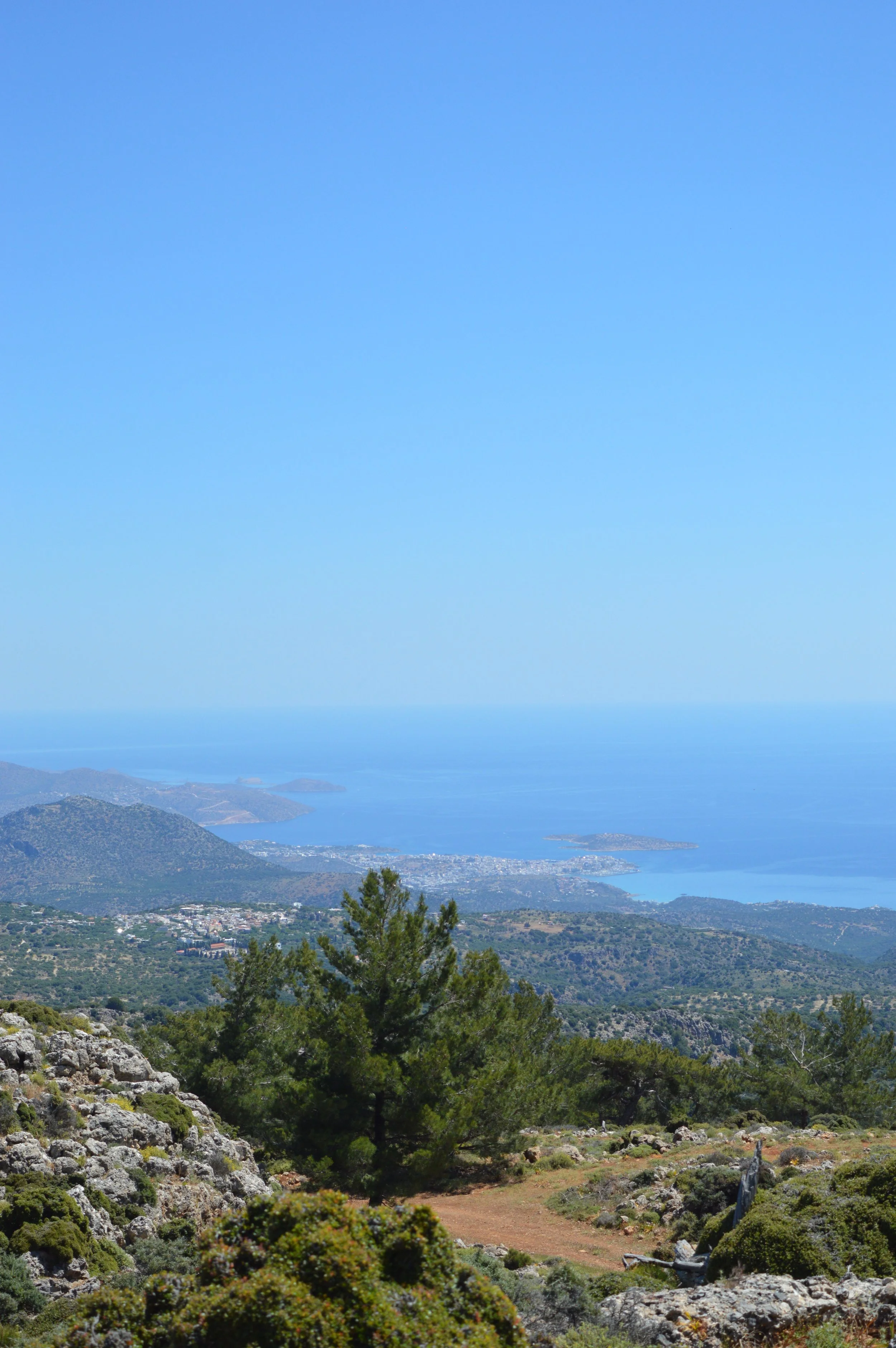
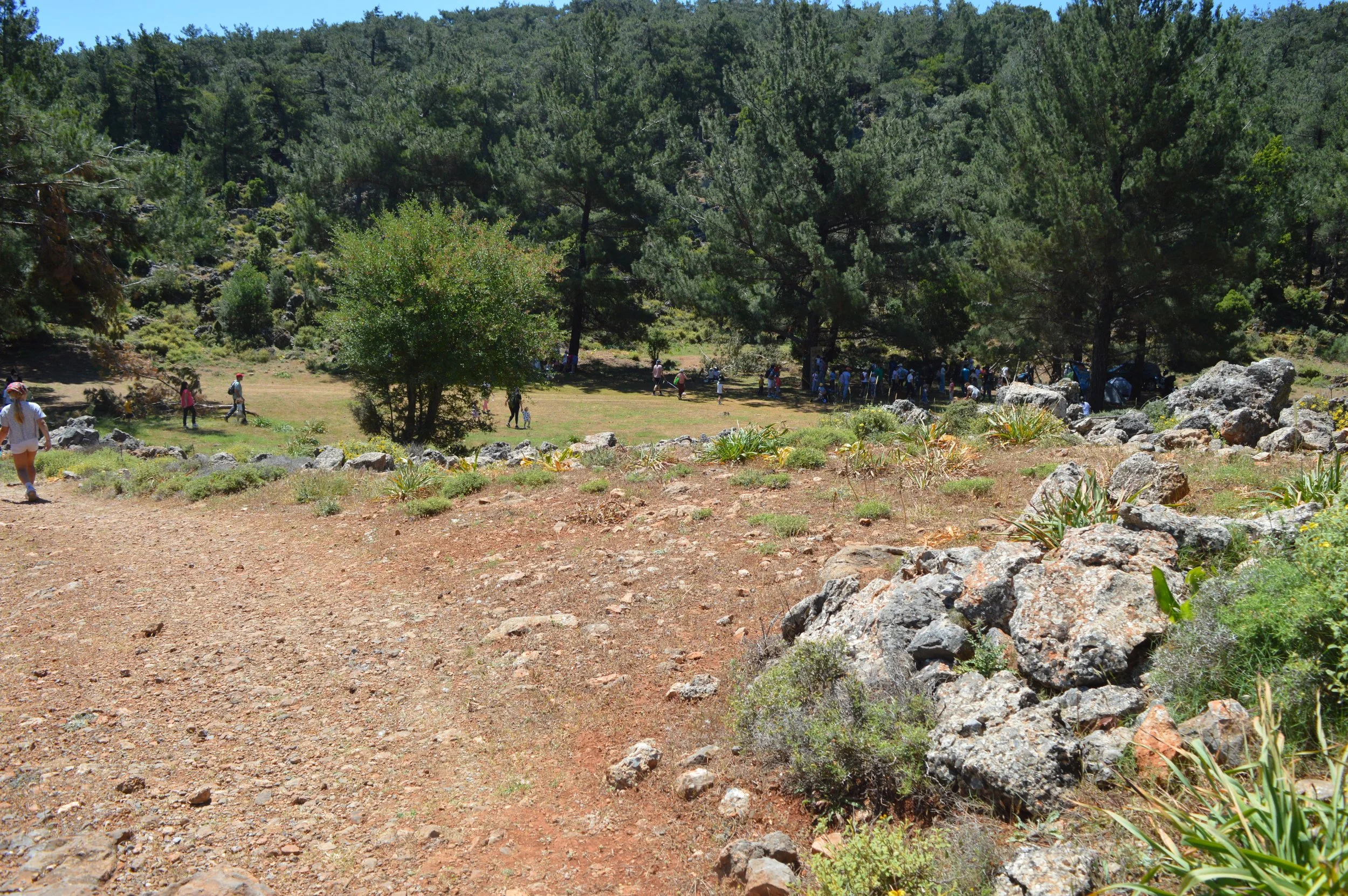
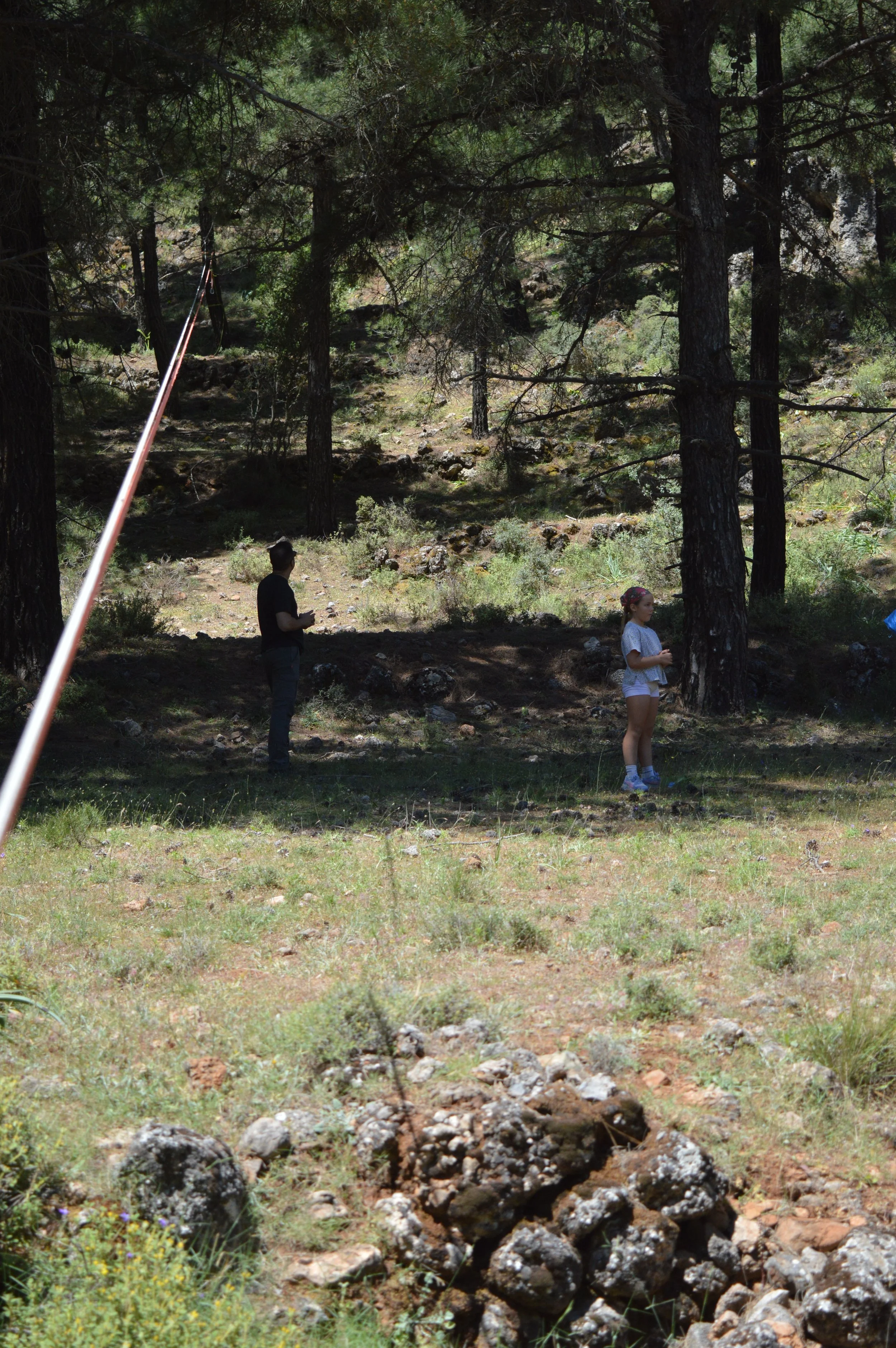
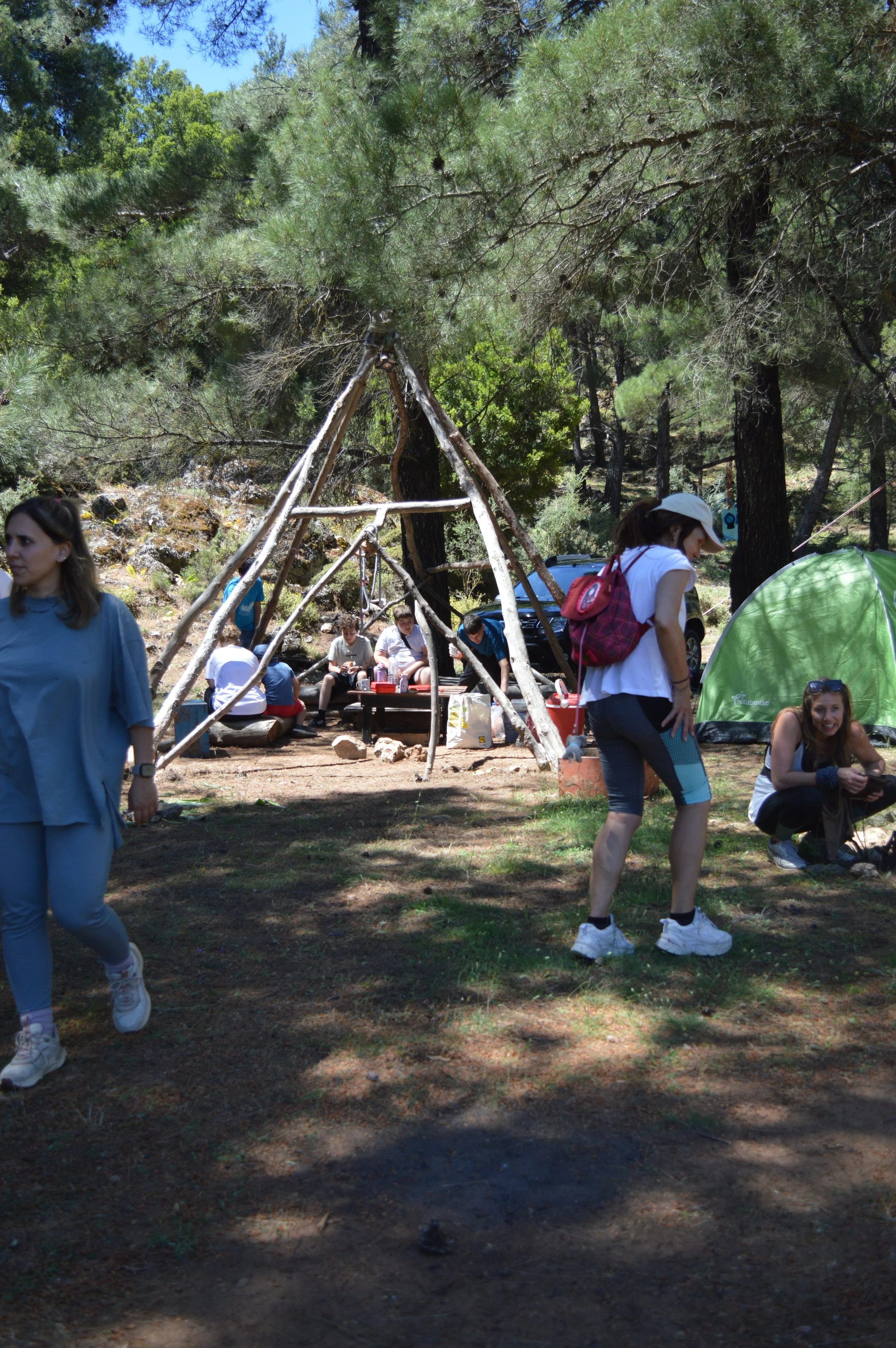
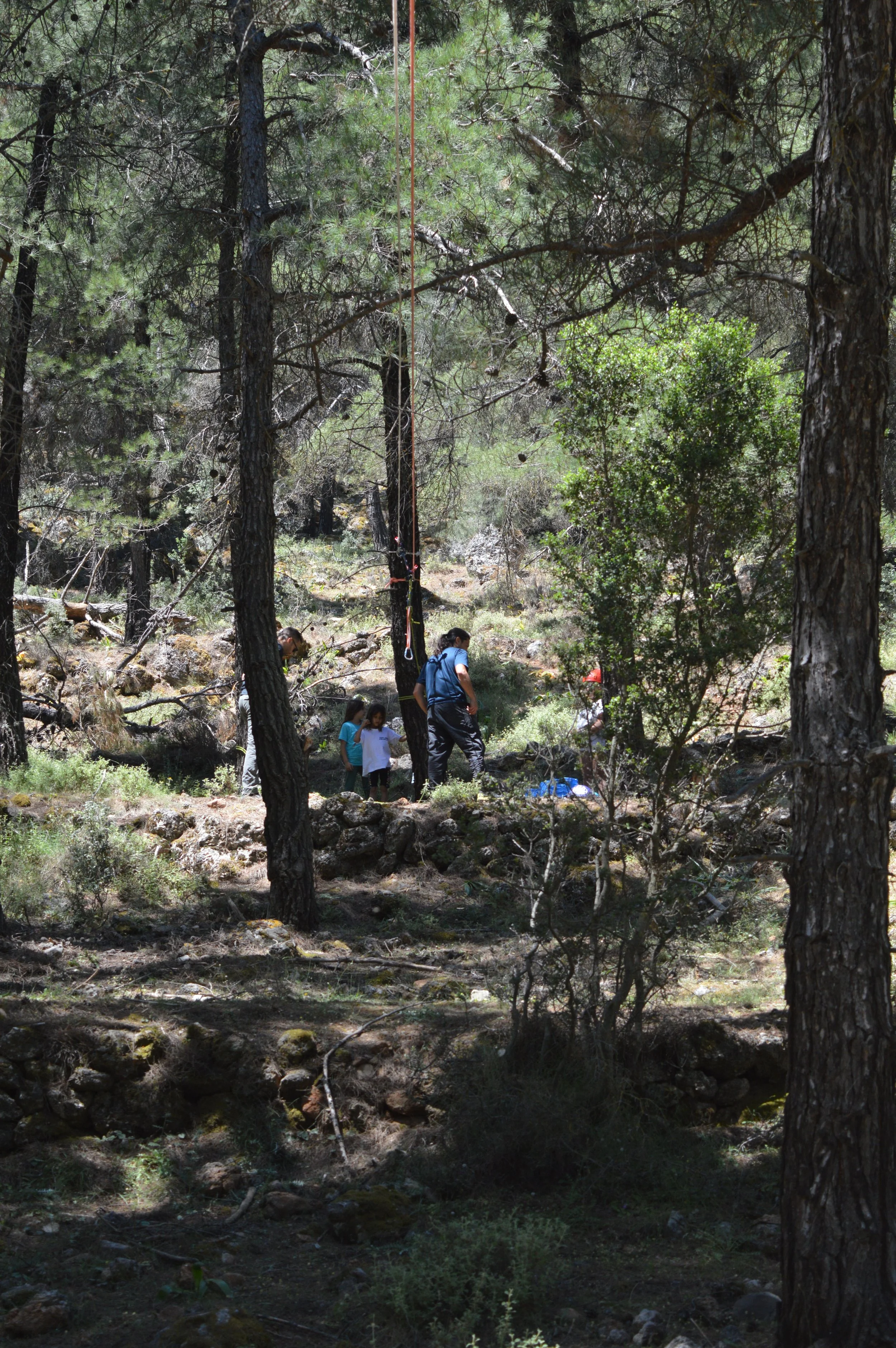
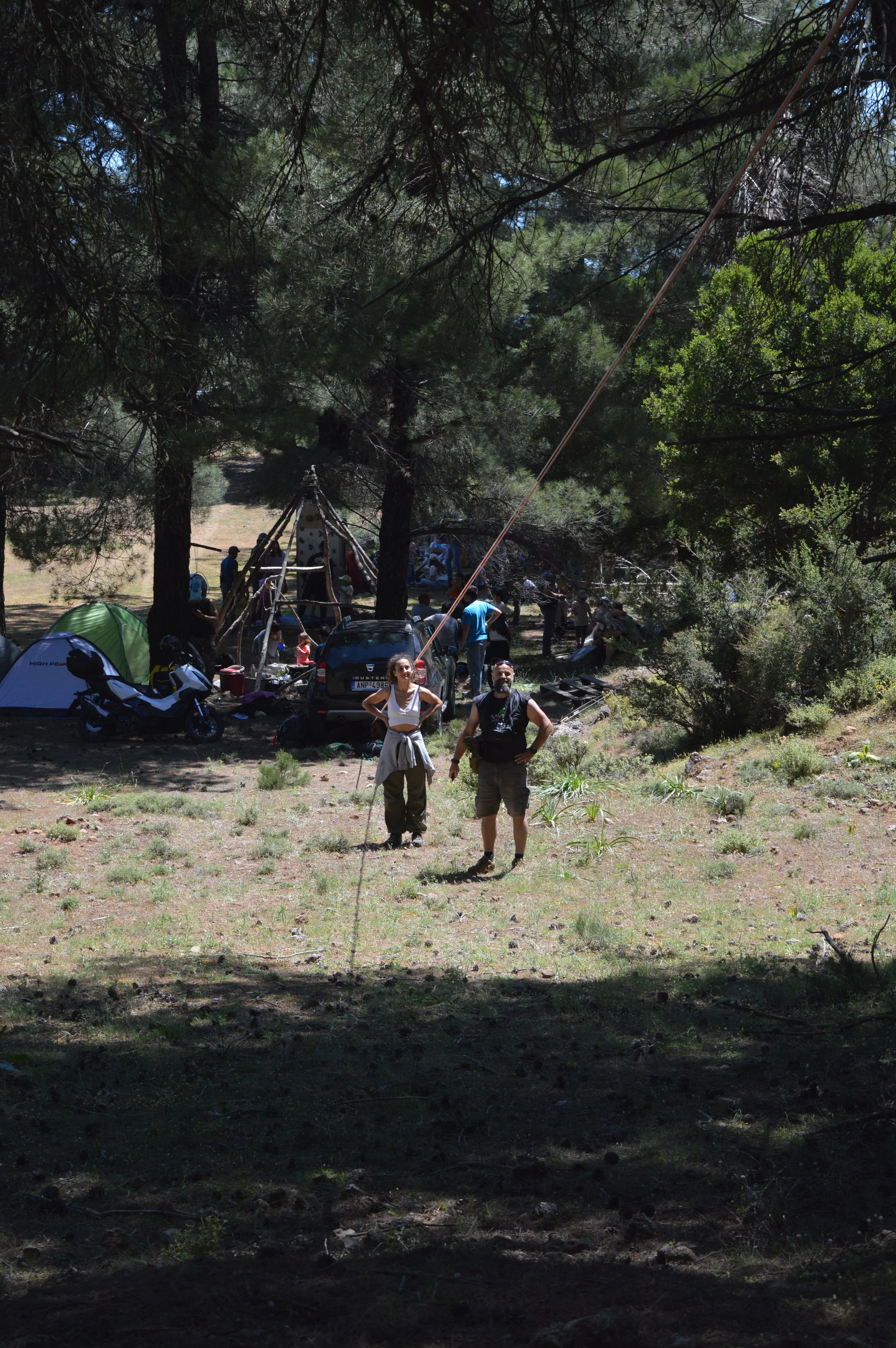
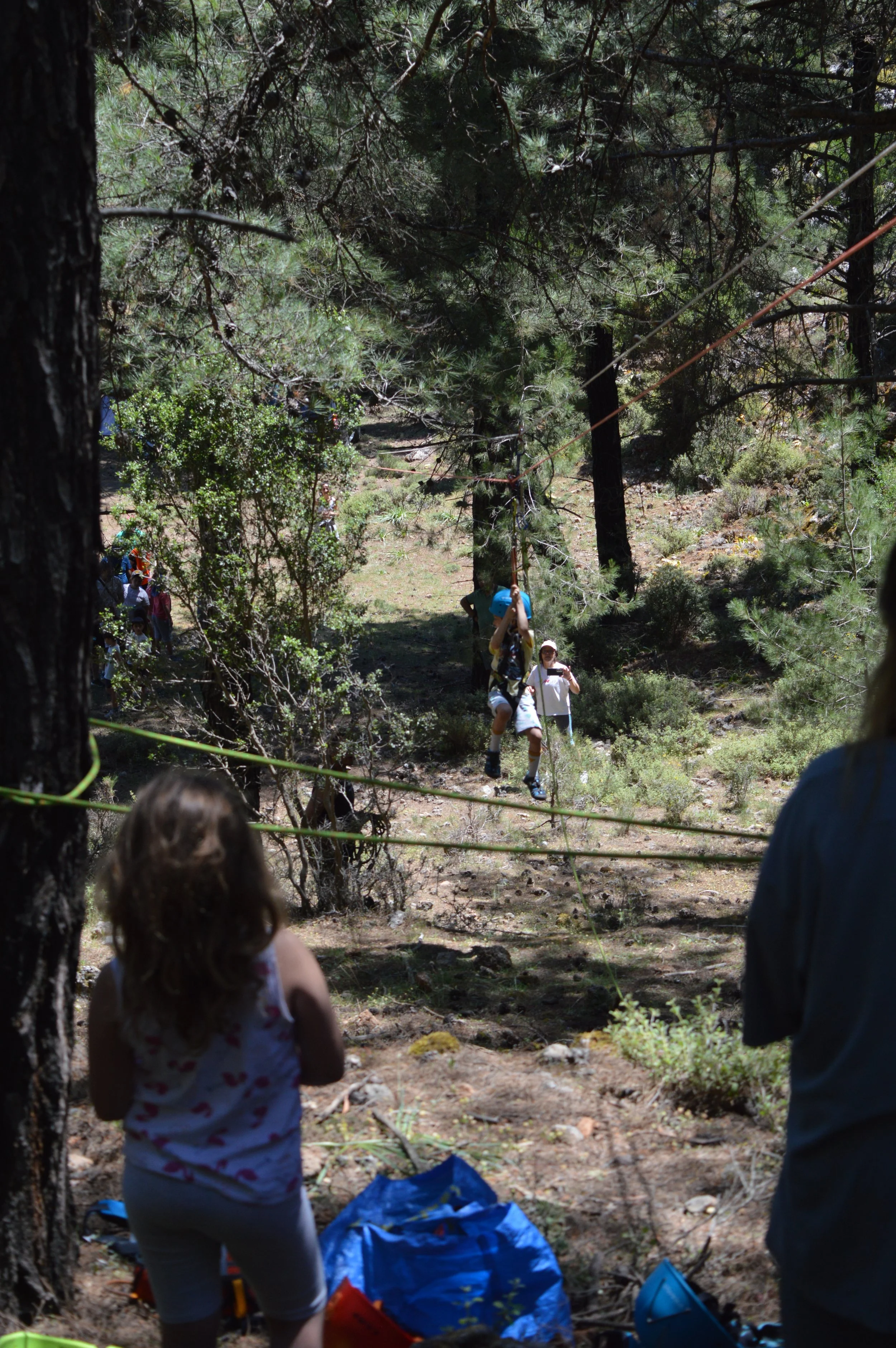
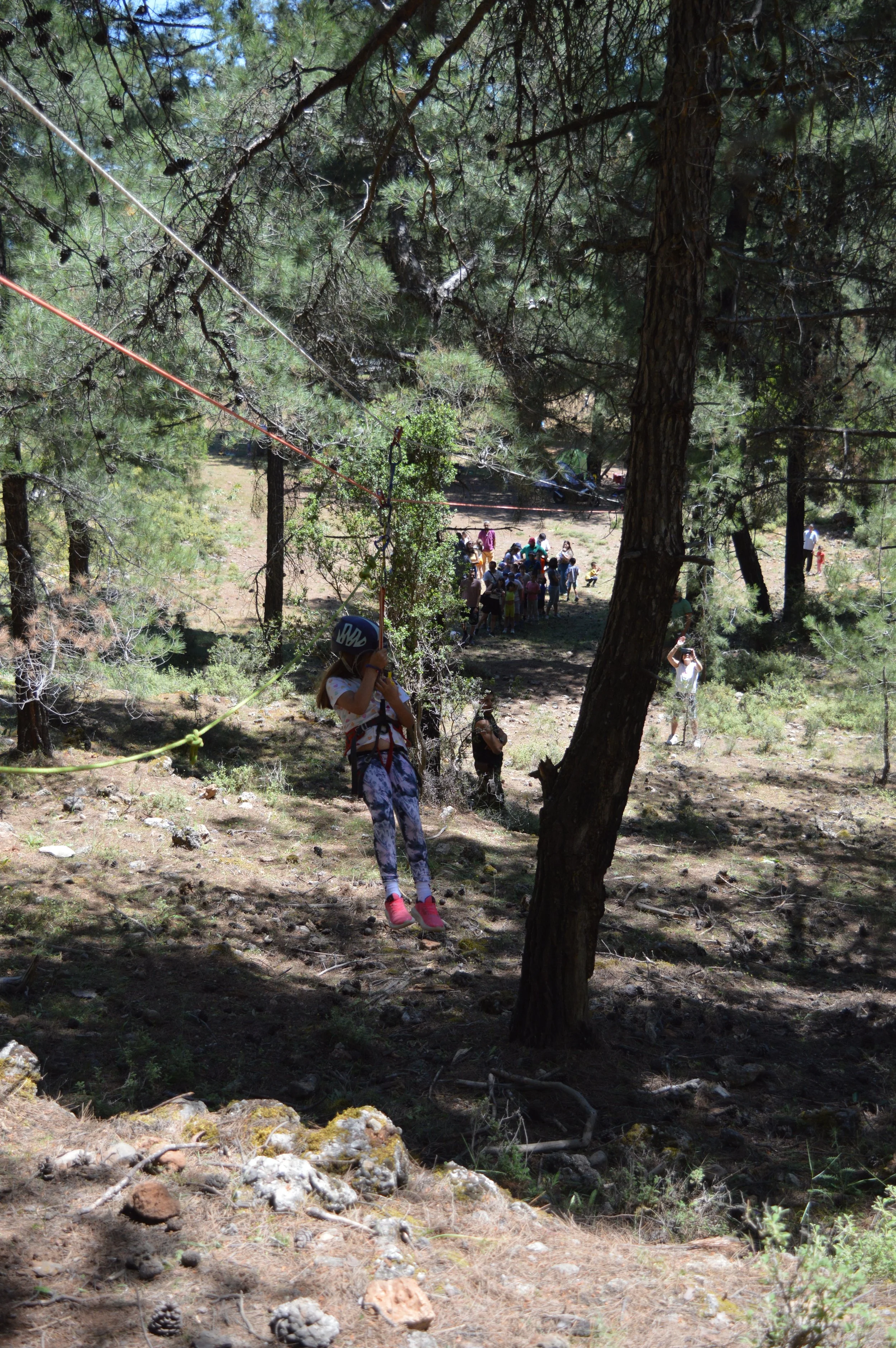
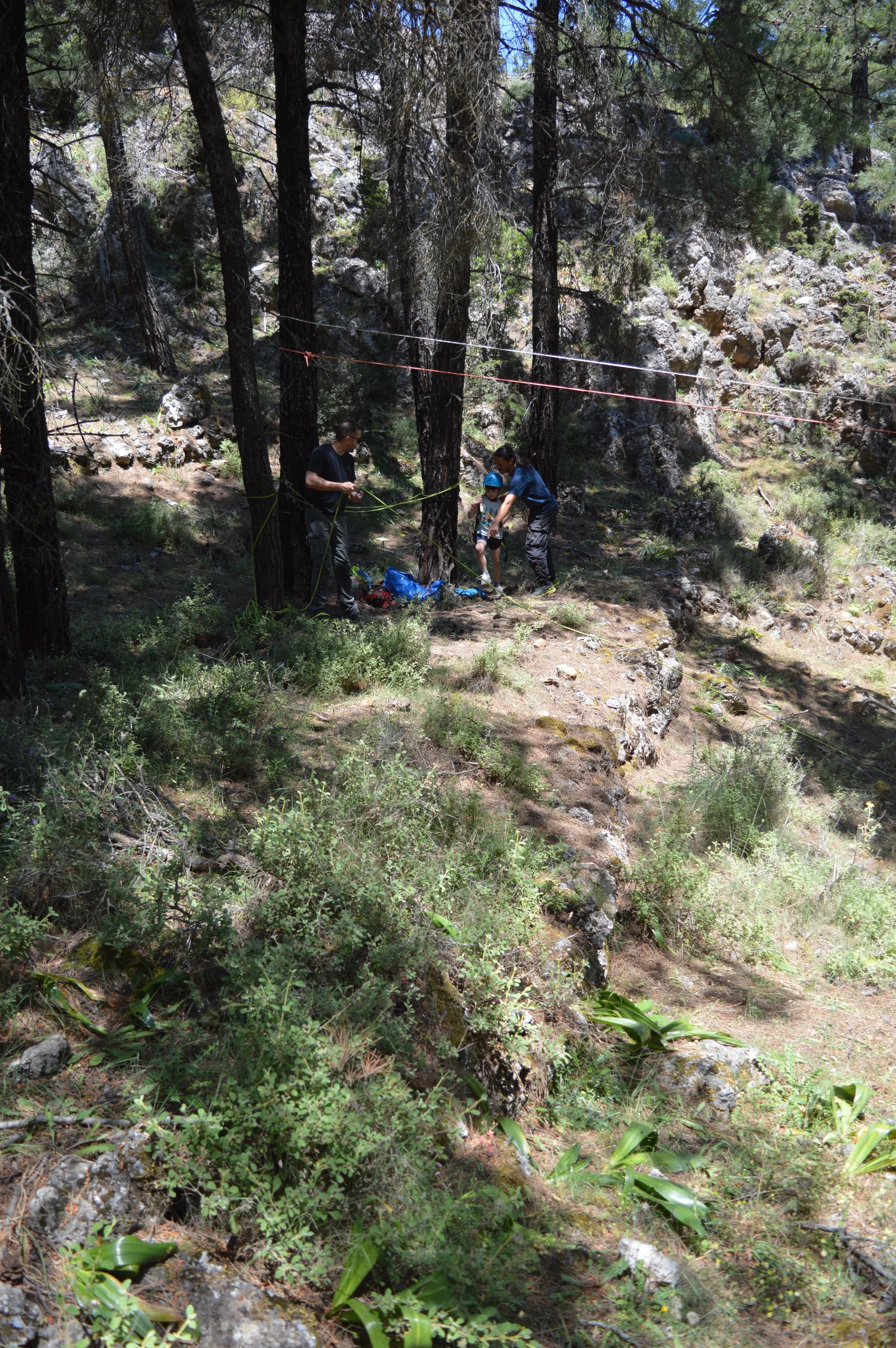
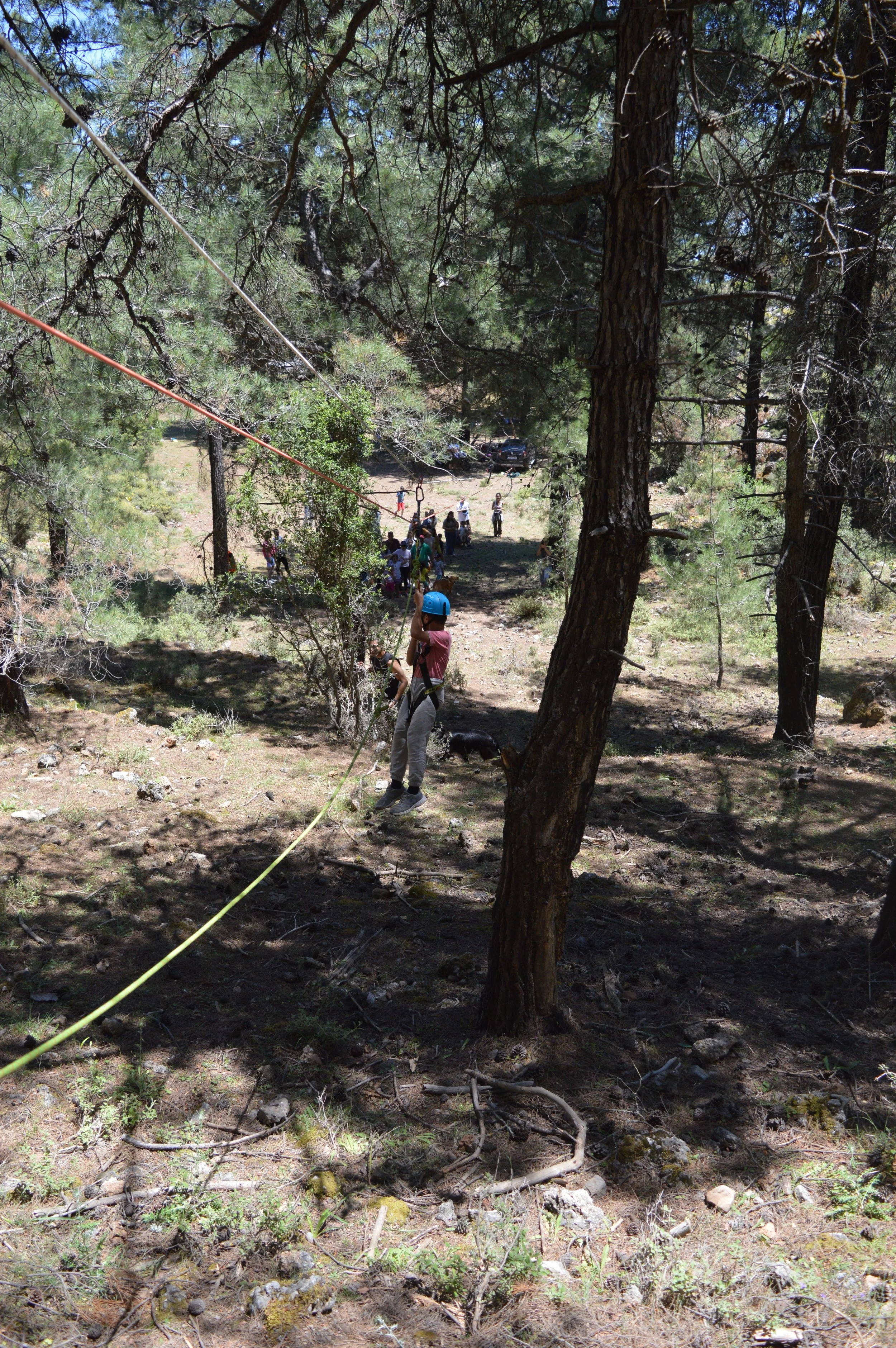
The forest includes pine trees, oaks, maples and other Mediterranean woodland species, together with shrubs and aromatic plants that contribute to its characteristic landscape.
The mixture of trees, rocky ground and open clearings creates different habitats for wildlife. A variety of birds and other animals can be found in the wider forest environment, while rare and endemic plants add to its ecological importance.
The woodland is especially attractive because of its contrast with the drier landscapes often associated with eastern Lasithi. During spring, the vegetation becomes particularly vibrant, while the forest shade offers a pleasant environment for walking during warmer months.
The surrounding mountains also protect parts of the area from the strong hot winds of summer and colder winter conditions.
Hiking the Ancient Minoan Paths
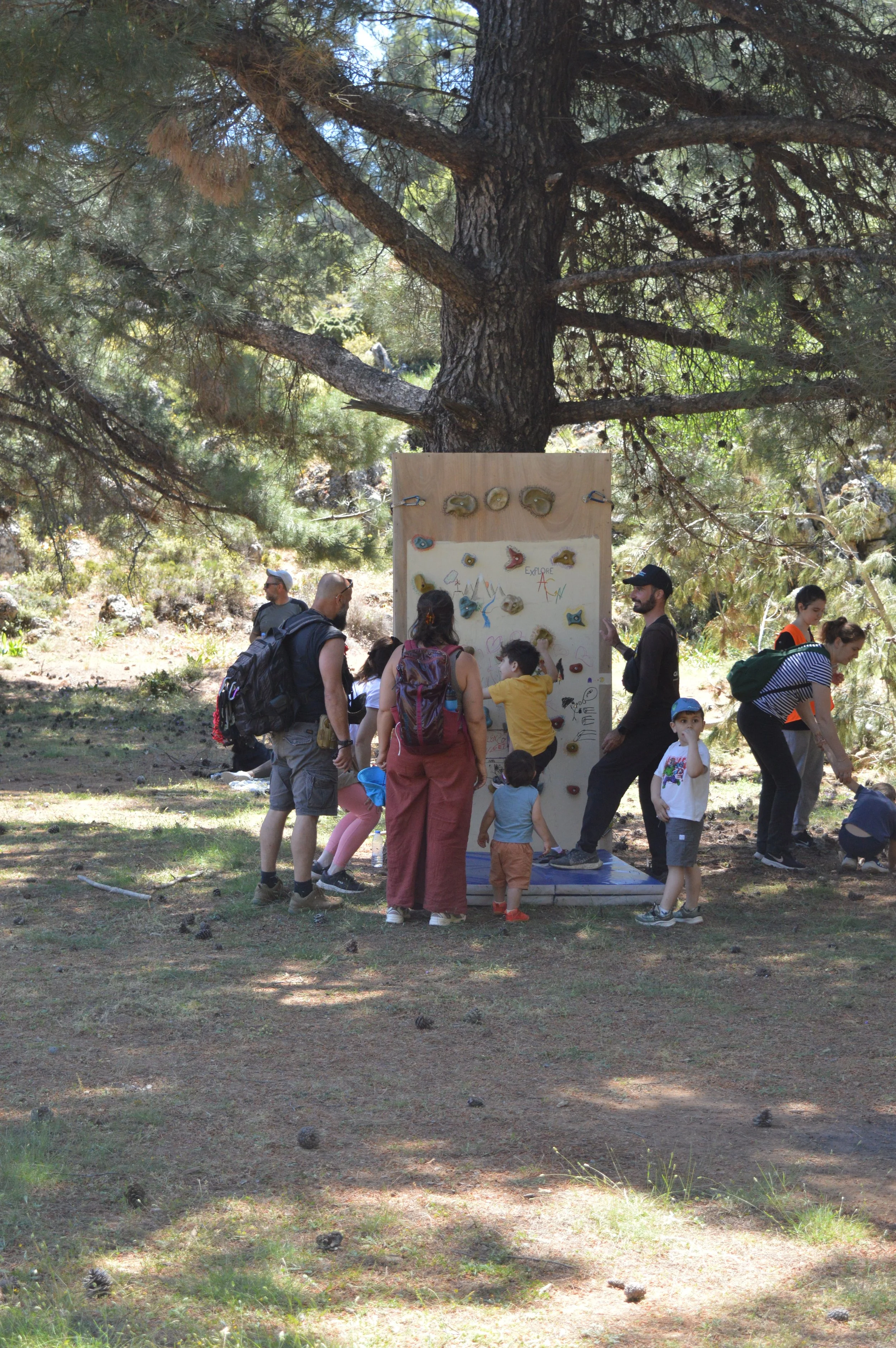
Exploring Kroustas Forest on foot is one of the best ways to appreciate its natural and archaeological character.
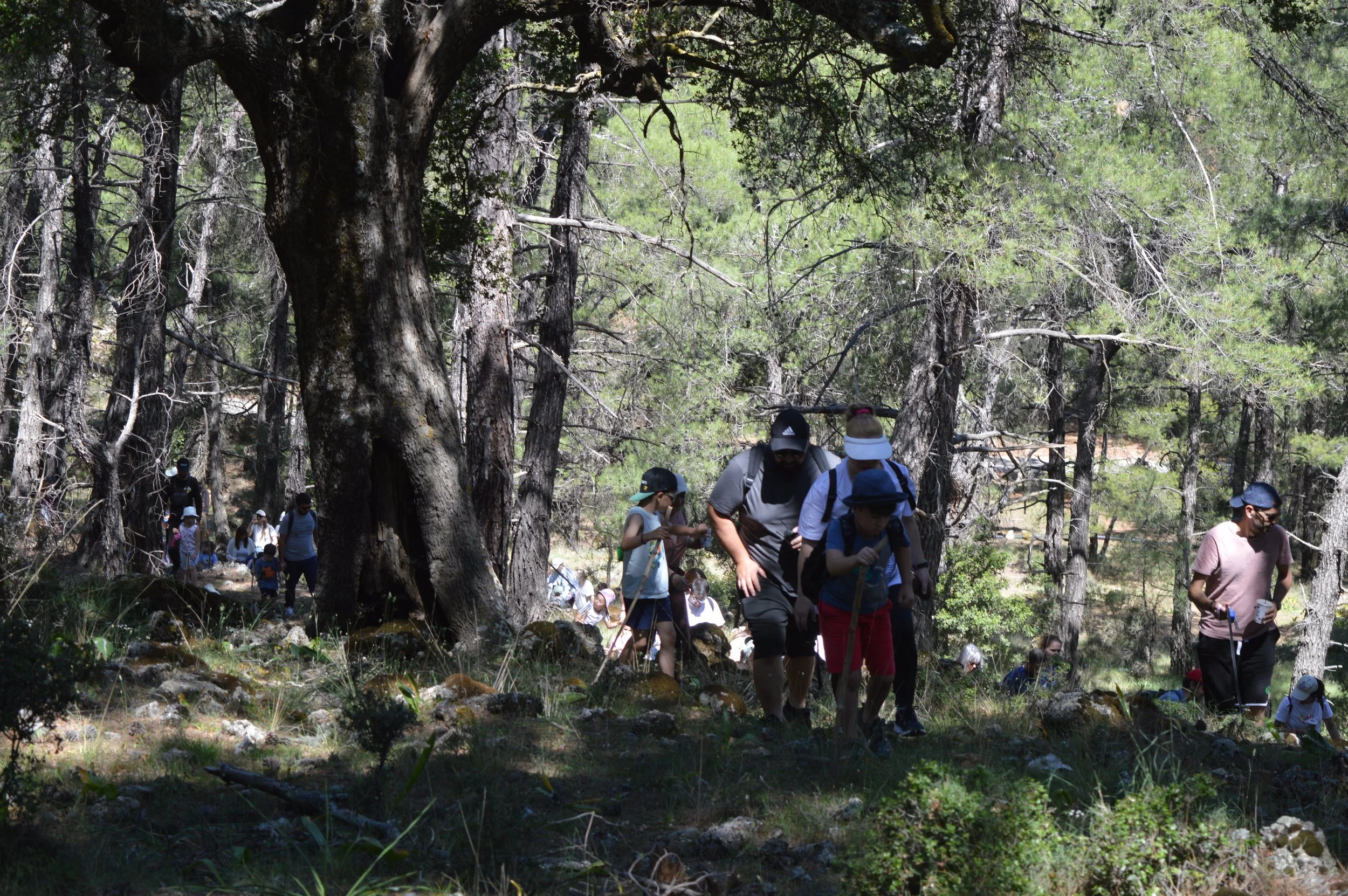
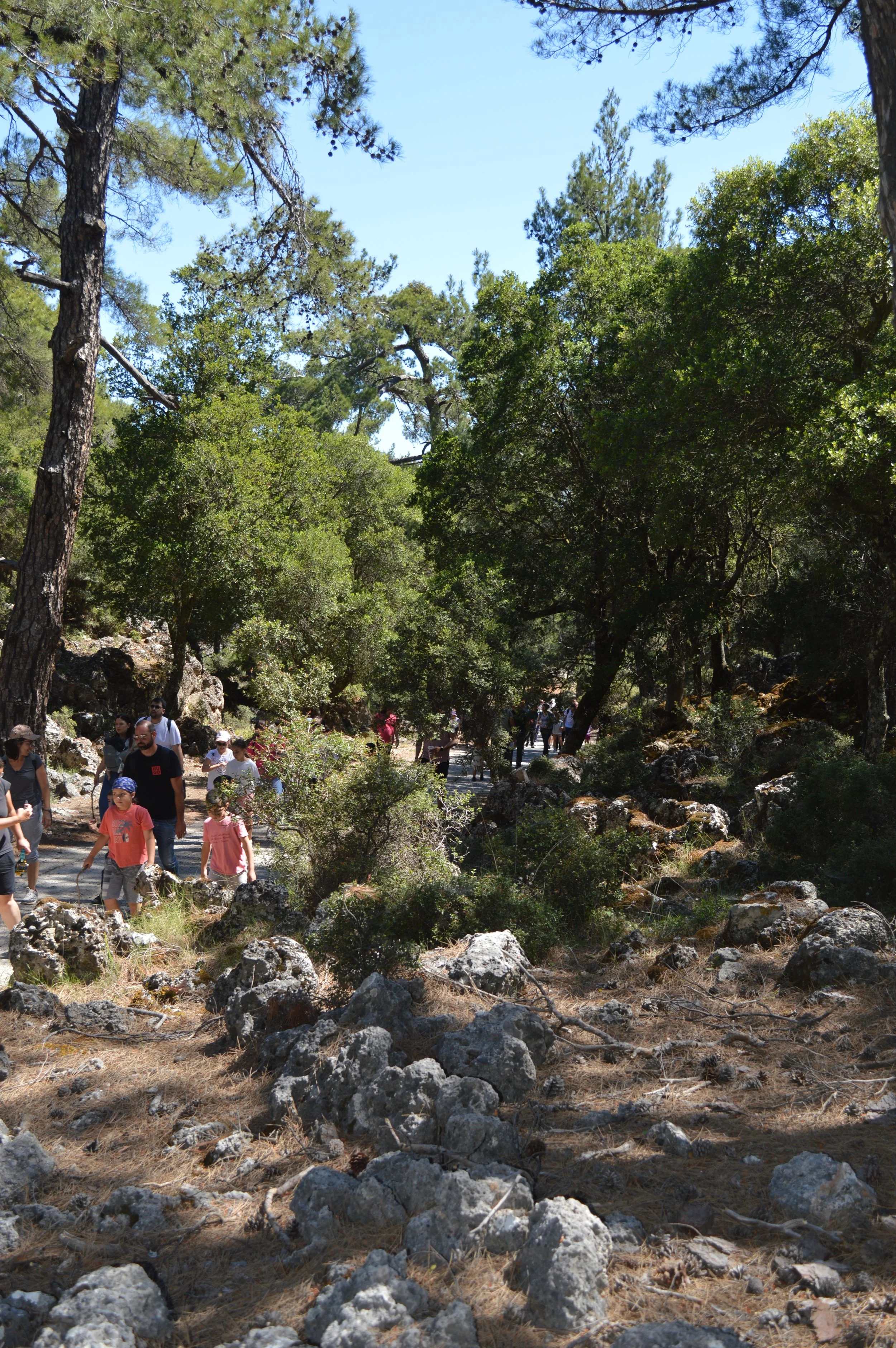
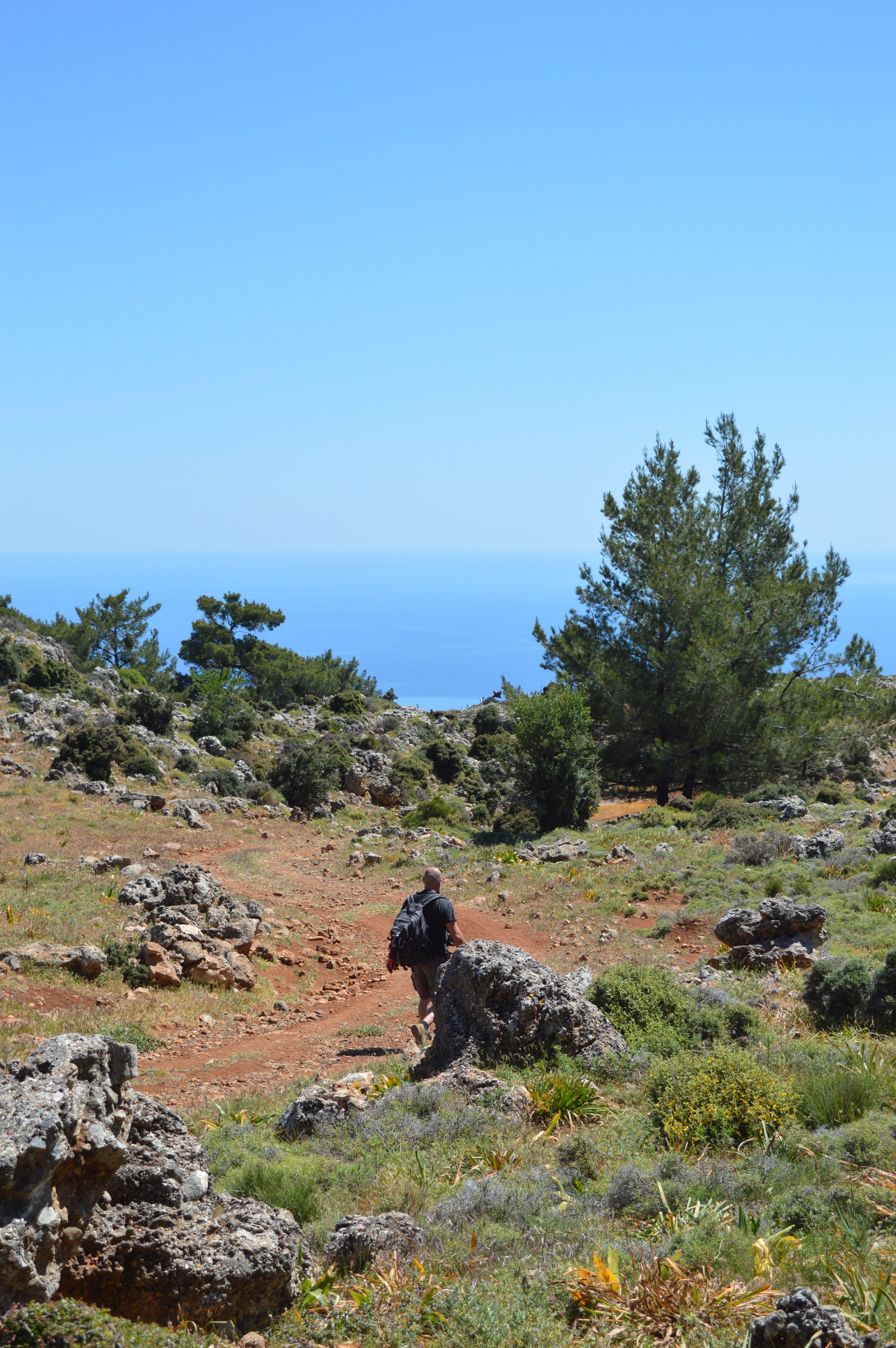
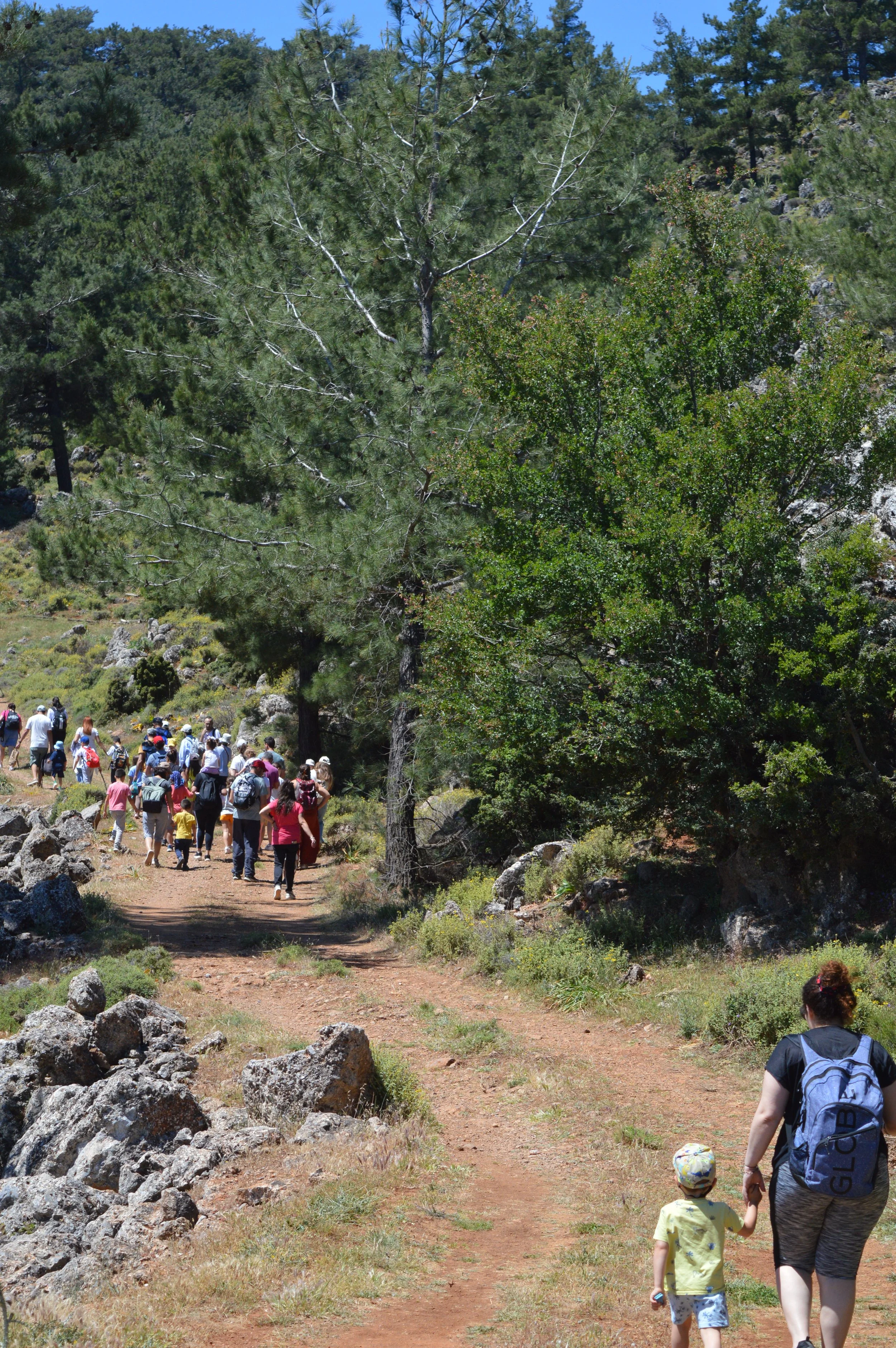
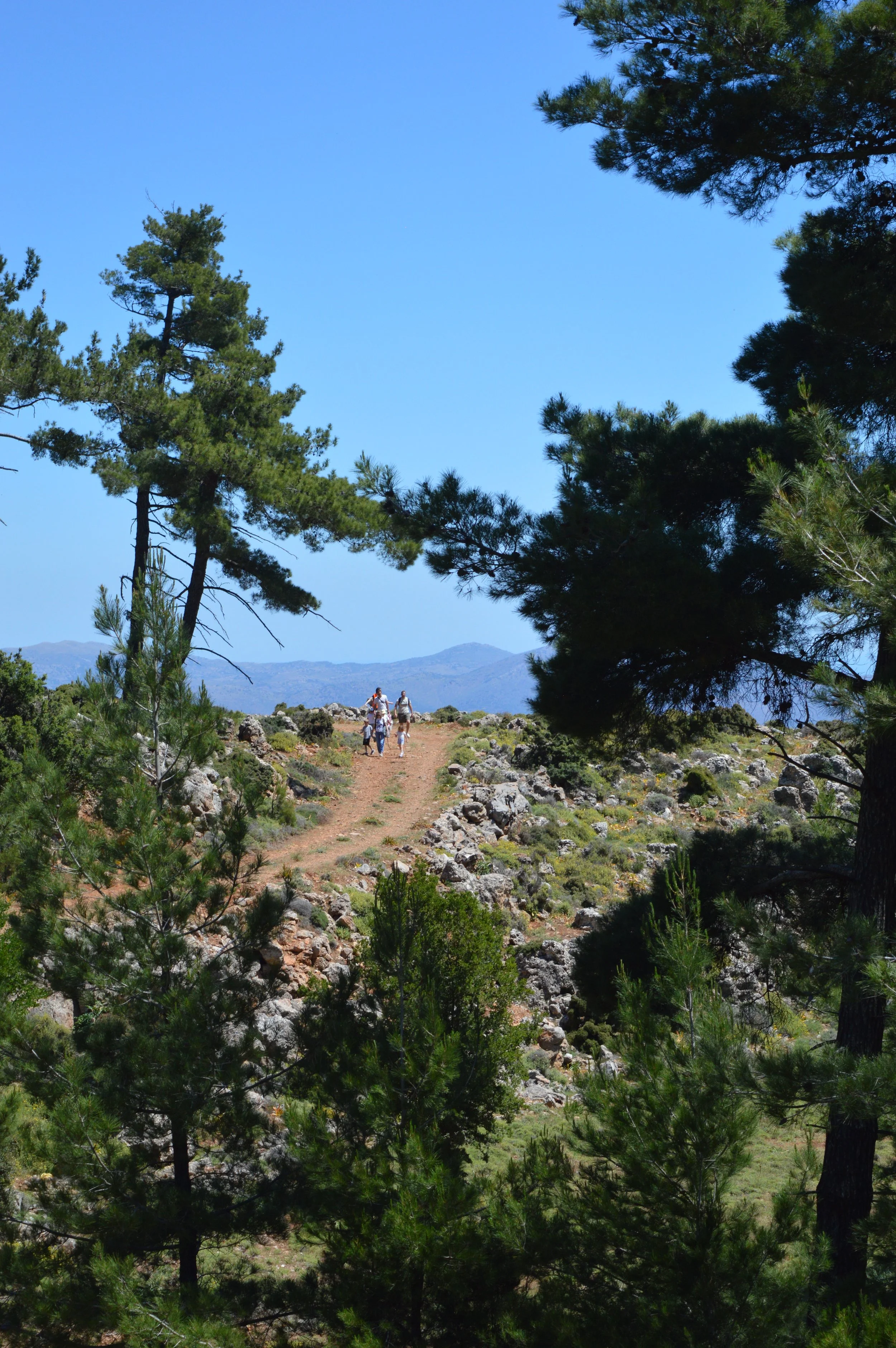
A network of walking routes crosses the woodland, passing through shaded areas, open clearings and sections where ancient stone structures can be seen. These paths provide access to parts of the forest that would otherwise remain hidden from visitors travelling only by road.
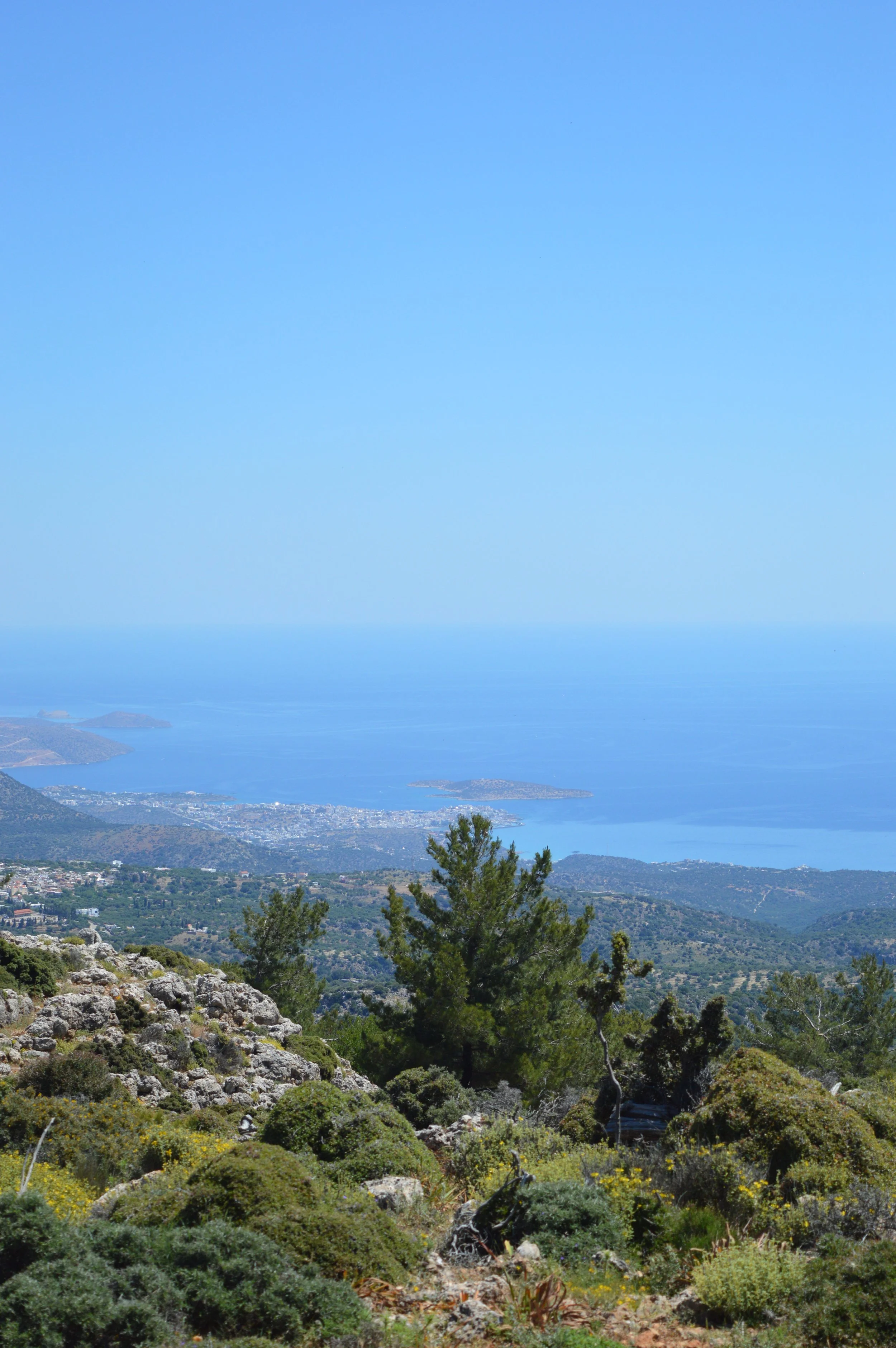
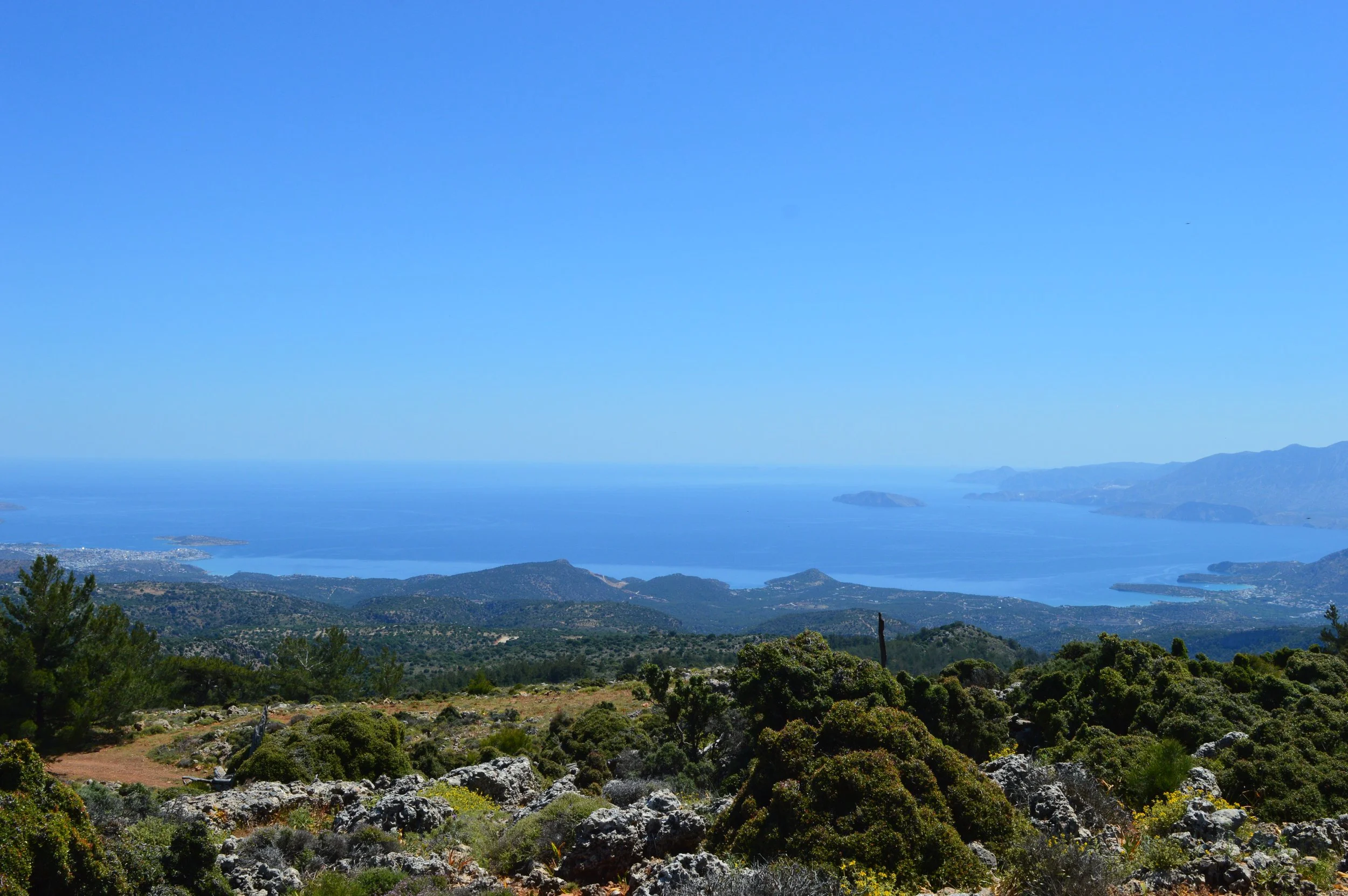
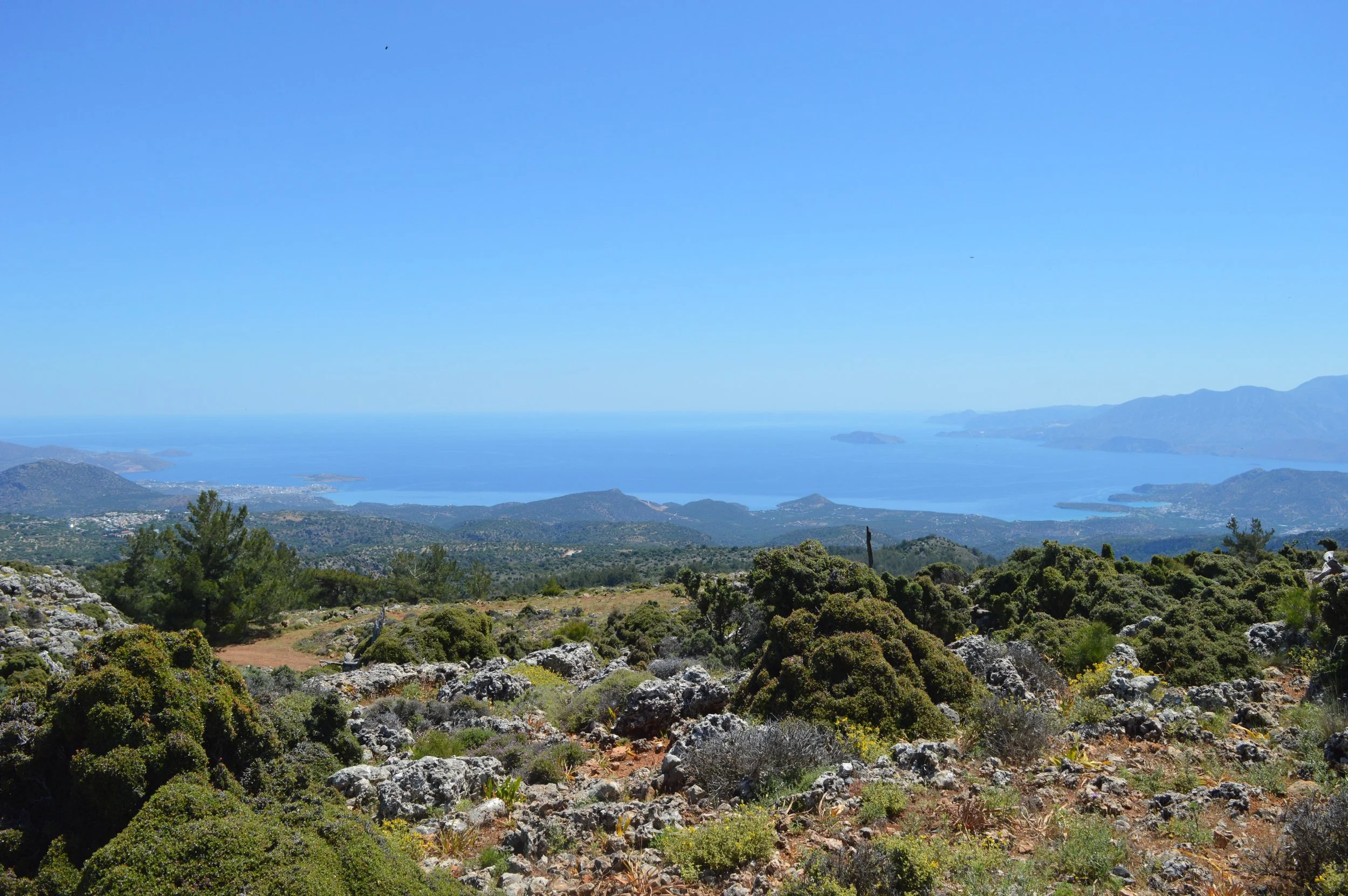
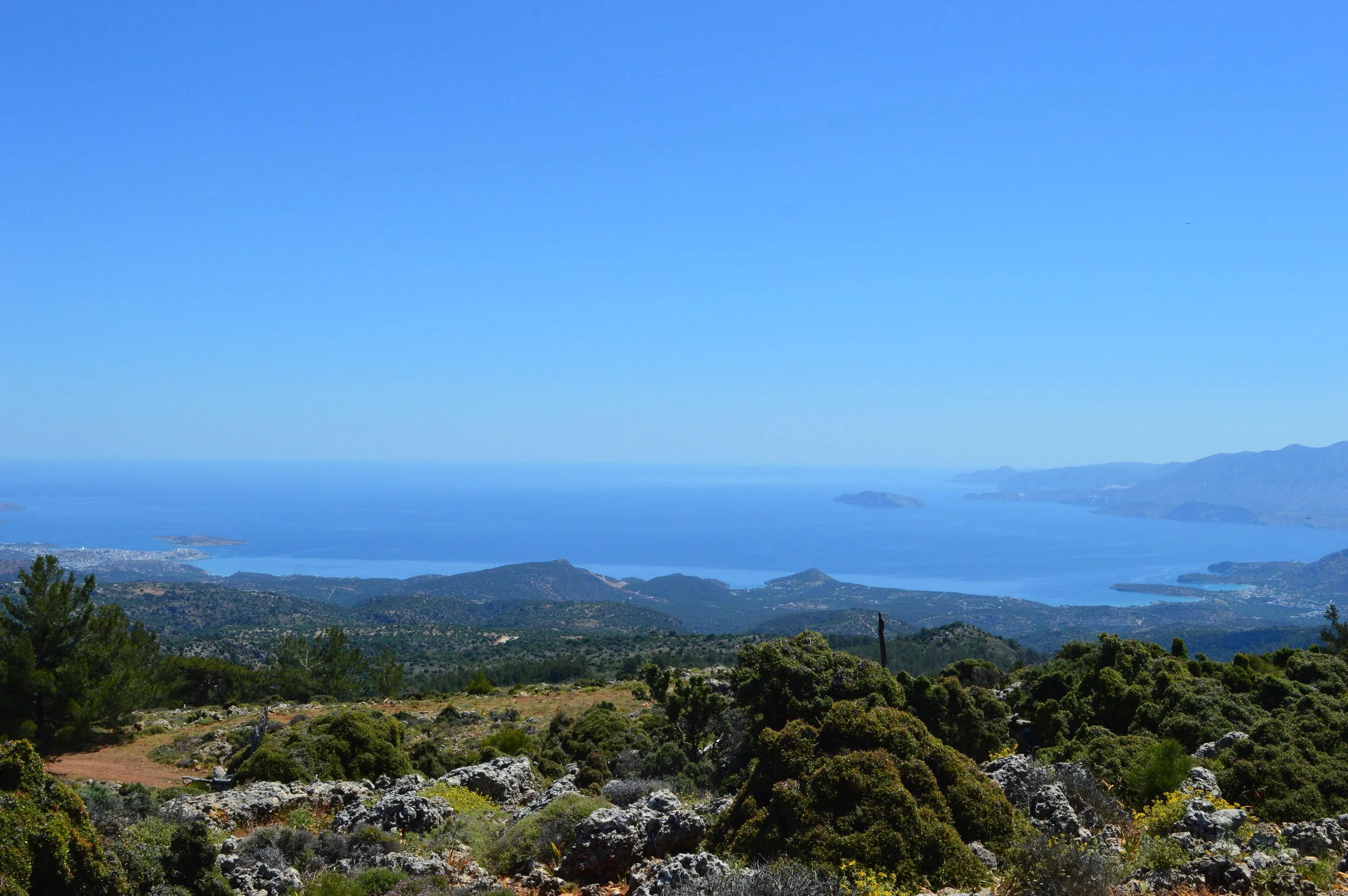
One of the most interesting routes follows the ancient Minoan path from Kroustas towards the higher mountain area of Korakia. Along the way, hikers can enjoy views across Mirabello Bay and, from suitable viewpoints, towards both the Aegean and Libyan seas.
The routes vary in length and difficulty. Some walks are relatively short, while longer excursions require several hours and a good level of physical preparation.
The forest is a particularly rewarding destination for visitors interested in combining hiking with cultural discovery. Rather than simply following a trail through the trees, walkers have the opportunity to encounter the archaeological remains of a landscape that was already being used thousands of years ago.
For visitors who prefer to explore with a local guide, Explore Agios Nikolaos offers guided hiking experiences in Kroustas Forest.
Views Across Mirabello Bay and Eastern Crete
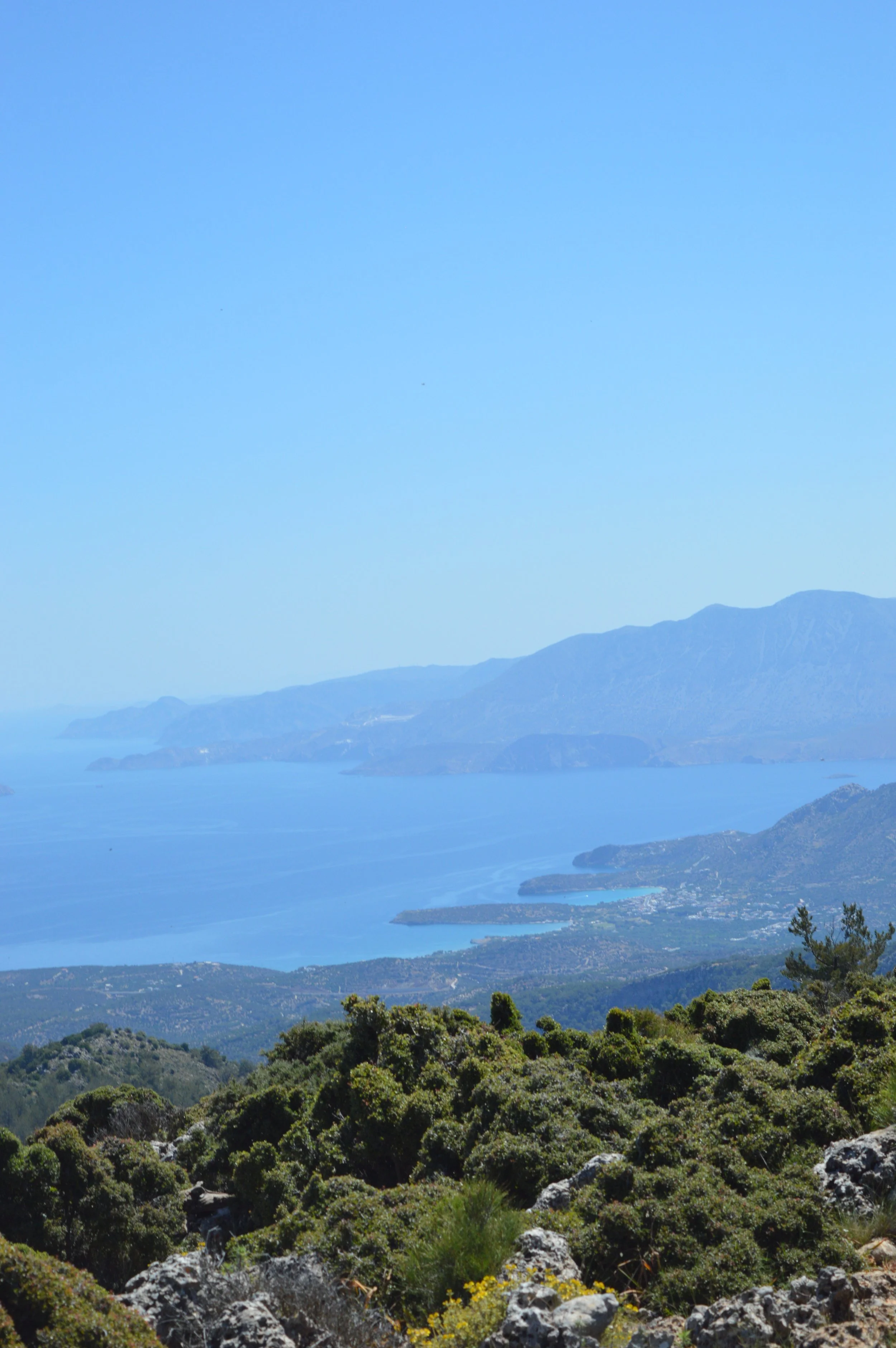
Although much of Kroustas Forest is covered by trees, the landscape also opens up at several points to reveal impressive views of the surrounding mountains and coastline.
From higher sections of the forest, visitors can enjoy views towards Mirabello Bay and the northern coast of Lasithi. On clear days, the visibility extends across a wide part of the surrounding region.
The contrast between the woodland, the mountain slopes and the distant sea makes the area particularly attractive for hikers who enjoy varied landscapes.
The higher elevation also creates a different atmosphere from the coastal destinations around Agios Nikolaos. Even during the summer months, temperatures can be more comfortable beneath the trees and along the mountain paths.
Best Time to Visit Kroustas Minoan Forest
Kroustas Forest can be explored throughout the year, although each season offers a different experience.
Spring: One of the most attractive periods for hiking. The woodland becomes greener, wild plants and flowers appear, and temperatures are generally pleasant for longer walks.
Summer: The forest provides valuable shade and a cooler environment than the coast. It is a good option for visitors looking for an outdoor activity away from the summer heat, although drinking water and sun protection remain essential.
Autumn: A particularly pleasant season for walking, with milder temperatures and changing colours across the woodland. The paths can be more comfortable for longer excursions.
Winter: The forest has a quieter atmosphere, but weather conditions in the mountains can change quickly. Rain, low temperatures and slippery ground may affect the trails.
Spring and autumn are especially recommended for visitors planning longer hikes and wishing to explore the archaeological remains.
Practical Information Before Visiting
Kroustas Minoan Forest is a natural and archaeological landscape rather than a fully developed national park with extensive visitor facilities.
Before visiting, consider the following:
Wear proper hiking shoes with good grip, particularly on rocky and uneven sections.
Carry sufficient drinking water and snacks for longer walks.
Bring a map or use a reliable navigation system, as not every route is equally easy to follow.
Allow enough time if you plan to explore the archaeological remains along the trails.
Respect the ancient stone structures and avoid moving or climbing on unstable remains.
Stay on established paths and avoid disturbing wildlife.
Check weather conditions before starting, particularly during winter and after rainfall.
The difficulty of the walk depends on the route selected. Some organised hiking descriptions classify longer forest excursions as moderate, while other routes are more demanding. Visitors should choose a route appropriate to their experience and physical condition.
How to Get to Kroustas Minoan Forest
Kroustas Forest is situated in the mountains above the villages of Kroustas and Prina, in the municipality of Agios Nikolaos, Lasithi.
From Agios Nikolaos, follow the road towards Kritsa and continue in the direction of Kroustas village. From the village, local roads lead towards the forest and its hiking areas.
The journey from Agios Nikolaos usually takes approximately 25–35 minutes by car, depending on the chosen access point and road conditions.
Visitors can also reach the wider forest area from the Prina side. However, the precise starting point depends on the walking route selected.
A car is the most practical way to reach the forest. Before setting out, check the location of the intended trailhead and any available parking, as access points and road conditions may vary.
Places to Discover Nearby
Kroustas Forest can be combined with visits to several interesting villages and natural attractions in the wider Agios Nikolaos region.
Kroustas Village: A traditional mountain village known for its rural character and close connection with the surrounding forest. It is a natural starting point for exploring the woodland and its ancient paths.
Prina Village: Another traditional settlement near the forest, surrounded by olive groves and mountain scenery. Its peaceful atmosphere offers a glimpse of rural life in this part of Lasithi.
Kritsa: One of the best-known traditional villages in the region, famous for its narrow streets, local crafts, churches and traditional Cretan character.
Kritsa Gorge: A striking natural canyon near Kritsa, with impressive limestone formations and a hiking route through a narrow rocky landscape.
Katharo Plateau: A remote mountain plateau above Kritsa, known for its traditional rural landscape, archaeological interest and impressive mountain scenery.
Ancient Lato: One of the most important ancient cities of Crete, situated between Kritsa and Agios Nikolaos. Its archaeological remains and elevated position offer a fascinating insight into the history of the region.
Discover the Minoan Landscape of Eastern Crete
Kroustas Minoan Forest offers a distinctive experience for visitors who want to discover more than the familiar beaches and coastal villages of Crete.
Its woodland paths, ancient stone structures and mountain viewpoints reveal a landscape where nature and human history have remained closely connected for thousands of years.
Whether explored on a short walk or as part of a longer hiking excursion, the forest provides an opportunity to experience the archaeological heritage and natural beauty of Eastern Crete in an authentic mountain setting.