Limnakaros Plateau, Crete
Mountain Scenery, Shepherding & Hiking
Limnakaros Plateau, Crete – Mountain Scenery, Shepherding & Hiking
Introduction
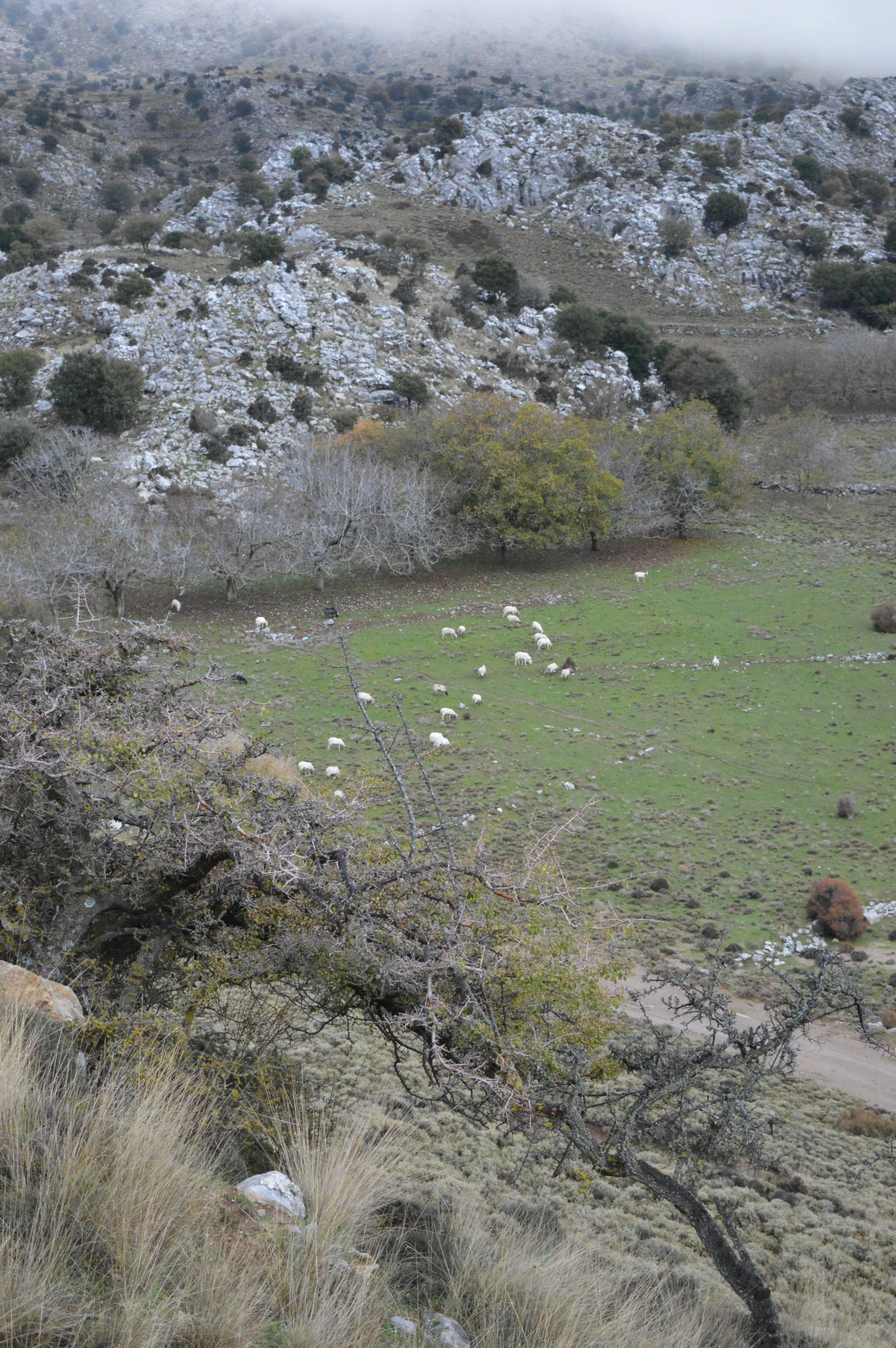
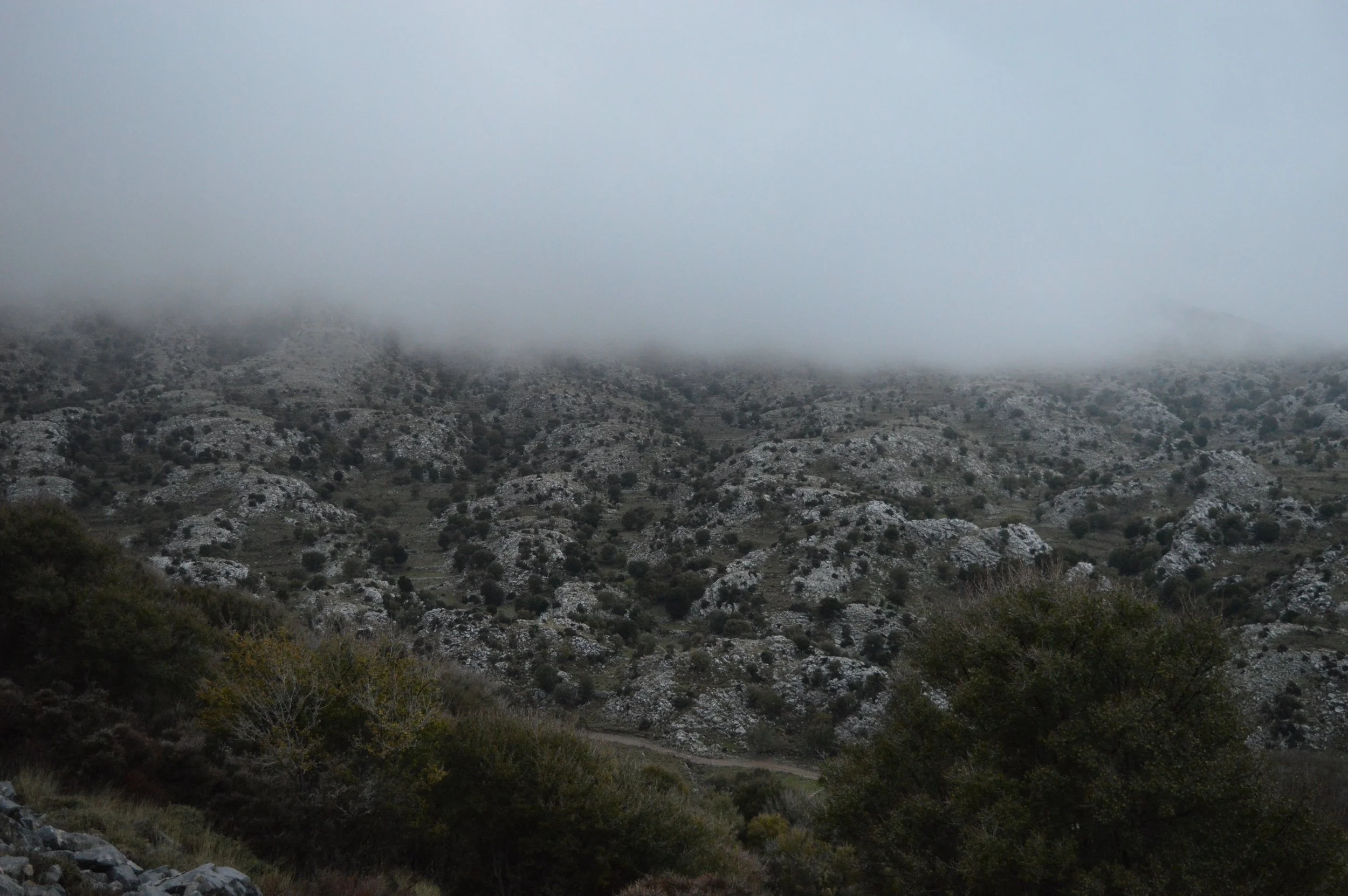
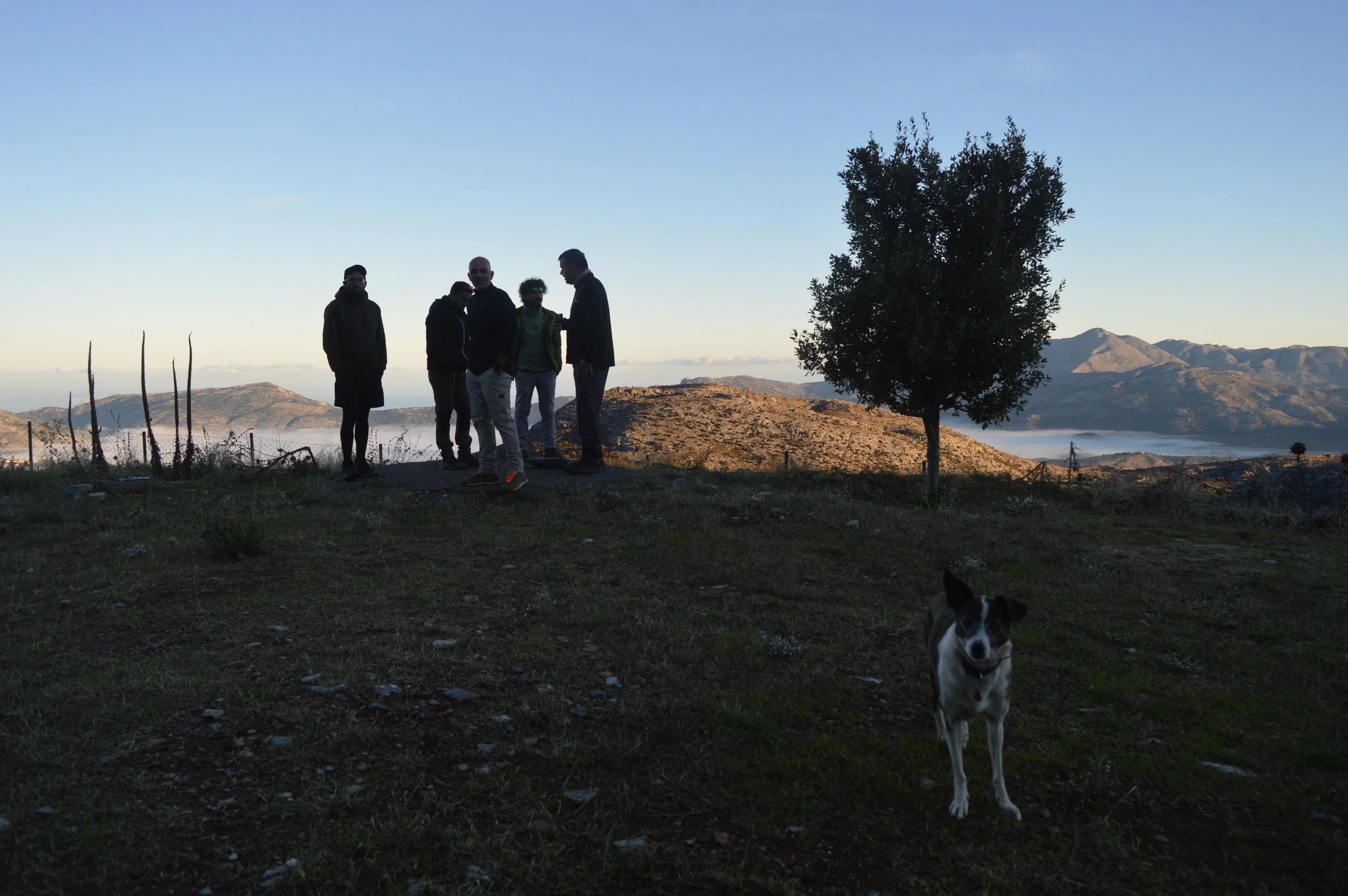
Situated high in the Dikti Mountains of Eastern Crete, Limnakaros Plateau is a peaceful mountain landscape at approximately 1,120 metres above sea level. Located south of the famous Lasithi Plateau, this smaller and less-visited upland basin offers a different experience of the Cretan countryside, with open grazing land, mountain peaks, traditional stone structures and scattered fruit trees.
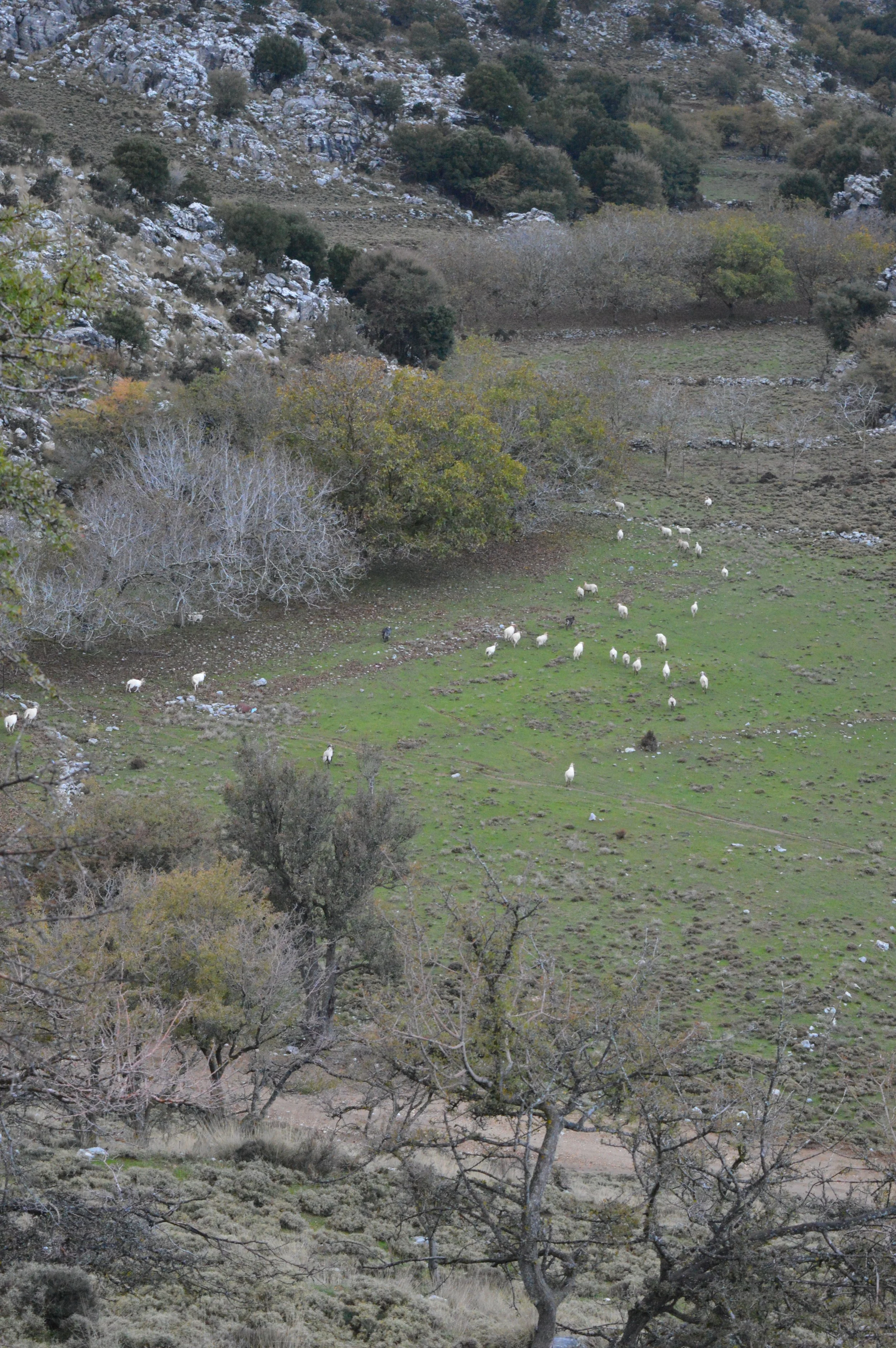
Surrounded by the impressive peaks of the Dikti range, Limnakaros has traditionally been connected with agriculture and seasonal livestock farming. Its fertile northern section once supported more intensive cultivation, while the wider plateau continues to serve as pastureland for local shepherds.
The area is also an important destination for hikers. The European E4 long-distance trail passes through Limnakaros, connecting the Lasithi Plateau with the higher mountain terrain and the landscapes towards Selakano Forest.
For visitors looking to explore the quieter mountain regions of Crete, Limnakaros offers an opportunity to discover traditional pastoral life and enjoy the natural scenery of the Dikti Mountains.
The Mountain Landscape of Limnakaros
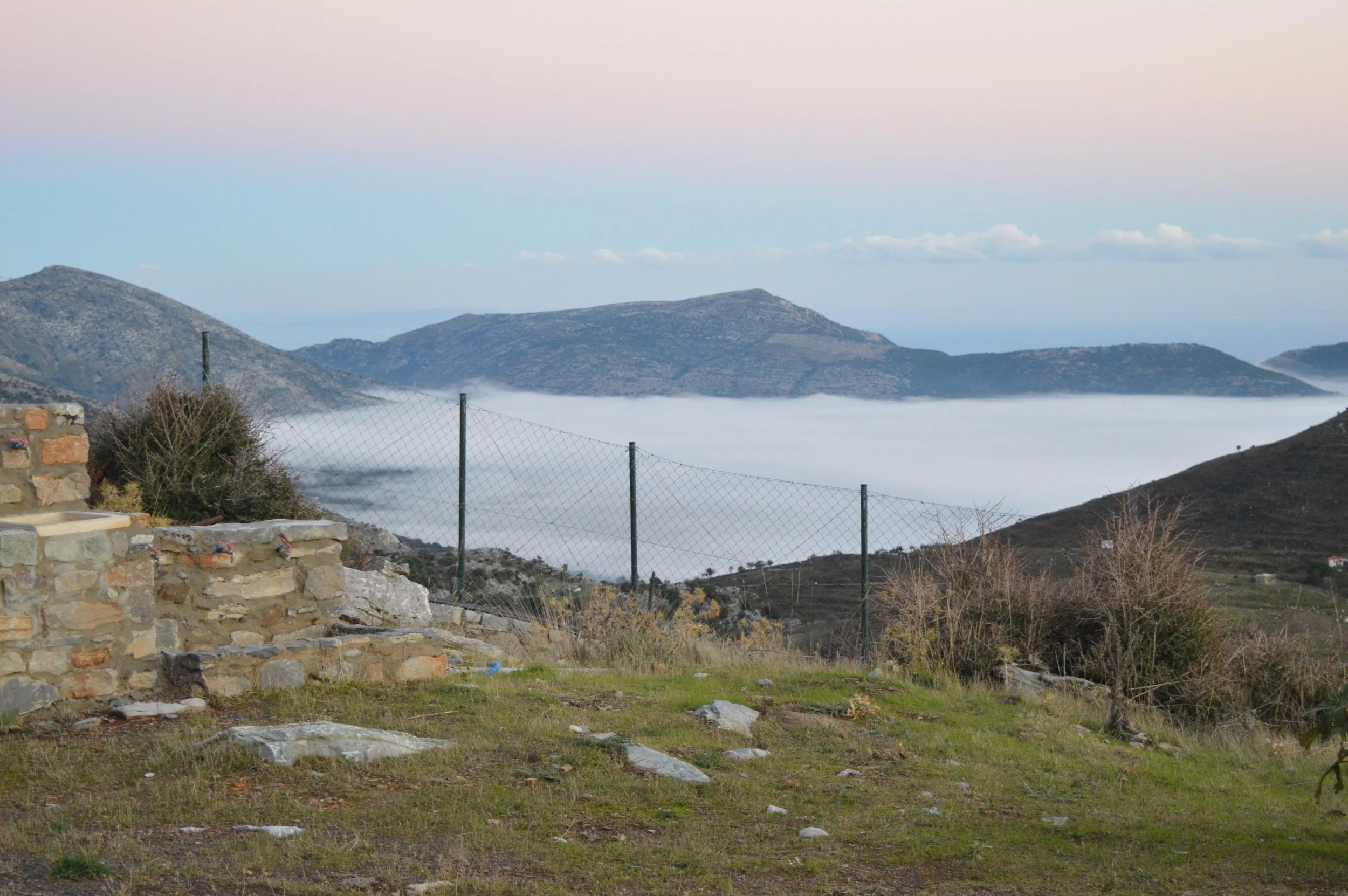
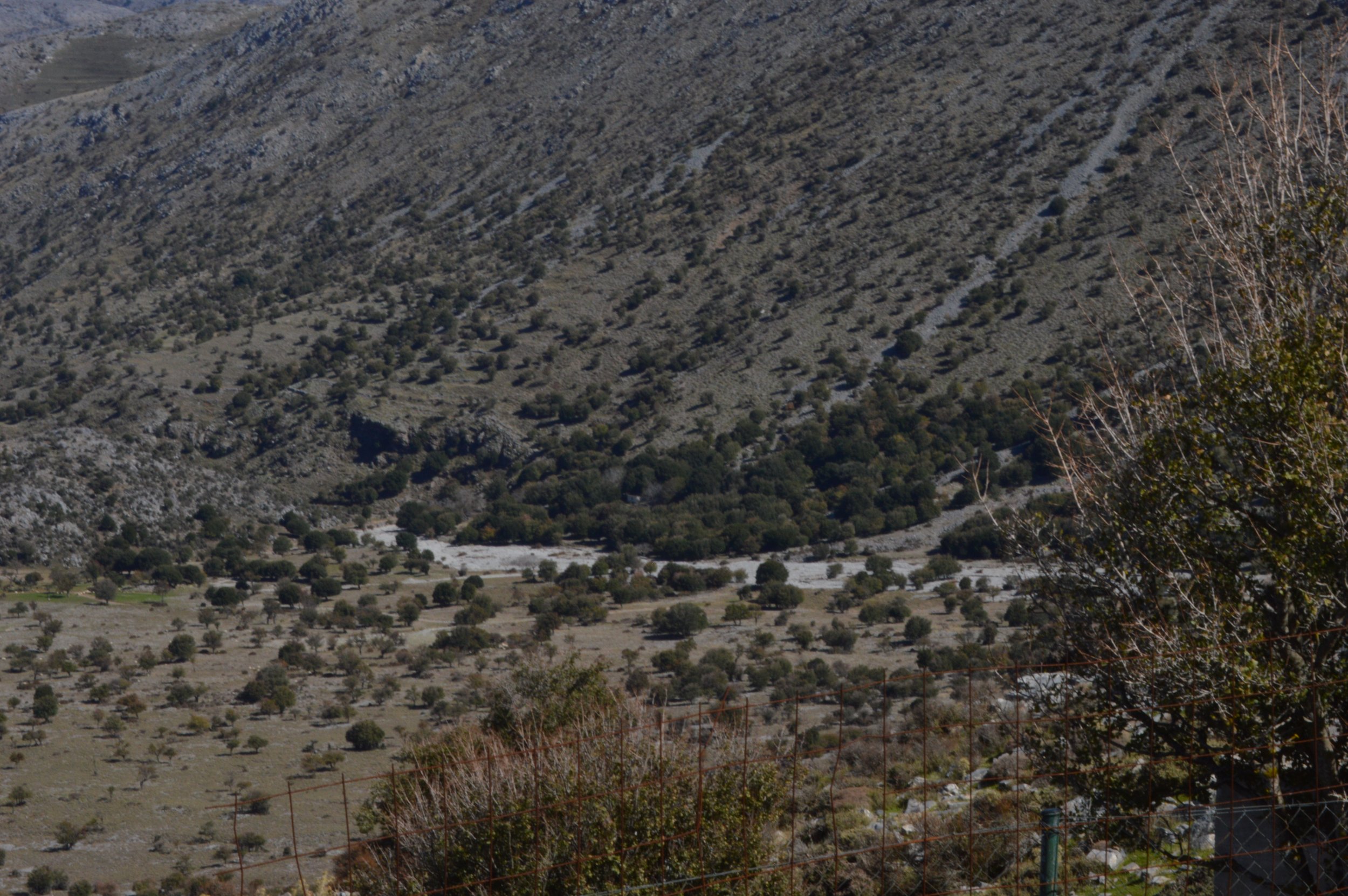
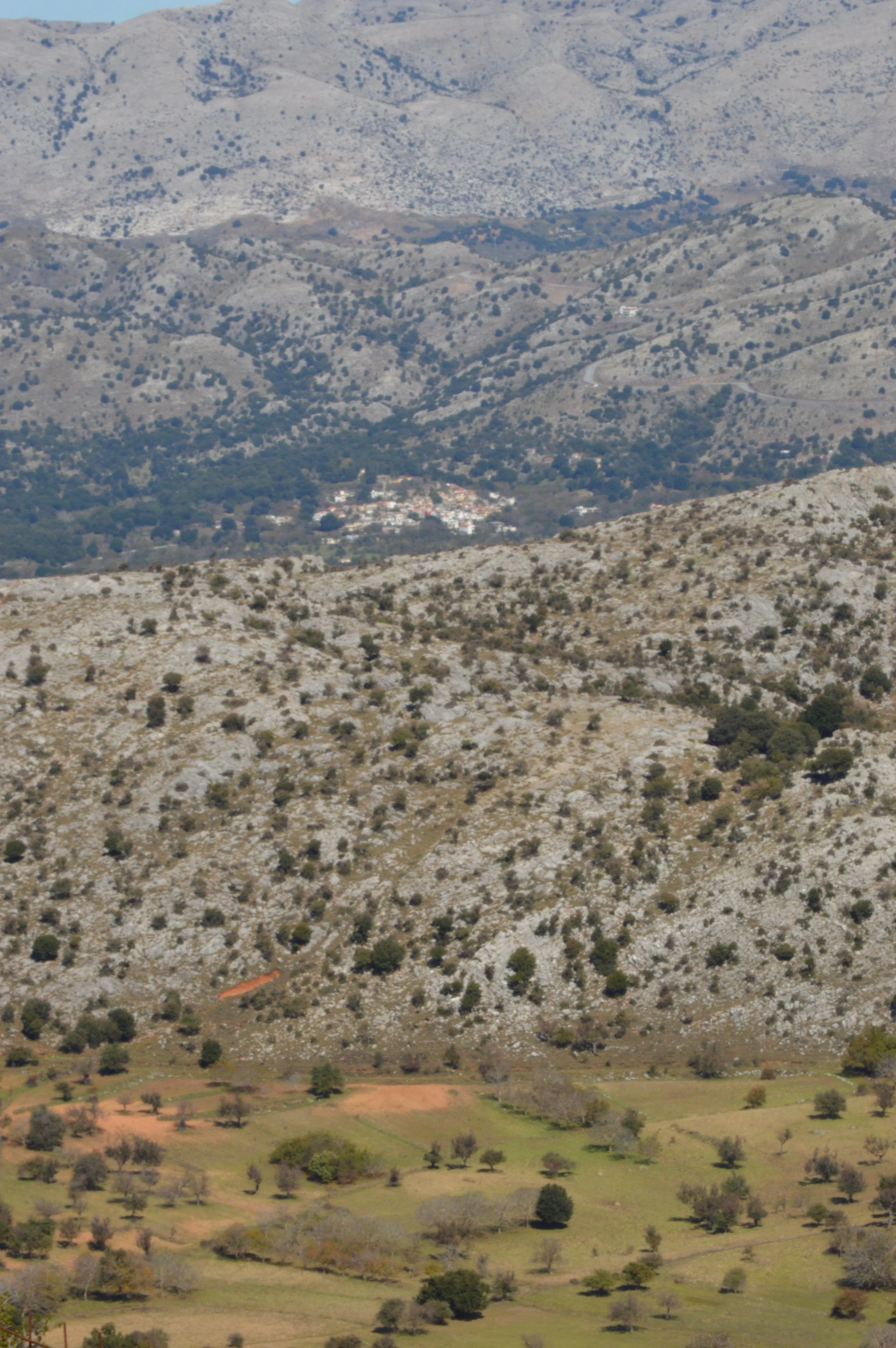
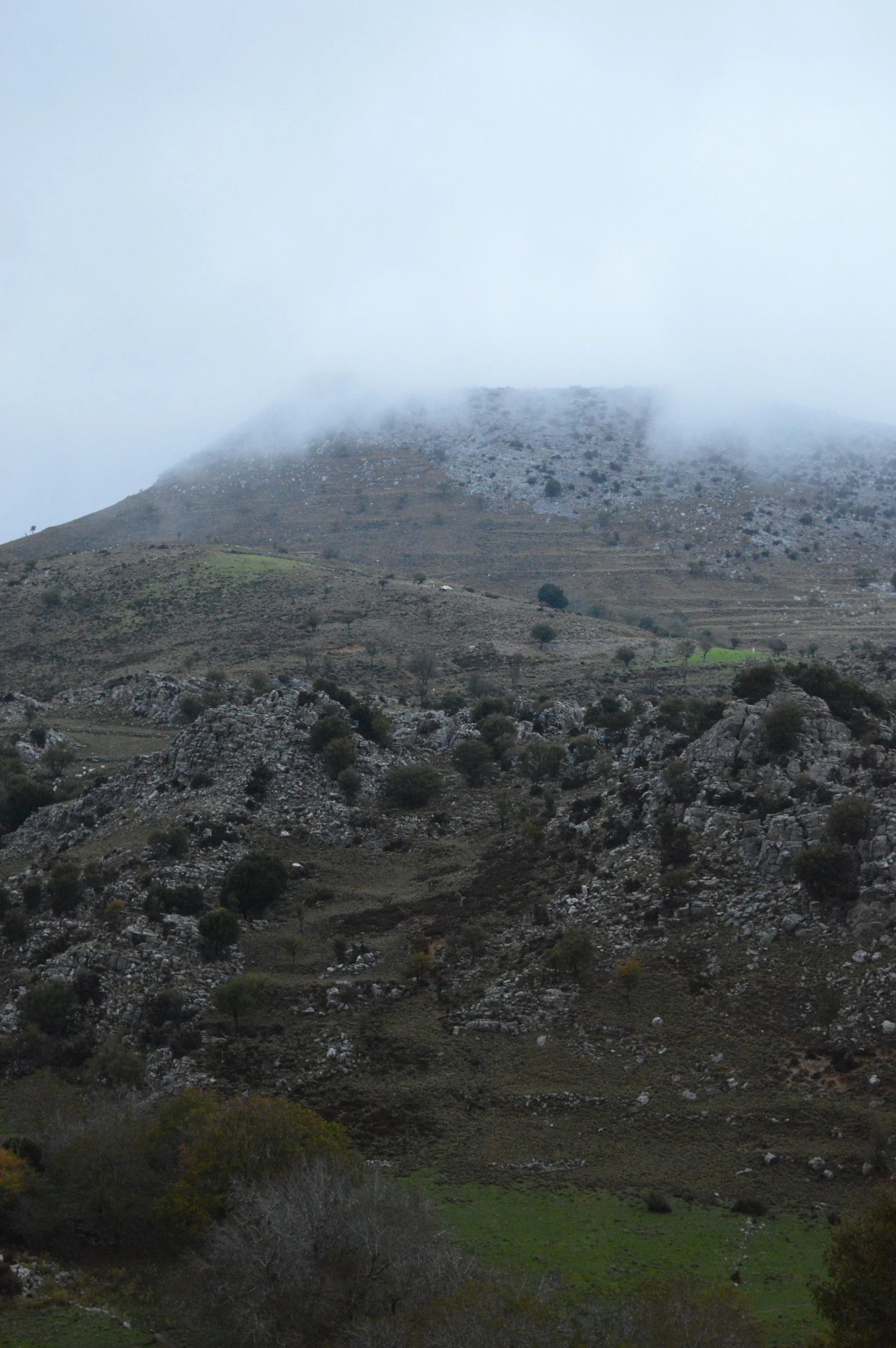
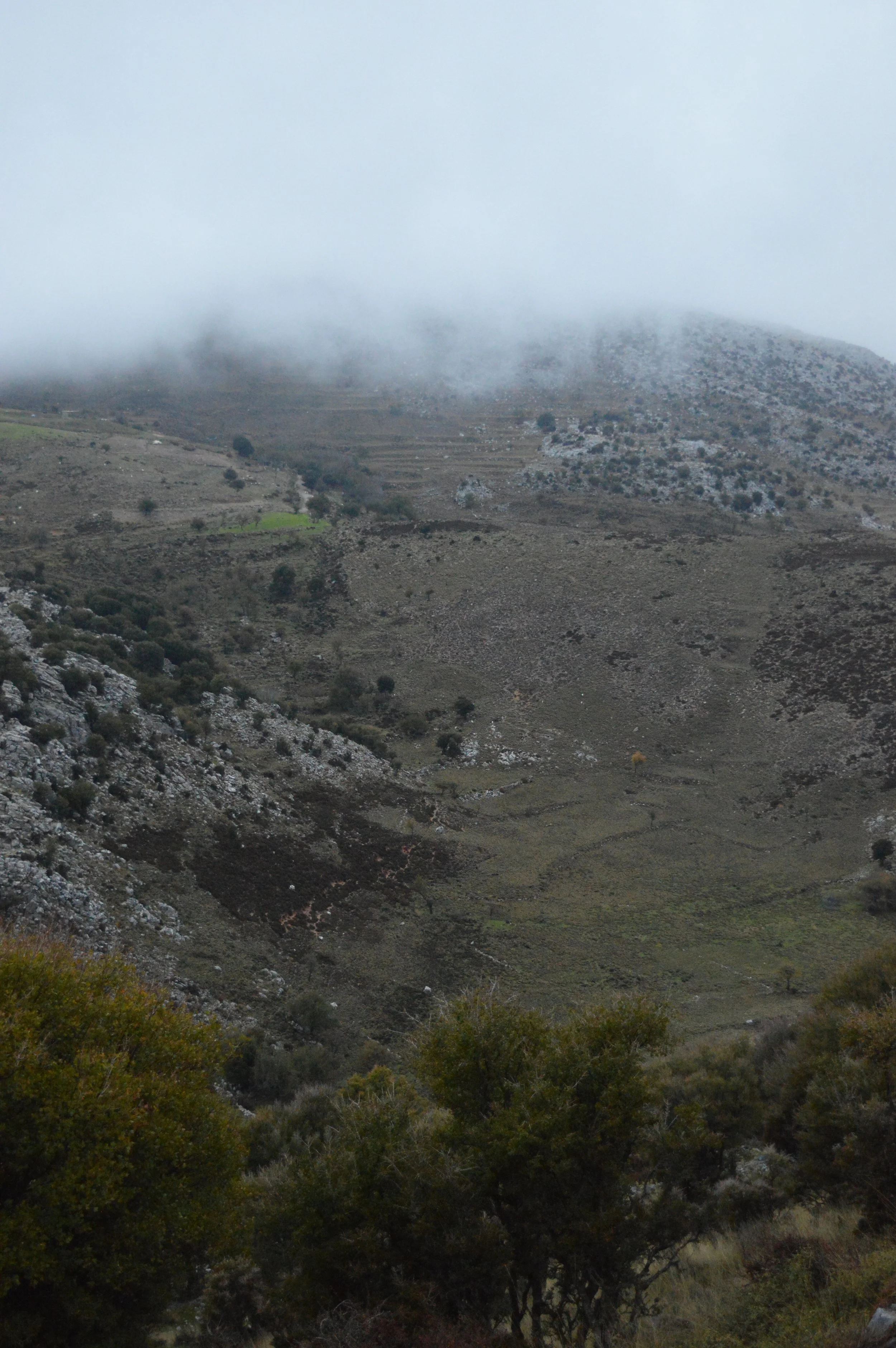
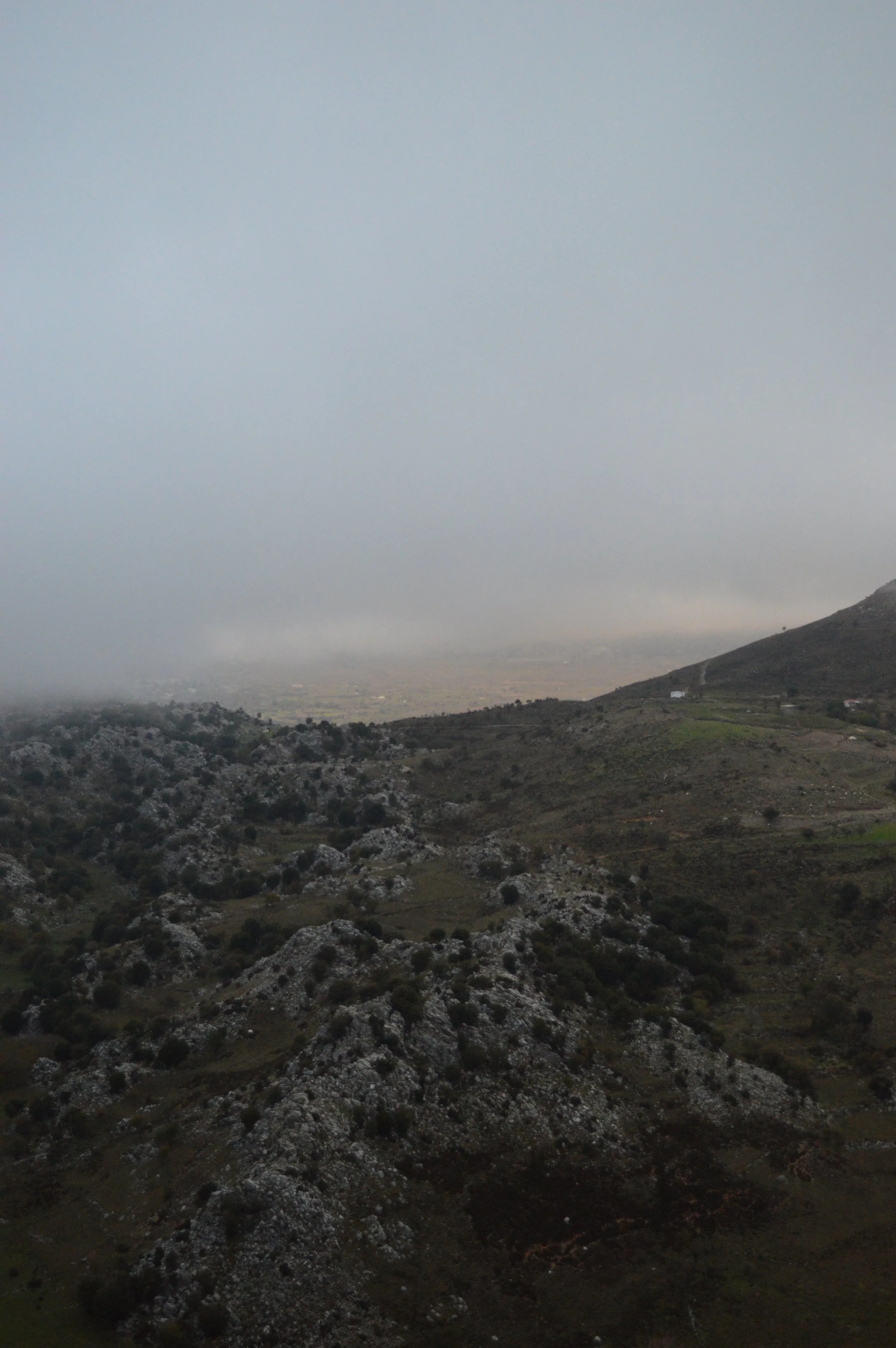
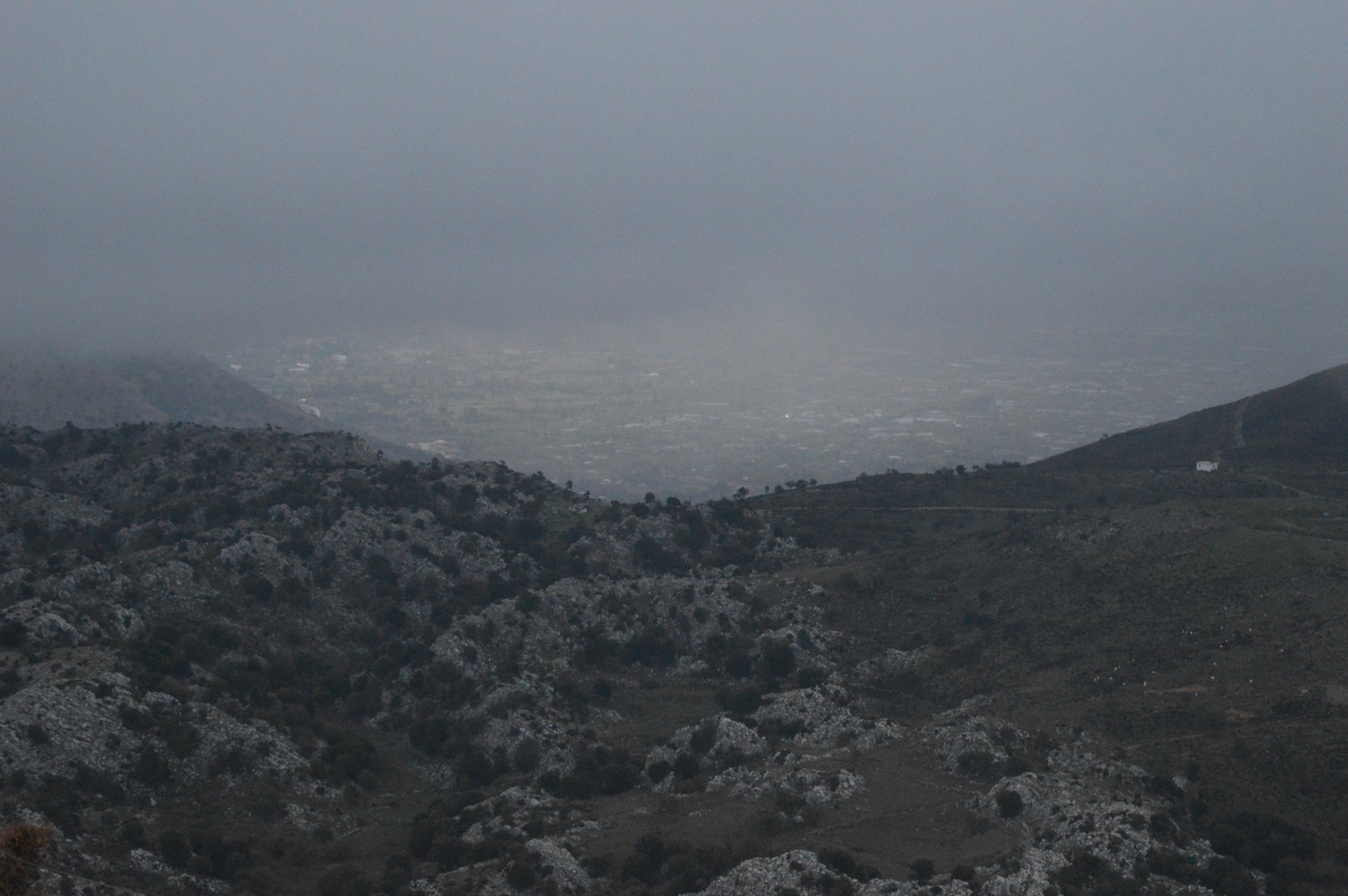
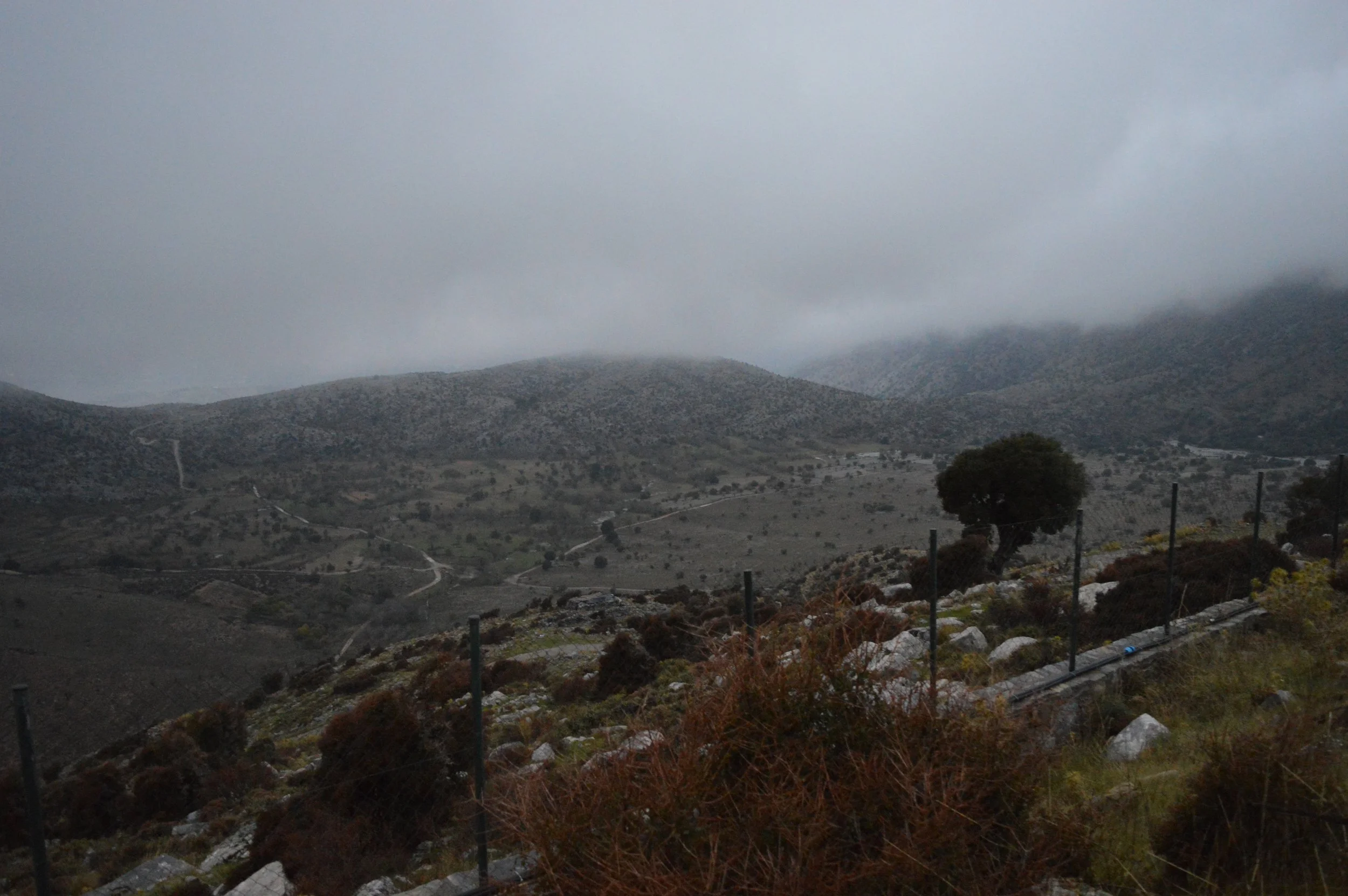
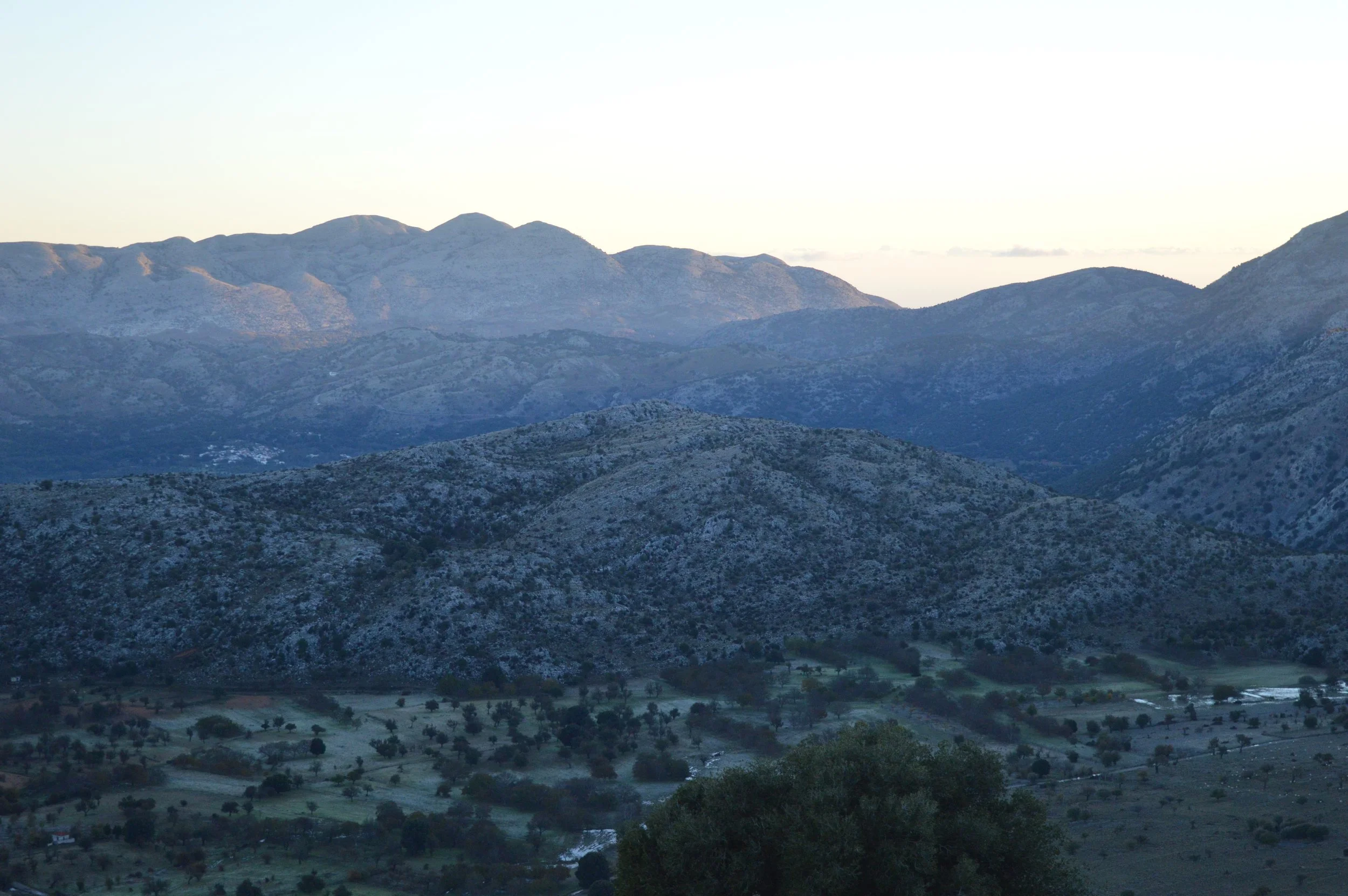
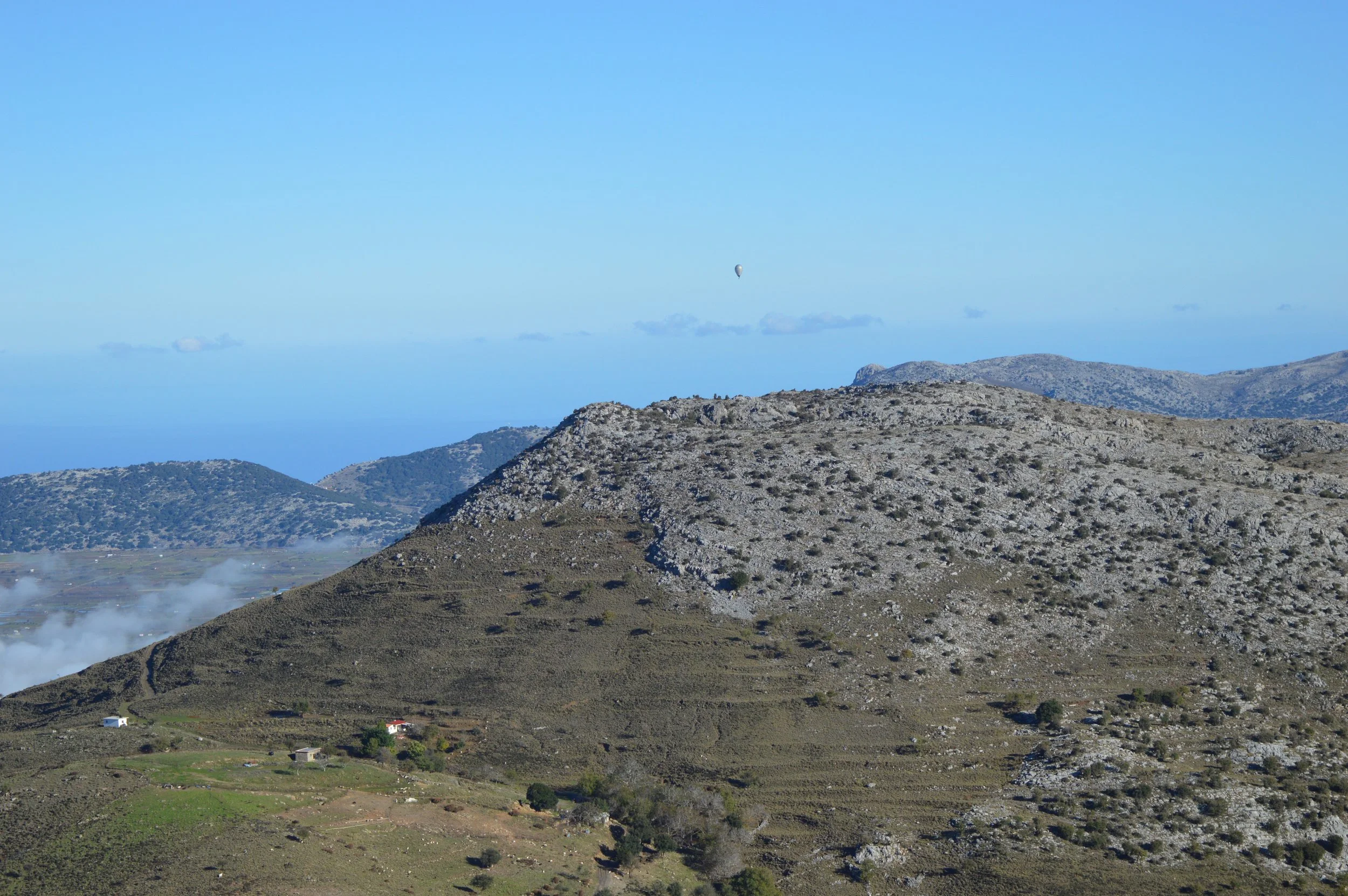
Limnakaros lies on the northern slopes of the Dikti mountain range, at an elevation of approximately 1,120 metres. Its distinctive triangular shape extends towards the higher mountain terrain, with the surrounding peaks creating a dramatic natural setting.
To the southeast rises Mount Spathi, the highest summit of the Dikti range, reaching approximately 2,148 metres. The western side is dominated by the slopes around Strovili, while Megali Korfi rises to the north.
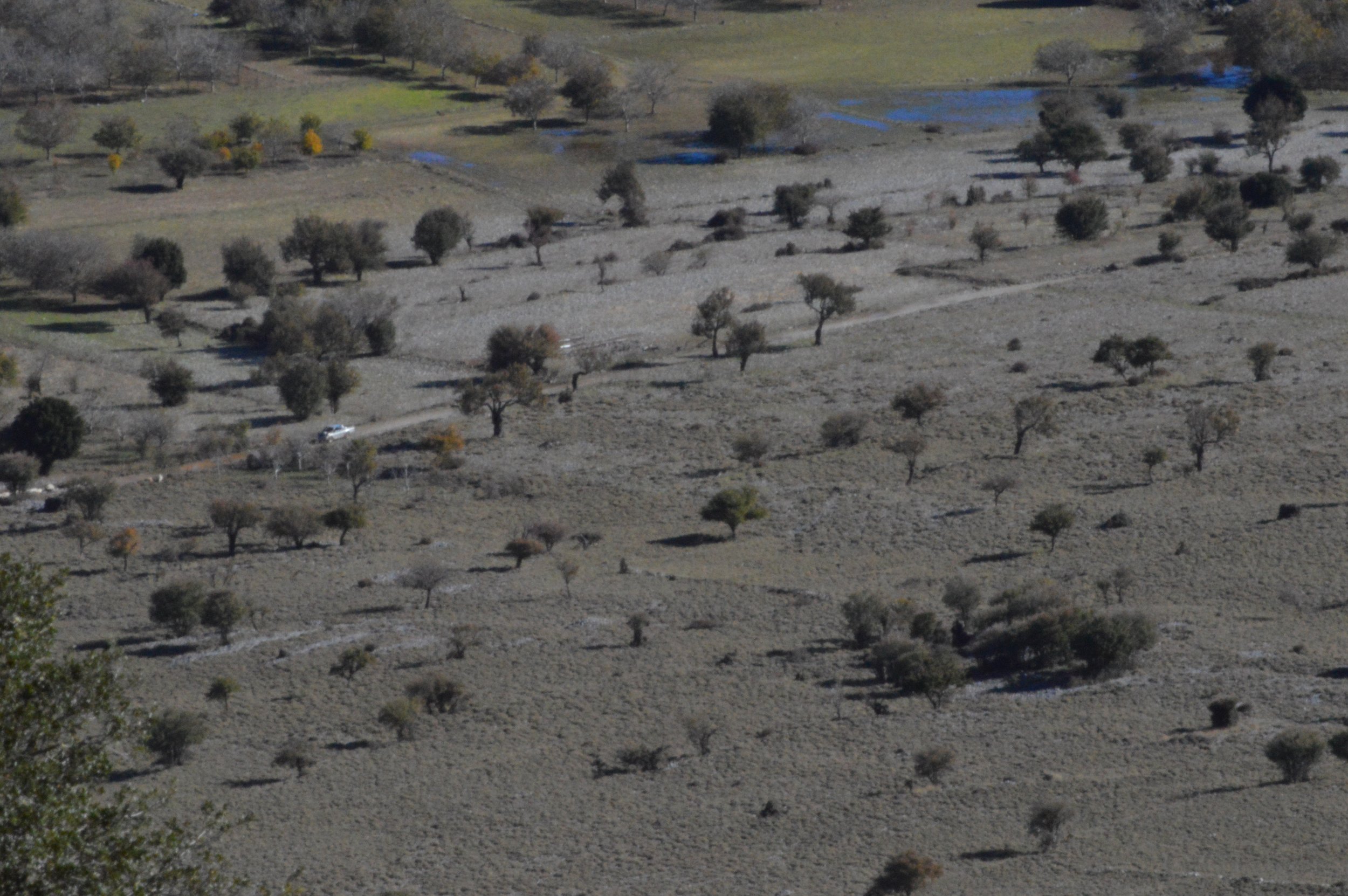
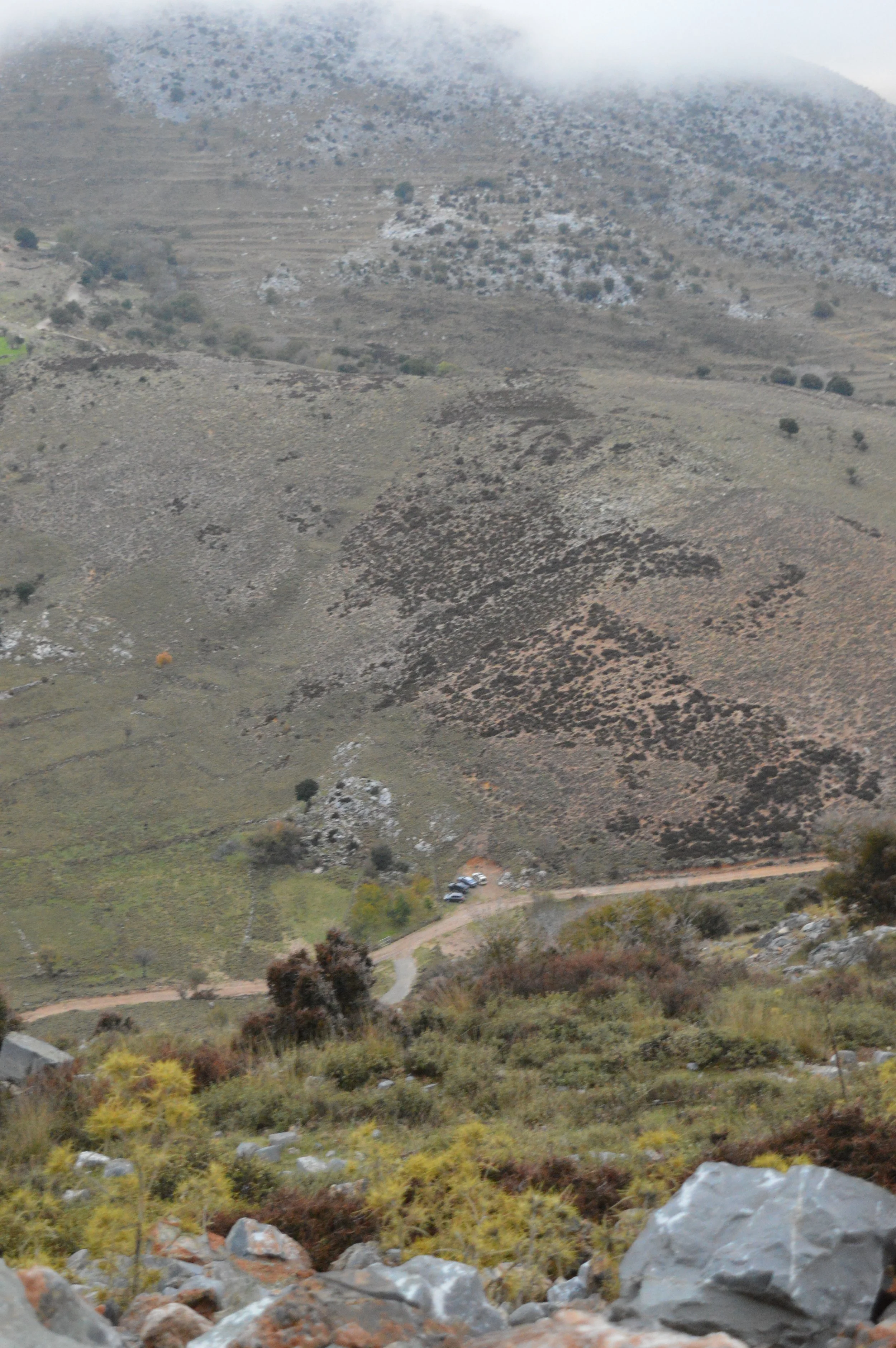
The plateau covers an area of approximately 750 stremmata, or 75 hectares. Its ground slopes noticeably from south to north, and much of the southern section is covered with gravel carried down from the mountains by water.
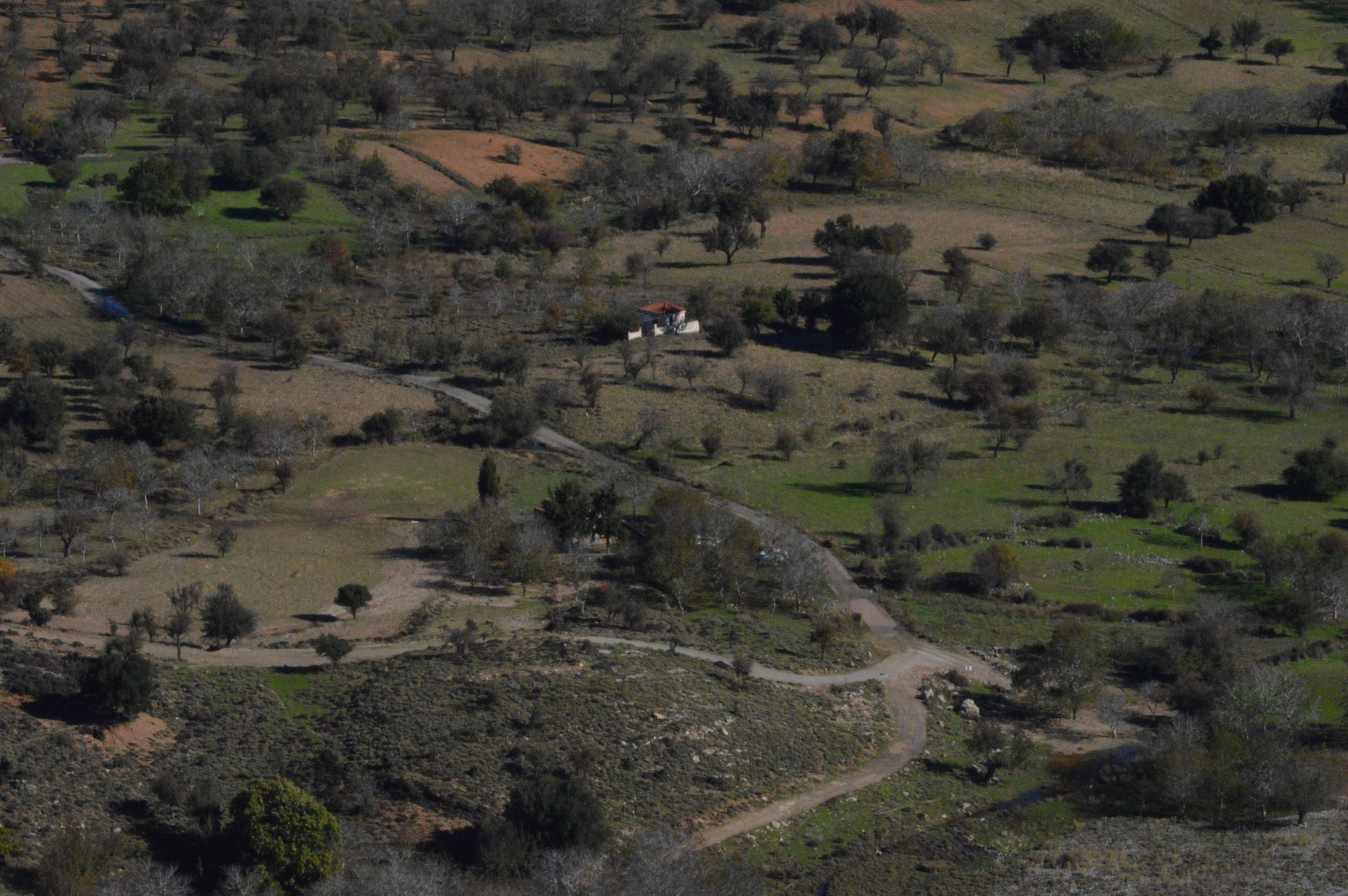
The northern part is different, with deeper alluvial soil that has traditionally supported cultivation. This contrast between the stony mountain terrain and the more fertile ground gives Limnakaros its distinctive character.
The scenery changes throughout the year. Spring brings fresh vegetation and greener pastures, while summer reveals the dry, open landscape typical of the Cretan highlands. During winter, snow and low temperatures can transform the plateau into a much harsher mountain environment.
Traditional Agriculture and Famous Walnut Trees
Although Limnakaros is primarily known today as a mountain grazing area, agriculture once played a more important role in its economy.
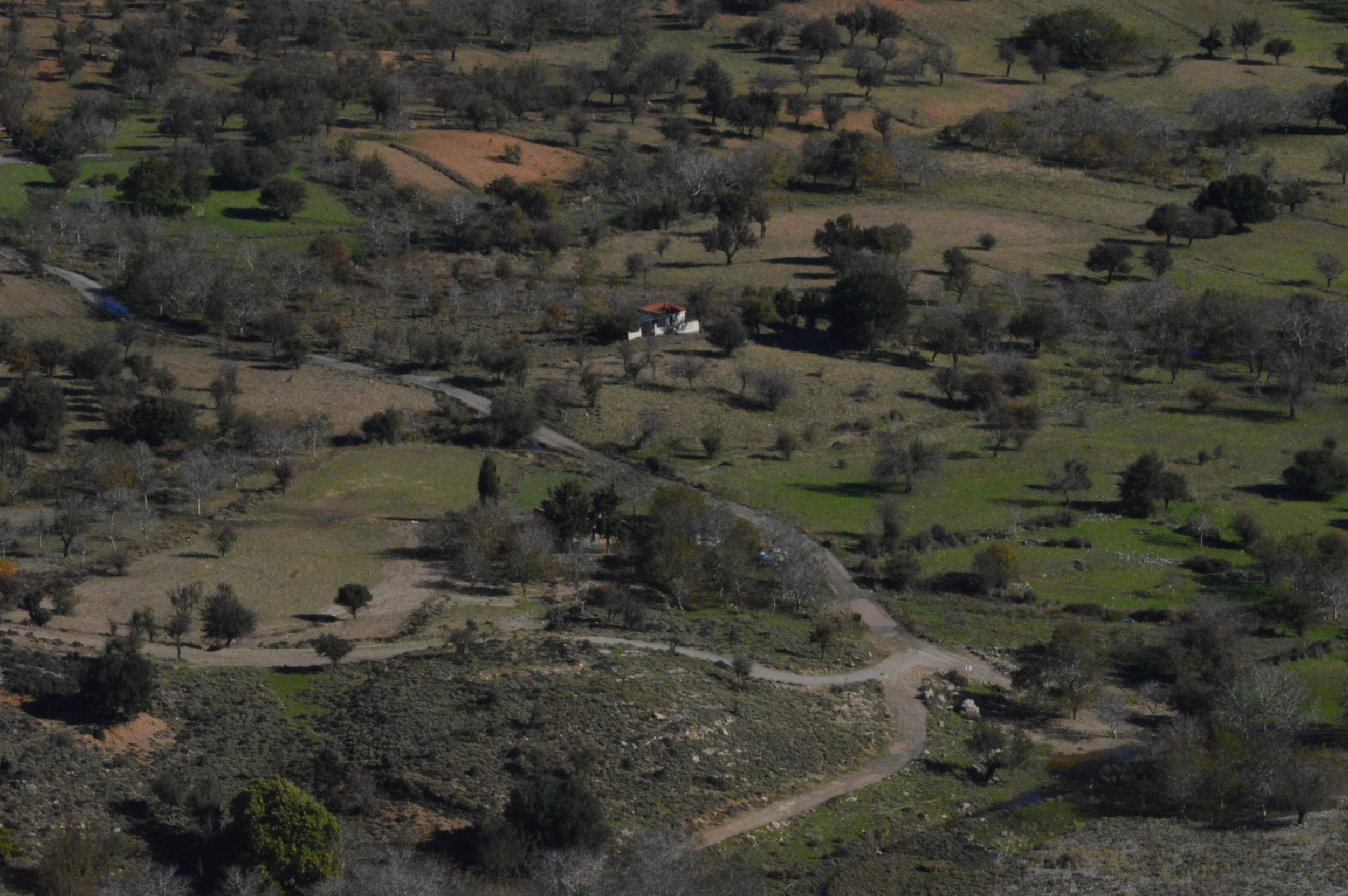
The more fertile northern section was cultivated, and fruit trees were traditionally grown across the plateau. Apple trees, pear trees and walnut trees are among the varieties associated with the area.
The walnuts of Limnakaros are particularly well known locally for their quality. Some of the walnut trees in the Skafidia area are reported to be several centuries old, reflecting the long agricultural history of this mountain landscape.
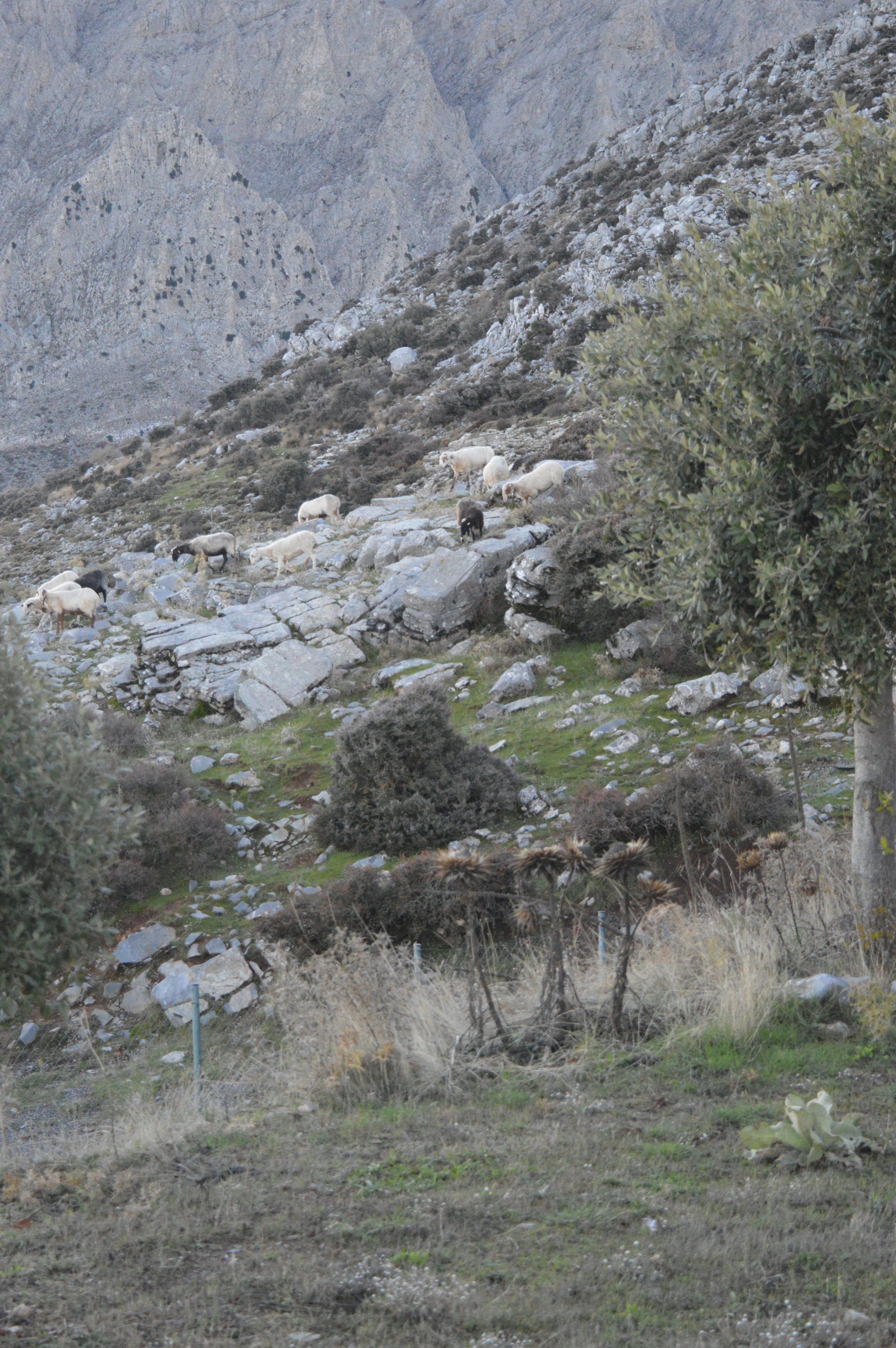
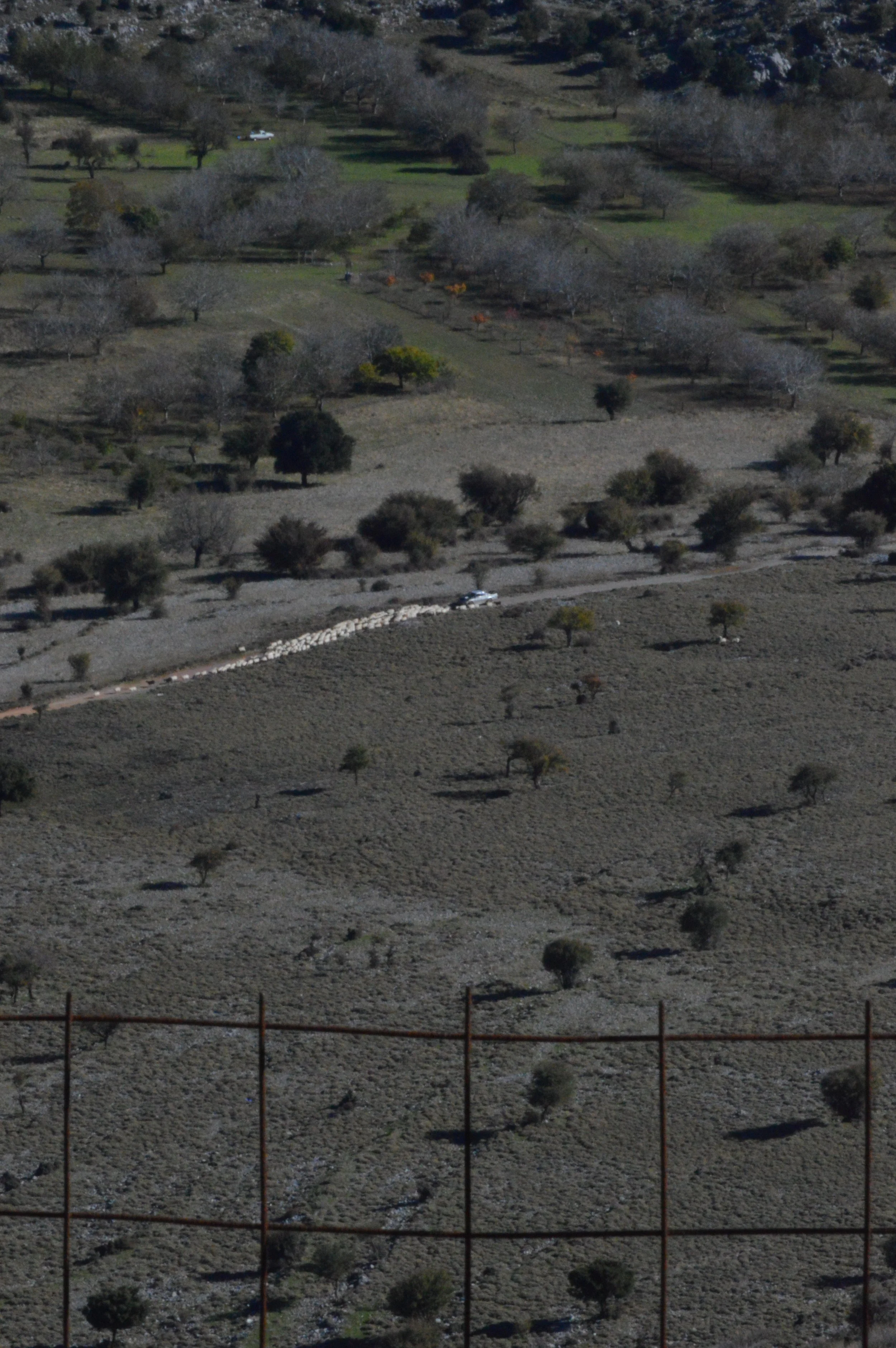
In recent decades, cultivation has become less intensive, and livestock farming has become the main traditional activity. A small number of shepherds continue to use the plateau and maintain the pastoral character of the area.
These agricultural traditions are an important part of Limnakaros's identity. The plateau is not simply an open mountain landscape; it is a place shaped by generations of people who adapted their activities to the climate, soil and seasonal conditions of the Dikti Mountains.
Shepherding and Traditional Stone Mitata
One of the most interesting aspects of Limnakaros is its connection with traditional Cretan shepherding.
For generations, the high mountain plateaus of the Dikti range have been used for seasonal livestock grazing. During the warmer months, shepherds moved their flocks to higher ground, where mountain pastures provided suitable grazing.
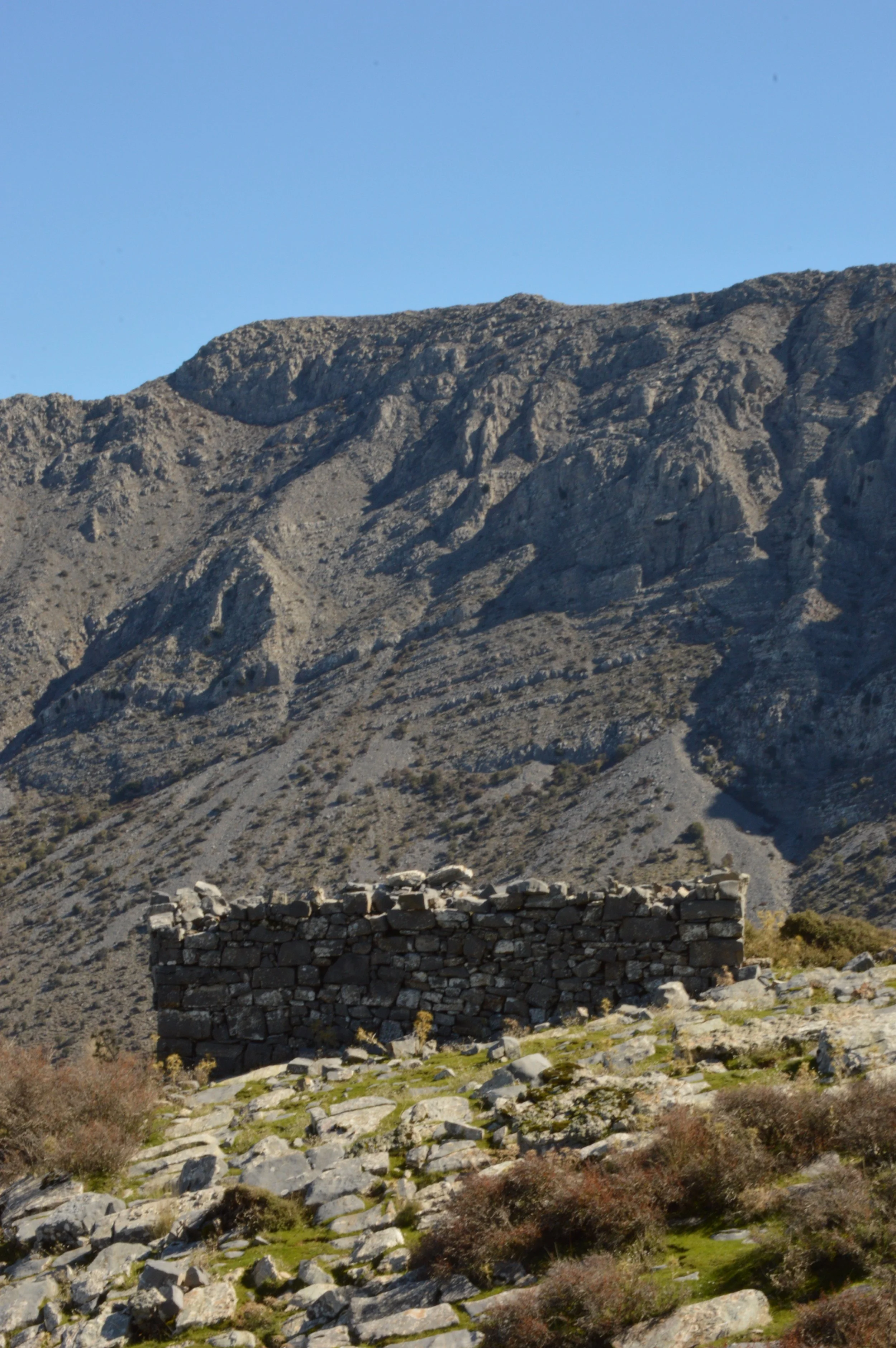
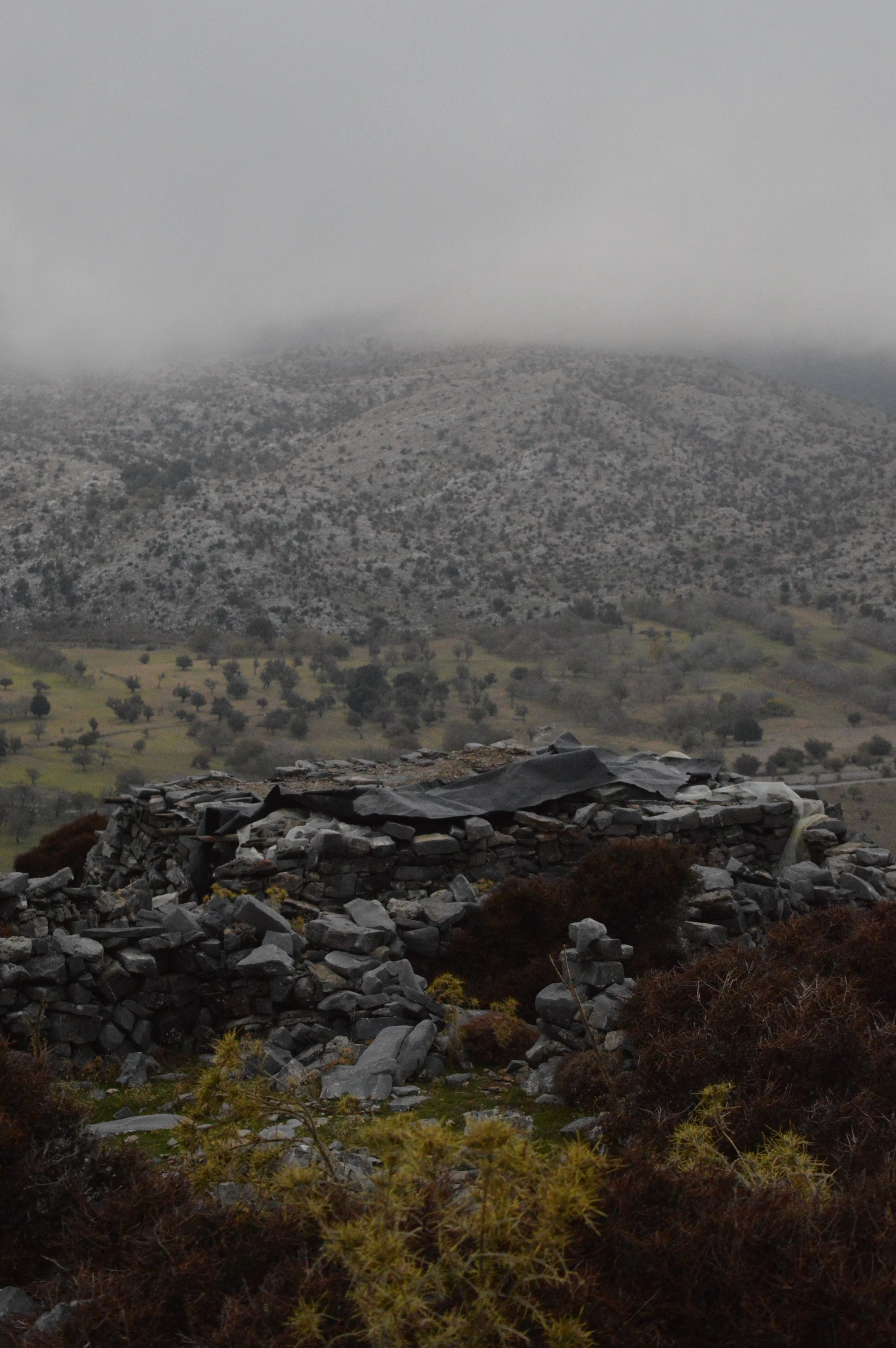
An important part of this way of life was the mitato, a traditional stone shepherd's shelter. These structures were built using local stone and designed to withstand the demanding conditions of the mountains.
Mitata served as practical working spaces and seasonal accommodation for shepherds. They were associated with livestock management, dairy production and the traditional preparation of products such as cheese.
Their architecture reflects the close relationship between Cretan pastoral communities and their natural environment. Built without modern construction materials, these stone shelters demonstrate how local knowledge and available resources were used to create functional structures in remote mountain locations.
The wider Limnakaros area is an important example of this pastoral tradition, which remains a distinctive part of the cultural heritage of the Dikti Mountains.
The Chapel of Agios Pnevmatos
One of the most recognisable landmarks of Limnakaros is the small church of Agios Pnevmatos, dedicated to the Holy Spirit.
Located in the northwestern part of the plateau, the church is a two-aisled basilica with a distinctive architectural appearance. Its setting, surrounded by open mountain scenery, makes it a notable point of interest for visitors exploring the area.
The church has a close connection with the local communities and the pastoral traditions of the plateau. It is also associated with the religious celebrations held in the mountain landscape.
The Feast of the Holy Spirit is particularly important here. The surrounding area becomes a gathering place for people from the neighbouring villages, maintaining a tradition that connects local religious life with the mountains.
The chapel is also a familiar landmark for hikers following routes through Limnakaros and the surrounding Dikti terrain.
Hiking Through Limnakaros – The E4 European Path
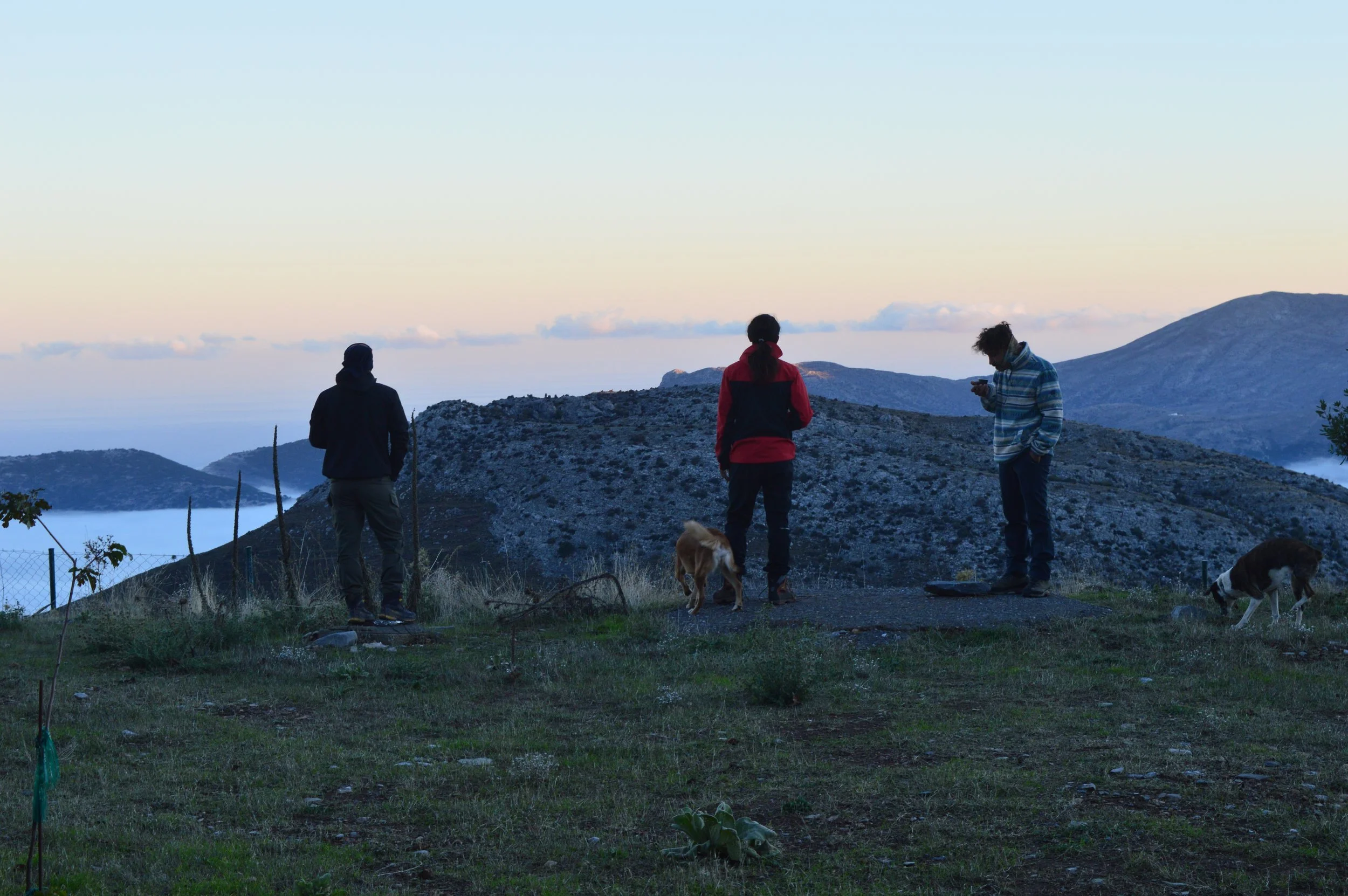
Limnakaros is an important point on the hiking network of the Dikti Mountains. The European E4 long-distance trail passes through the plateau, connecting the Lasithi Plateau with the higher mountain slopes and continuing towards Selakano.
This route offers an opportunity to explore the mountainous interior of Eastern Crete, passing through open plateaus, rocky slopes and traditional rural landscapes.
From Limnakaros, hikers can also explore routes towards the surrounding peaks, including Mount Spathi and Afendis Christos. These are demanding mountain routes that require appropriate preparation, navigation skills and suitable weather conditions.
The ascent to Mount Spathi, at approximately 2,148 metres, is particularly challenging. The route involves steep mountain terrain and sections of loose rock and scree. It should not be confused with an ordinary countryside walk.
During winter, snow and ice can make the higher mountain routes significantly more difficult. Only experienced and properly equipped mountaineers should attempt these ascents under winter conditions.
For visitors who prefer a shorter and more relaxed experience, exploring the plateau itself provides an opportunity to enjoy the scenery and traditional mountain atmosphere without attempting the higher summits.
The Lasithi Mountaineering Refuge at Strovili
Above Limnakaros, at an altitude of approximately 1,358 metres, stands the Lasithi Mountaineering Club refuge at Strovili.
The refuge has served hikers and mountaineers exploring the Dikti Mountains since 1992. It provides basic accommodation for up to 12 people, making it a useful base for those planning longer mountain routes.
Access on foot is possible from Avrakontes, following the E4 trail, with an approximate walking time of two hours. An agricultural road also approaches the refuge, although its condition and suitability should be checked before travelling.
From Strovili, experienced hikers can continue towards Mount Spathi, Afendis Christos and other high points of the Dikti range. The E4 also provides a connection towards Selakano Forest.
The refuge is not a hotel or a staffed tourist facility. Visitors should contact the Lasithi Mountaineering Club in advance to arrange accommodation and confirm current availability and requirements.
Flora and Wildlife
The natural environment of Limnakaros reflects its high-altitude position and the varied conditions of the Dikti Mountains.
The plateau combines open grassland, rocky ground, cultivated areas and surrounding mountain slopes. The more fertile sections support fruit trees and seasonal vegetation, while the higher and rockier terrain is characterised by mountain shrubs and hardy Mediterranean plants.
The surrounding Dikti range is also home to important wildlife. Birds of prey and other mountain species inhabit the wider area, while livestock remains a familiar part of the landscape.
The seasonal changes in vegetation and grazing conditions are closely connected with the traditional use of the plateau. Spring generally brings greener pastures, while the dry summer months create a more exposed mountain environment.
Visitors should respect the natural surroundings, avoid disturbing livestock and leave the area clean.
Best Time to Visit Limnakaros Plateau
Spring and early summer are particularly pleasant times to visit Limnakaros. The landscape is greener, the temperatures are generally more comfortable and the surrounding mountains provide beautiful conditions for walking and exploring.
Summer offers clearer weather and longer daylight hours, making it suitable for hiking and mountain activities. However, the plateau is exposed in several areas, so visitors should carry sufficient water and avoid strenuous walks during the hottest part of the day.
Autumn provides cooler temperatures and a quieter atmosphere, while winter can bring snow, frost and difficult road conditions.
For visitors planning to hike towards the higher Dikti peaks, weather conditions are more important than the calendar. Mountain weather can change quickly, and routes that are relatively straightforward in good conditions can become hazardous in snow, strong winds or poor visibility.
Practical Information Before Visiting
Limnakaros is a remote mountain destination with limited visitor facilities. It is best approached as a natural and agricultural landscape rather than a developed tourist attraction.
Things to consider before visiting:
Check the condition of the access road before travelling.
Carry sufficient drinking water and food.
Wear comfortable walking shoes or hiking boots.
Bring warm clothing, as mountain temperatures can be considerably lower than on the coast.
Download an offline map if you plan to explore beyond the main access road.
Respect local shepherds, livestock and agricultural activities.
Avoid entering private agricultural areas or disturbing traditional stone structures.
The plateau has three main road approaches, but their condition varies from moderate to poor. Although these roads have been described as accessible to passenger cars, this does not mean that they are suitable in every weather condition. After rain or during winter, some sections may become difficult.
For longer mountain hikes, appropriate equipment and previous hiking experience are essential. Visitors unfamiliar with the Dikti Mountains should consider using an experienced local guide.
How to Get to Limnakaros Plateau
Limnakaros is located south of the Lasithi Plateau, on the northern slopes of the Dikti Mountains.
There are three main approaches:
From Agios Georgios: This route passes through Vasilikos, Poros and the Pouliou to Nero area before reaching Limnakaros near Skafidia. The route is approximately six kilometres from its starting point at Agios Georgios.
From Avrakontes: This approach passes through Koutsoura, Adilos and Fasoselos, near Peristera Cave, before reaching the western side of the plateau. It is generally considered the best access road.
From Kaminaki: Another route branches off the road between Katofygi and Kaminaki. A dirt track leads through Sklavomytis towards the Agios Pnevmatos area.
The approach from Avrakontes is often the most practical option, but road conditions can change. It is advisable to ask locally before setting out, particularly if travelling in a standard rental car.
A car is the most convenient way to reach Limnakaros. Public transport does not provide direct access to the plateau.
Places to Discover Near Limnakaros Plateau
Limnakaros can be combined with visits to several traditional villages, natural attractions and mountain destinations in the Lasithi region.
Lasithi Plateau
The famous Lasithi Plateau lies just north of Limnakaros and is known for its traditional villages, agricultural landscapes, historic windmills and Dikteon Cave. It offers a different but complementary experience of the Dikti mountain region.
Agios Georgios
One of the traditional villages of the Lasithi Plateau municipality, Agios Georgios has a long connection with the agricultural and pastoral life of the surrounding mountains. It is also one of the access points for Limnakaros.
Avrakontes
A small traditional settlement on the northern side of the Dikti Mountains. Avrakontes provides access to Limnakaros and the surrounding hiking routes, making it a useful starting point for exploring the mountain area.
Peristera Cave
Located along one of the access routes from Avrakontes, Peristera Cave is a natural feature of the wider mountain landscape. It adds further interest to the area for visitors exploring the lesser-known caves and geological formations of the Dikti range.
Selakano Forest
One of the largest and most important pine woodland areas in Eastern Crete, Selakano is known for its mountain scenery, traditional beekeeping and hiking opportunities. The E4 trail connects the wider Limnakaros area with Selakano, making the two destinations particularly interesting to explore as part of a longer mountain journey.
Katharo Plateau
Situated above Kritsa, Katharo is another distinctive mountain plateau in Eastern Crete. Its open landscapes, traditional rural character and surrounding peaks make it a worthwhile destination for visitors interested in the highlands of the island.
Discover the Mountain Heritage of Eastern Crete
Limnakaros Plateau offers a different perspective on the natural and cultural landscape of Crete. Its open grazing land, traditional walnut trees, stone shepherd shelters and surrounding mountain peaks reflect a way of life shaped by the conditions of the Dikti Mountains.
For hikers, the plateau is also an important part of the E4 trail network and a starting point for exploring some of the highest summits in Eastern Crete.
Whether visiting for its peaceful scenery, traditional pastoral heritage or mountain hiking opportunities, Limnakaros is a rewarding destination for those who want to discover the quieter and less familiar landscapes of the island.