
Richtis gorge
The Best Gorges and Hiking Trails in Eastern Crete
Eastern Crete is an excellent destination for travellers who enjoy walking, hiking and exploring nature. Beyond its beaches and traditional villages, the region has an impressive variety of landscapes, including deep gorges, mountain plateaus, forests, rocky coastlines and trails connecting historic settlements.
The Lasithi region, around Agios Nikolaos, Ierapetra and Sitia, offers walking experiences for different interests and fitness levels. Some routes follow shaded riverbeds and lead to waterfalls, while others cross mountain landscapes and remote countryside where visitors can discover a quieter side of Crete.
Among the most interesting places are Richtis Gorge, Kritsa Gorge, Sarakina Gorge and the Valley of the Dead at Zakros. There are also beautiful walking routes through Pefki Gorge, Chochlakies Gorge and the forests and plateaus of the Dikti Mountains.
If you are planning an outdoor adventure in Eastern Crete, here are some of the best gorges and hiking trails to include in your travel plans.
1. Richtis Gorge – A Beautiful Trail Leading to a Waterfall
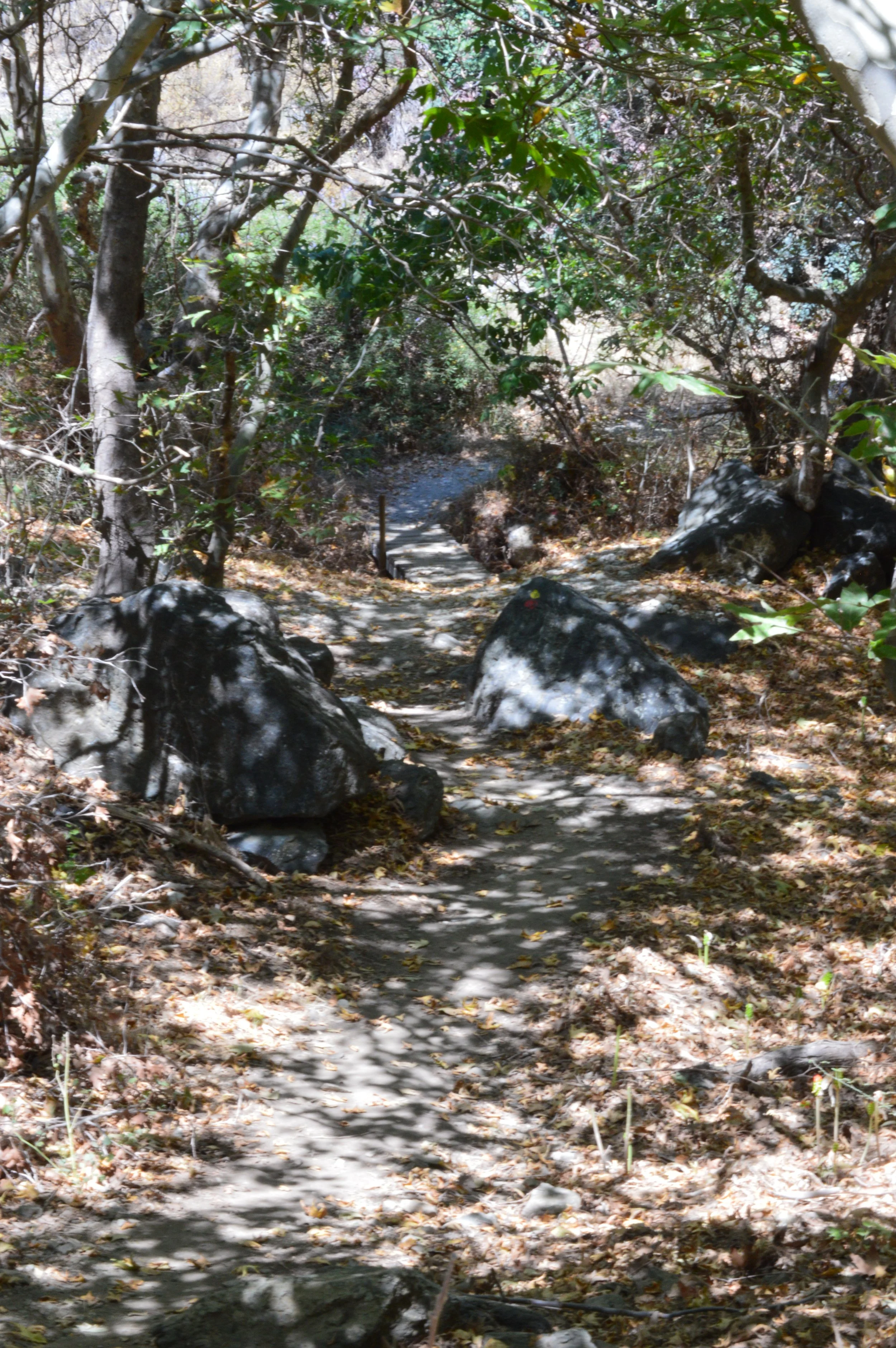
Located between Agios Nikolaos and Sitia, near the village of Exo Mouliana, Richtis Gorge is one of the most beautiful natural destinations in Eastern Crete.
The gorge is known for its lush vegetation, flowing stream, old stone structures and impressive waterfall. Unlike many of the drier landscapes found elsewhere on the island, Richtis has a particularly green character, with plane trees, oleanders, wild plants and shaded sections along the route.
The traditional hiking trail begins near Exo Mouliana and follows the stream towards the coast. Along the way, visitors pass the historic Lachanas stone bridge, built in the early 20th century, as well as remains of old watermills and other structures connected with the area's former agricultural life.
The highlight of the route is the Richtis Waterfall, which drops into a natural pool surrounded by vegetation. It is a particularly attractive place to stop, enjoy the scenery and, when conditions allow, take a refreshing swim.
The trail continues towards Richtis Beach, a quiet coastal area where hikers can rest before returning.
Hiking information: The route is several kilometres long, with the full descent and return requiring a considerable amount of time. Allow approximately 3–4 hours or more, depending on your route, pace and return arrangements. The terrain includes uneven paths, stones and sections that can be slippery.
Location: Near Exo Mouliana, between Agios Nikolaos and Sitia.
Best time to visit: Spring and early summer are particularly attractive, although conditions vary throughout the year.
Useful tip: If you do not want to walk the entire route, alternative access points may reduce the walking distance. Check current access conditions before setting out.
2. Kritsa Gorge – A Dramatic Natural Passage Near Agios Nikolaos
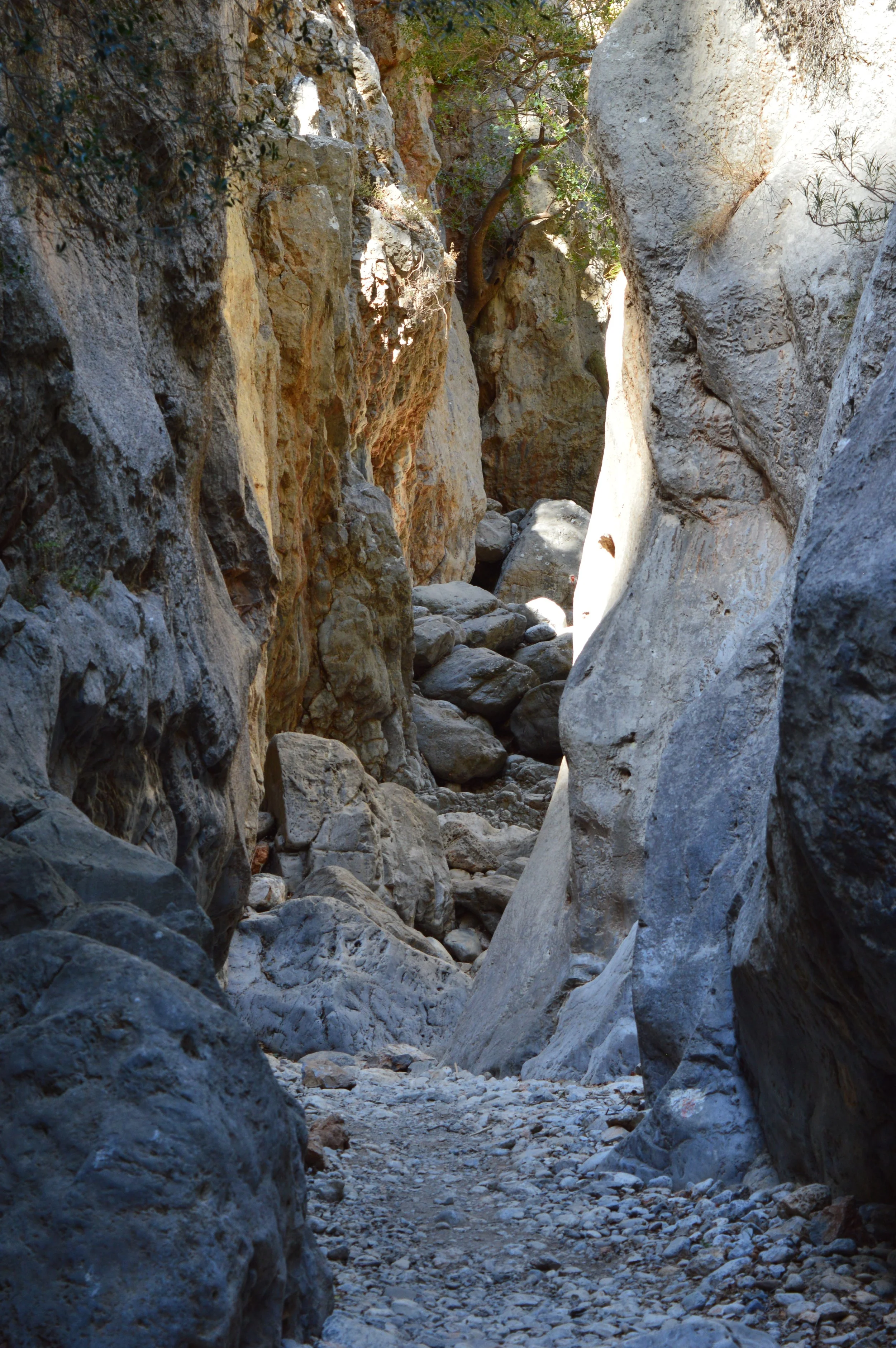
Just a short distance from the traditional village of Kritsa, Kritsa Gorge is one of the most accessible natural attractions near Agios Nikolaos, although walking through it requires preparation and suitable physical condition.
The entrance is particularly impressive, with high rocky walls creating a narrow passage through the mountains. In some sections, the gorge becomes very tight, with large rocks and steep sides rising above the walking route.
As visitors continue through the gorge, the landscape gradually changes. The narrow rocky passages open into wider sections with vegetation, olive groves and views of the surrounding countryside.
Kritsa Gorge is often associated with the nearby village of Tapes, which can form part of a longer walking route. The exact route and distance depend on the chosen starting and finishing points.
The gorge is an excellent destination for people who want to experience the rugged landscape of Eastern Crete without travelling far from Agios Nikolaos.
Hiking information: The main gorge passage is commonly described as approximately 4 kilometres, although longer routes are possible. Expect uneven ground and sections where you may need to climb over rocks.
Location: Near Kritsa, approximately 10 kilometres from Agios Nikolaos.
Best time to visit: Spring and other dry periods are generally preferable.
Important safety advice: Do not enter the gorge after heavy rainfall or when rain is forecast. Water can collect in the narrow passages, making the route dangerous or impassable. Check local conditions before visiting.
3. Sarakina Gorge – Impressive Rock Formations Near Myrtos
Sarakina Gorge, also known as Myrtos Gorge, is located near the village of Mythi, a short drive inland from the coastal village of Myrtos in the Ierapetra area.
It is one of the most distinctive gorges in Eastern Crete because of its impressive geological formations. The rocky walls rise steeply on both sides, creating narrow passages, natural pools and small waterfalls.
The route follows a stream through the gorge, with sections where the walls become very close together. Visitors may need to walk through shallow water, step over smooth rocks or negotiate natural obstacles.
The landscape changes along the way, offering a combination of shaded passages, open sections and impressive rock formations shaped by water over thousands of years.
Sarakina is relatively short compared with some of Crete's larger gorges, but it offers a memorable outdoor experience.
Hiking information: The gorge is approximately 1–1.5 kilometres long, depending on the route taken. The crossing can take around 1–2 hours or longer, depending on water levels and conditions.
Location: Near Mythi village, approximately 15 kilometres from Ierapetra.
Best time to visit: Spring and early summer can be particularly attractive, but water conditions must always be considered.
Important safety advice: This is not a simple dry walking trail. Some sections involve scrambling over rocks and walking through water. Wear suitable footwear with good grip and avoid entering when water levels are high or heavy rain is expected.
4. Valley of the Dead – Zakros Gorge
One of the most fascinating hiking routes in Eastern Crete is the Valley of the Dead, also known as Zakros Gorge.
Located in the eastern part of the Sitia region, the gorge connects the village of Ano Zakros with the coastal settlement of Kato Zakros.
Its unusual name comes from the Minoan burial caves discovered in the rocky cliffs along the gorge. These caves were used as burial places during ancient times, making the route particularly interesting for visitors who enjoy both nature and archaeology.
The landscape is characterised by impressive rocky formations, high cliffs and a dry riverbed. Walking through the gorge provides a different perspective on the eastern Cretan countryside, where the natural environment and ancient history come together.
The route finishes close to the archaeological site of the Minoan Palace of Zakros, one of the four major Minoan palatial centres of Crete.
This makes the hike an excellent combination of outdoor activity and cultural exploration.
Hiking information: The main route is approximately 2.5–3 kilometres, depending on the starting point and trail followed. Allow around 1–1.5 hours for the walk, with additional time for exploring the archaeological site.
Location: Between Ano Zakros and Kato Zakros, in the eastern part of Lasithi.
Best time to visit: Spring and autumn are particularly pleasant for walking. Summer visits are possible, but temperatures can be high and shade is limited.
Useful tip: If you plan to walk from Ano Zakros to Kato Zakros, arrange your return transport in advance or allow time to walk back.
5. Pefki Gorge – A Beautiful Forested Trail in Southern Sitia
Near the traditional village of Pefki, in the Sitia area, Pefki Gorge is a beautiful walking destination known for its impressive rock formations and vegetation.
Also known as Anegyros Gorge, it offers a pleasant combination of rocky passages, trees and shaded sections. Pine trees and other vegetation give the area a distinctive character, especially compared with the drier landscapes found in parts of Eastern Crete.
The trail passes through a natural landscape with interesting geological formations and views of the surrounding countryside. There are also walking routes connecting Pefki with nearby settlements, including Aspros Potamos.
The gorge is a good choice for visitors who want to combine hiking with exploring the traditional villages of southern Sitia.
Hiking information: The main marked route is approximately 1.5 hours, while longer walking options are available in the surrounding area.
Location: Near Pefki village, in the wider Makry Gialos and Sitia region.
Best time to visit: Spring and autumn are ideal for comfortable walking.
Useful tip: Wear suitable walking shoes and carry water. Check the condition of the trail and any route variations before starting.
6. Chochlakies Gorge – A Coastal Hike to Karoumes Beach
On the eastern coast of Crete, near the village of Chochlakies, lies Chochlakies Gorge, a relatively short route leading to the secluded Karoumes Beach.
The gorge offers an interesting walking experience through a rocky landscape with natural vegetation and impressive formations. The route follows the valley towards the coast, eventually opening onto the beautiful bay of Karoumes.
One of the most rewarding aspects of this hike is the destination itself. Karoumes is a remote beach with clear water and a peaceful setting, making it an excellent place to relax after the walk.
Because the beach is not directly accessible by a normal road, hiking through the gorge is one of the main ways visitors reach it.
Hiking information: The route is approximately 1.5 kilometres each way, with around 1–1.5 hours usually sufficient for the walk in both directions, depending on your pace and stops.
Location: Near Chochlakies village, on the eastern coast of the Sitia region.
Best time to visit: Spring and autumn are particularly pleasant. Summer is also possible, but the route offers limited shade.
Useful tip: Bring enough drinking water, sun protection and anything you need for your time at the beach. Do not assume there will be facilities at Karoumes.
7. Havgas Gorge – A Mountain Route in the Lasithi Plateau
Located in the Dikti Mountains, Havgas Gorge is one of the most interesting natural areas around the Lasithi Plateau.
The gorge is formed between the mountain slopes of Katharios Lakkos and Katharia Kefala, and is connected to the wider water system of the Lasithi and Katharo areas.
Its landscape is different from the coastal gorges of Eastern Crete. Here, the surroundings are more mountainous, with rocky slopes, trees and a riverbed that carries water after periods of rainfall.
One of the most attractive locations inside the gorge is Neraidokolymbos, a natural pool at the base of a small waterfall, surrounded by steep rocks. A large, rounded boulder gives the place a distinctive appearance.
The route can be relatively gentle in its lower sections, but the terrain becomes more difficult further inside. The gorge narrows, and continuing towards the higher mountain paths requires greater care and route knowledge.
Hiking information: The gorge is approximately 4 kilometres long, although the accessible route and walking distance depend on the chosen entry and exit points.
Location: Near the Lasithi Plateau, in the Dikti mountain range.
Best time to visit: Spring and early summer, depending on weather and water conditions.
Important safety advice: Do not assume the entire gorge is an easy walking route. Some sections are more demanding, and the continuation towards Katharo requires careful navigation. For visitors unfamiliar with the area, a local guide is recommended.
8. Pervolakia Gorge – A Scenic Hike Near Kapsa Monastery
In southeastern Crete, near the historic Monastery of Kapsa, Pervolakia Gorge offers an interesting hiking route through a rugged mountain landscape.
The gorge begins near the village of Pervolakia and descends towards the southern coast, ending close to Kapsa Monastery and the Libyan Sea.
Along the route, visitors can admire steep rocky slopes, natural formations and views of the surrounding landscape. The trail offers a different experience from the greener gorges of northern Lasithi, with a more open and rugged character.
Its location also makes it possible to combine the hike with a visit to Kapsa Monastery or a stop at the nearby coastal area.
Hiking information: The full route is approximately 3 kilometres, with a significant difference in elevation. Allow several hours for the walk, including breaks and time to explore the area.
Location: Between Pervolakia village and Kapsa Monastery, near Makry Gialos.
Best time to visit: Spring and autumn are generally preferable because of the milder temperatures.
Useful tip: The route includes a descent over uneven terrain. Suitable footwear, water and good physical condition are important.
9. Selakano Forest – Hiking Through One of Crete's Important Forest Landscapes
For visitors who prefer forest trails rather than narrow rocky gorges, Selakano Forest is one of the most rewarding natural destinations in the mountains of Eastern Crete.
Located on the southern slopes of the Dikti mountain range, inland from Ierapetra, Selakano is an important forested area characterised by pine trees, other native vegetation and mountain scenery.
The forest is particularly attractive during spring and early summer, when the landscape is green and the weather is suitable for outdoor activities. It also provides a cooler environment compared with the exposed coastal areas during warmer months.
Several routes and rural tracks pass through the wider area, offering opportunities for walking and exploring the surrounding mountain countryside.
Selakano is also closely connected to traditional rural life. The wider area has a history of beekeeping, livestock farming and seasonal agricultural activity.
Hiking information: There is no single standard hiking route covering the entire forest. Walking distances and difficulty depend on the chosen path.
Location: In the Dikti Mountains, inland from Ierapetra.
Best time to visit: Spring and autumn are particularly pleasant.
Useful tip: Because the forest is extensive and some tracks are remote, plan your route in advance. A local guide can help visitors discover suitable paths and understand the natural environment.
10. Kroustas Forest – A Peaceful Walking Experience Near Agios Nikolaos
Located near the traditional village of Kroustas, Kroustas Forest is one of the most accessible natural destinations for visitors staying in Agios Nikolaos.
The area is known for its Mediterranean vegetation, including cypress trees, pines and other native plants. It offers a quieter atmosphere away from the coastal settlements and provides an opportunity to explore the countryside around the village.
Walking through the forest allows visitors to experience a different landscape from the rocky gorges and open beaches of the region. The paths and rural tracks offer opportunities for gentle walks and longer excursions, depending on the chosen route.
Kroustas is also a good destination to combine with a visit to the traditional village itself, where visitors can discover local architecture and enjoy a meal at a traditional taverna.
Hiking information: Walking routes vary in length and difficulty. Check the chosen trail before setting out.
Location: Near Kroustas village, approximately 15 kilometres from Agios Nikolaos.
Best time to visit: Spring and autumn are ideal, although the forest can also provide a pleasant escape during warmer months.
Useful tip: Combine a walk through the forest with a visit to Kroustas to enjoy both the natural and cultural character of the area.
More Mountain Trails and Landscapes to Explore
Beyond these ten destinations, Eastern Crete has several other mountain areas worth exploring.
Katharo Plateau
Above the village of Kritsa, the Katharo Plateau is a remote mountain landscape surrounded by the Dikti range. It offers opportunities for walking, exploring traditional rural areas and enjoying impressive views.
The plateau has a strong connection to pastoral life and is an interesting destination for travellers who want to discover the mountainous side of Crete.
Limnakaro Plateau
Located within the Dikti mountain range, Limnakaro Plateau is a beautiful high-altitude landscape with mountain scenery and a traditional pastoral character.
It is particularly interesting for experienced walkers and visitors exploring the higher mountain areas of Lasithi.
Omalos Viannou Plateau
Further south, in the wider Viannos area, Omalos Viannou Plateau offers another impressive mountain landscape. It is known for its rural surroundings, natural scenery and connection to the mountains of southern Crete.
Ha Gorge
Near Kavousi, in the eastern part of the Ierapetra area, Ha Gorge is one of the most spectacular geological formations in Crete.
Its extremely narrow entrance and steep, almost vertical rock walls make it visually impressive. However, Ha is not an ordinary hiking destination. Traversing the gorge requires technical canyoning skills, specialist equipment and appropriate experience.
Visitors who are not trained in technical canyoning should admire the landscape from suitable viewpoints rather than attempting to enter the gorge.
Practical Tips for Hiking in Eastern Crete
Hiking in Eastern Crete can be a wonderful experience, but the landscape should never be underestimated. Some trails are relatively easy, while others involve steep descents, narrow passages, loose rocks, water crossings or remote mountain terrain.
Before choosing a route, consider the following advice.
Choose a route that matches your fitness level. Not every gorge is suitable for beginners or families. Check the distance, elevation changes and terrain before starting.
Check the weather forecast. Avoid entering gorges during or after heavy rainfall. Water levels can rise quickly, particularly in narrow passages.
Wear proper footwear. Hiking shoes with good grip are important. Ordinary sandals or smooth-soled trainers are not suitable for rocky or wet trails.
Carry enough water. Many routes have no shops, fountains or facilities. This is particularly important during the warmer months.
Protect yourself from the sun. Bring a hat, sunscreen and suitable clothing, especially when walking on exposed trails.
Start early. Morning is generally the best time to begin longer walks, particularly during summer.
Download or carry route information. Mobile coverage can be limited in some mountain areas. Do not rely entirely on your phone for navigation.
Respect the natural environment. Take all rubbish with you, avoid disturbing wildlife and do not remove plants or natural materials.
Consider a local guide. Some gorges and mountain trails are difficult to navigate if you do not know the area. A knowledgeable guide can help you choose a suitable route, understand the landscape and avoid unnecessary risks.
Discover the Nature of Eastern Crete with Local Guides
The gorges, forests and mountain landscapes of Eastern Crete reveal a side of the island that many visitors never experience. From the green surroundings of Richtis Waterfall to the dramatic passages of Kritsa and Sarakina, the region offers a wide variety of outdoor experiences.
Exploring these places with local knowledge can make a significant difference, especially when routes are remote, difficult to follow or affected by seasonal conditions.
At Agios Nikolaos Travel Guide, we aim to help visitors discover the natural and cultural heritage of the region. Through our destination guides and local experiences, you can explore the landscapes, villages and traditions that make Eastern Crete special.
If you would like to discover more of the region, explore our local tours and experiences. For visitors interested in Richtis Gorge, guided excursion options are also available through Explore Agios Nikolaos.
Whether you prefer a relaxed forest walk, a challenging mountain route or a hike through a dramatic gorge, Eastern Crete offers opportunities to explore the island beyond its beaches and resorts.
Frequently Asked Questions About Gorges and Hiking in Eastern Crete
What is the most beautiful gorge in Eastern Crete?
Richtis Gorge is one of the most popular choices because of its lush vegetation, historic stone bridge and impressive waterfall. Kritsa Gorge and Sarakina Gorge are also excellent destinations, each offering a different landscape and hiking experience.
Which gorge is closest to Agios Nikolaos?
Kritsa Gorge is one of the closest major hiking destinations to Agios Nikolaos. It is located near the traditional village of Kritsa, approximately 10 kilometres from the town.
Can beginners hike in Eastern Crete?
Yes. There are several walking routes suitable for people with moderate fitness, including some forest trails and shorter gorge walks. However, not all gorges are suitable for beginners. Always check the difficulty and current conditions before choosing a route.
Can you swim in Richtis Waterfall?
Swimming may be possible in the natural pool below the waterfall when conditions permit. Water temperature, water levels and access conditions vary, so visitors should assess the situation carefully and avoid entering unsafe water.
When is the best time for hiking in Eastern Crete?
Spring and autumn are generally the best seasons for hiking because temperatures are usually more comfortable. Early summer can also be pleasant, particularly in forested and mountainous areas. During hot summer days, start early and avoid exposed routes during the middle of the day.
Is it safe to hike through the gorges without a guide?
Some marked and well-known routes can be explored independently by experienced walkers who have checked the conditions. However, remote or technically demanding routes require greater preparation. For unfamiliar trails, difficult gorges and mountain routes, a local guide is strongly recommended.