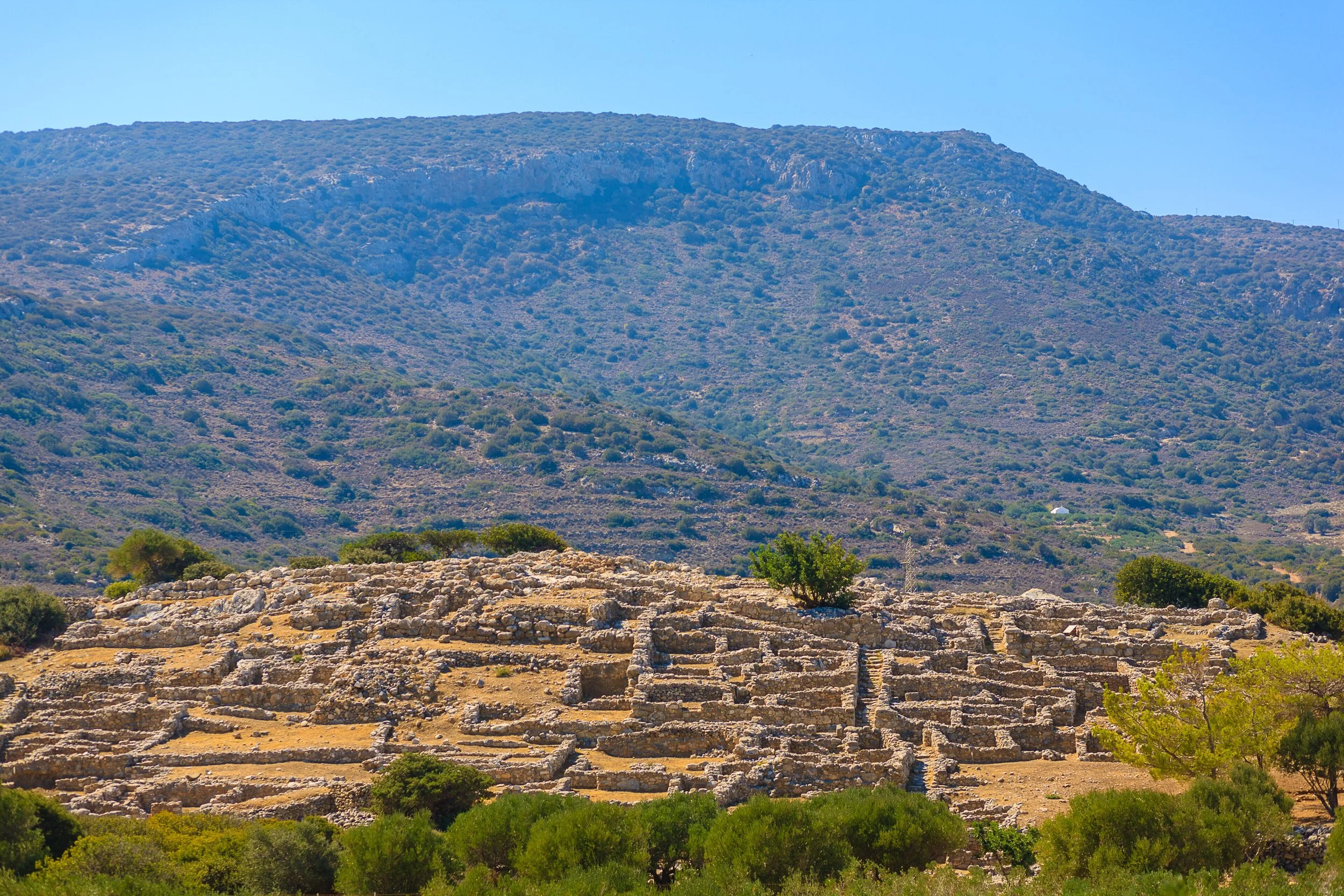
Gournia - Minoan settlement
10 Historical and Archaeological Places to Visit in Eastern Crete
Eastern Crete is one of the most interesting regions of the island for visitors who want to discover its ancient history and archaeological heritage. From Minoan palaces and ancient Greek city-states to Roman remains and impressive Venetian fortifications, the region preserves traces of many different civilisations.
The area around Agios Nikolaos, Elounda, Ierapetra and Sitia offers opportunities to explore archaeological sites in very different settings. Some are located close to modern towns, while others stand among mountains, beside the sea or on small islands.
Whether you are interested in Minoan civilisation, ancient Greek history or the Venetian period, these ten historical and archaeological places offer an excellent introduction to the past of Eastern Crete.
1. Spinalonga: The Venetian Fortress and Historic Island
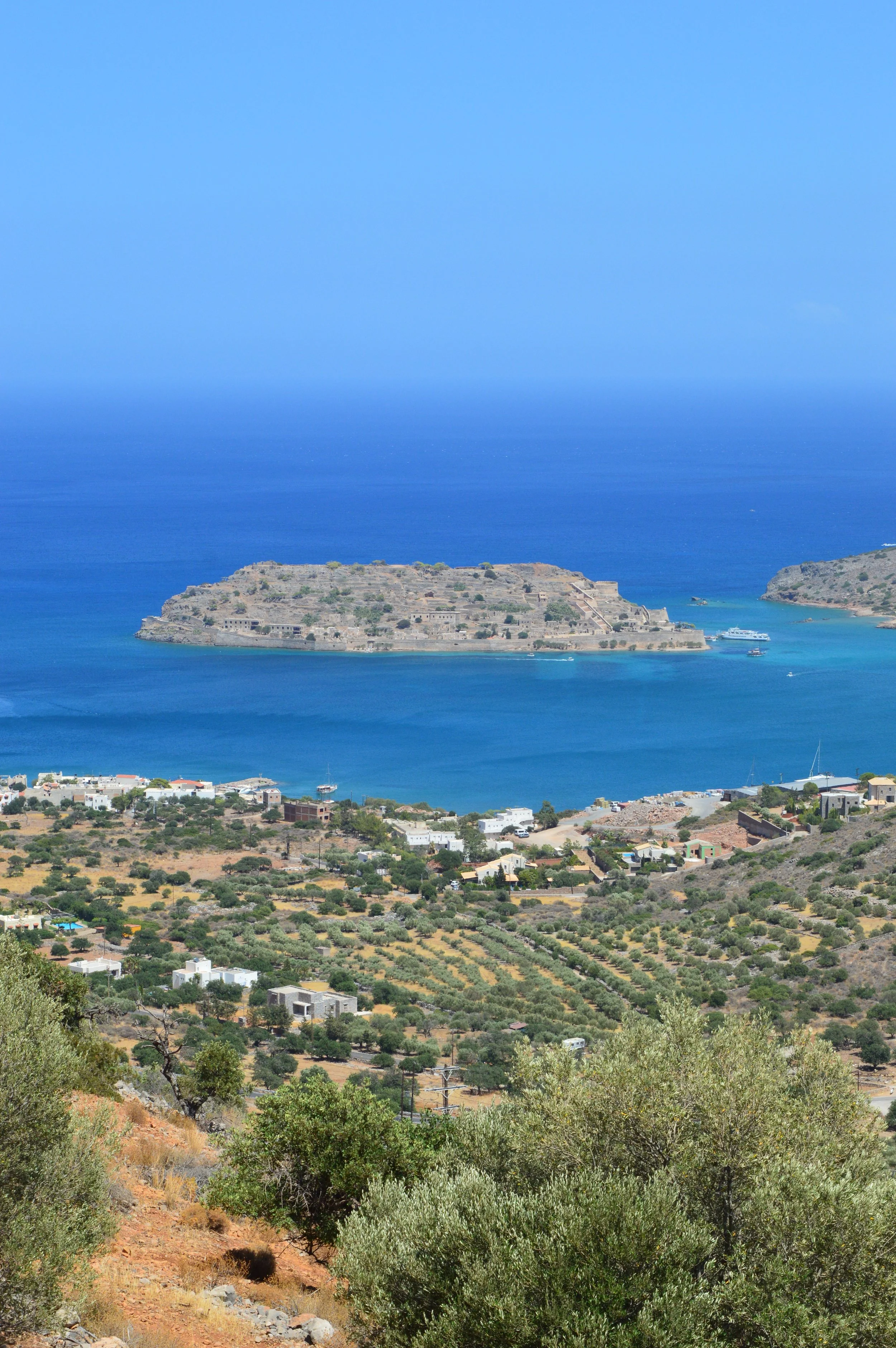
Located at the entrance of Elounda's natural harbour, Spinalonga is one of the most important historical monuments in Eastern Crete. The small island has a fascinating history, shaped by Venetian, Ottoman and modern Greek periods.
Although the island was known in antiquity as Kalydon, its most recognisable historical character developed during Venetian rule. Between 1579 and 1586, the Venetians constructed an impressive fortress to protect the harbour of Elounda and its important maritime trade routes.
Its strong defensive walls allowed Spinalonga to remain under Venetian control even after much of Crete had fallen to the Ottomans. The island was eventually surrendered in 1715 and subsequently developed into an Ottoman settlement.
Spinalonga is also known for its use as a leper colony. In 1903, it was designated as a place of isolation for people suffering from Hansen's disease. The settlement remained in operation until 1957, leaving behind an important and deeply moving part of the island's history.
Today, visitors can walk through the fortress gates, explore the remains of the settlement, see the historic buildings and follow paths around the island. The combination of Venetian military architecture, Ottoman houses and the remains of the former leper colony makes Spinalonga a unique historical destination.
Location: Opposite Plaka and near Elounda, in Mirabello Bay.
How to visit: Boats operate from Plaka and Elounda, with services also available from Agios Nikolaos depending on the season. Allow enough time to explore the island on foot.
2. Ancient Lato: One of the Best-Preserved Ancient Cities in Crete
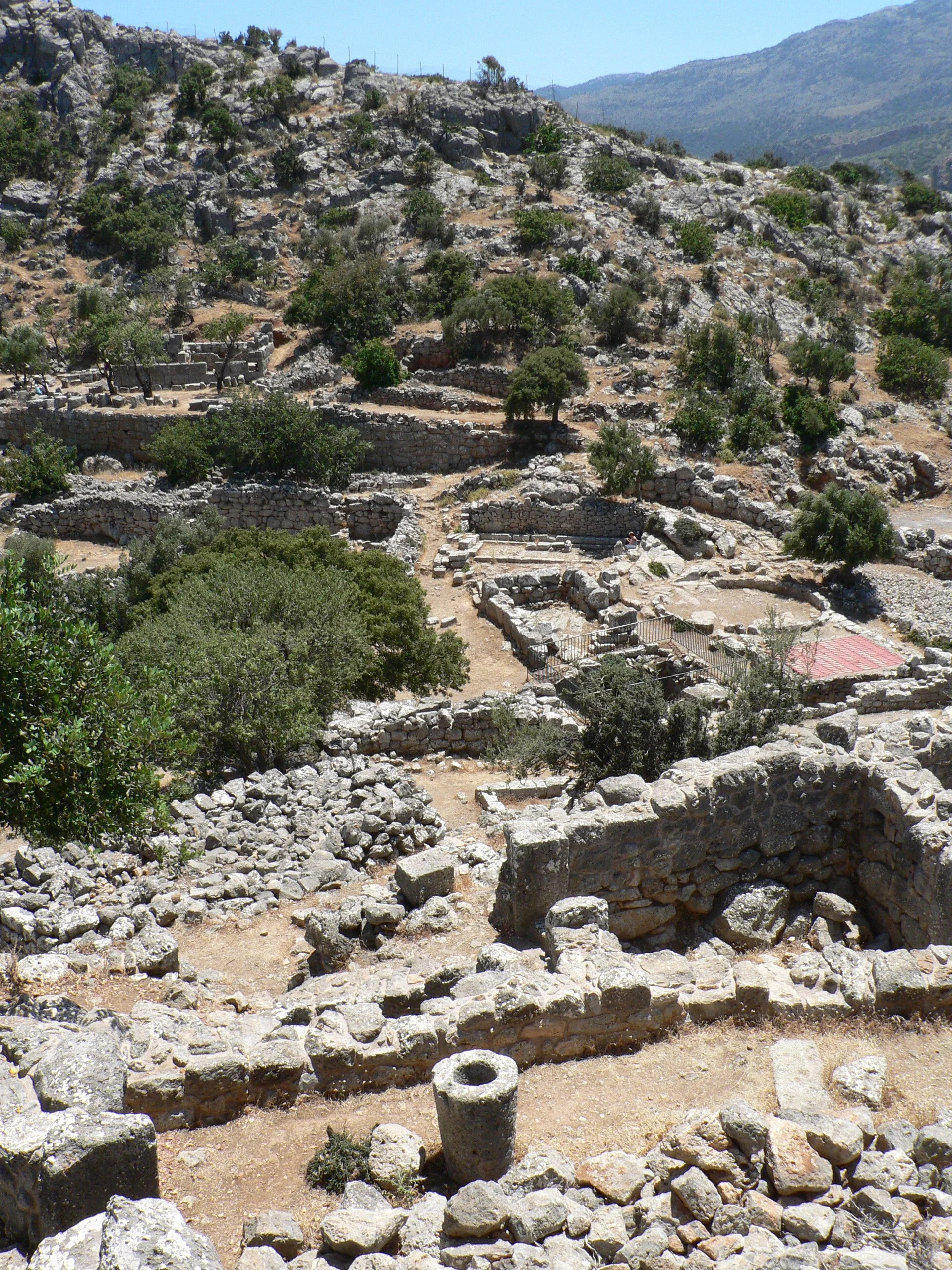
Ancient Lato
Just a short distance from the traditional village of Kritsa lies Ancient Lato, one of the most important archaeological sites in the Agios Nikolaos area.
Lato was a powerful Dorian city-state that flourished particularly during the Classical and Hellenistic periods. Its strategic position between two hills provided natural protection and offered impressive views over the surrounding landscape and Mirabello Bay.
The city was named after Leto, the mother of Apollo and Artemis, according to the traditional interpretation of its name.
The archaeological remains include parts of the ancient defensive walls, houses, public buildings, temples, an agora and a small theatre. The layout of the settlement gives visitors an idea of how an ancient Cretan city was organised and how its inhabitants used the natural terrain.
One of the most interesting aspects of Ancient Lato is its location. As you walk through the remains, you can appreciate why this position was chosen for a fortified settlement. The elevated setting provided both defensive advantages and control over the surrounding area.
Ancient Lato is an excellent destination to combine with a visit to Kritsa and the nearby Byzantine church of Panagia Kera.
Location: Approximately 3 kilometres from Kritsa and around 18 kilometres from Agios Nikolaos.
How to visit: The site is reached by car from Agios Nikolaos or Kritsa. Wear comfortable shoes, as the archaeological area has uneven paths and sloping terrain.
3. Gournia: Discover an Ancient Minoan Town
Gournia is one of the most important Minoan archaeological sites in Eastern Crete. Located near Pachia Ammos, on the narrow stretch of land connecting the northern and southern parts of the Lasithi region, it offers visitors a remarkable opportunity to understand everyday life in a Minoan settlement.
The ancient name of the town is unknown. Its modern name comes from the stone and wooden troughs, known in Greek as gournes, that were found in the area.
Gournia flourished during the Late Minoan period, particularly between approximately 1550 and 1450 BC. Unlike larger palace complexes, the site provides a detailed picture of an organised town, with houses, paved streets, workshops, public spaces and a central complex.
The remains include a small palace, a central courtyard and a sanctuary associated with Minoan religious practices. The settlement's layout reveals how residential, administrative and working areas were connected.
Gournia is especially interesting because it allows visitors to imagine the daily activities of the people who lived there thousands of years ago. It is not simply a collection of ruins; it is a place where the organisation of an ancient community can still be recognised.
Location: Near Pachia Ammos, approximately 20 minutes by car from Agios Nikolaos.
How to visit: Gournia is easily accessible by road and can be combined with a visit to Ierapetra or other archaeological sites along the northern and southern routes of the region.
4. The Palace of Zakros: The Easternmost Minoan Palace

At the southeastern edge of Crete, near the small coastal settlement of Kato Zakros, lies the Minoan Palace of Zakros, one of the four major palatial centres of Minoan Crete.
The palace was an important administrative, religious and commercial centre between approximately 1900 and 1450 BC. Its strategic location near the coast allowed it to participate in maritime trade networks connecting Crete with the eastern Mediterranean.
Although smaller than the palaces of Knossos and Phaistos, Zakros is particularly important because of the archaeological discoveries made there. Excavations revealed a complex of rooms, courtyards, storage areas, workshops and religious spaces.
Among the significant finds were objects connected with trade and international contacts, including materials originating from regions outside Crete. These discoveries demonstrate the importance of the palace in the commercial networks of the Minoan world.
The surrounding landscape adds another dimension to the visit. The palace is located near the entrance of the famous Gorge of the Dead, where caves in the rocky cliffs were used as burial places during ancient times.
A visit to Zakros is especially rewarding for travellers interested in Minoan civilisation and the archaeological heritage of easternmost Crete.
Location: Kato Zakros, approximately 45 kilometres from Sitia.
How to visit: The palace is accessible by car. Because it is a considerable distance from Agios Nikolaos, it is best included in a full-day excursion around the Sitia and Zakros area.
5. Ancient Itanos: A Historic City Beside Vai Beach

Near the famous Vai Palm Forest and the beaches of Erimoupoli lies Ancient Itanos, an archaeological site with a long history connected to maritime trade and the sea.
Itanos was one of the important cities of eastern Crete during Hellenistic and Greco-Roman times. Evidence of human activity in the area extends from the Minoan period to Early Christian times.
The city's prosperity was closely connected to fishing, maritime trade, glass production and the production of Tyrian purple dye, a valuable colourant obtained from marine molluscs.
Today, the archaeological remains are spread across the coastal landscape. Visitors can see traces of ancient buildings and settlement areas, some of which extend towards the sea.
The setting is particularly interesting because the ruins are located beside the beaches of Erimoupoli. The combination of archaeology and coastline makes Itanos a worthwhile stop for anyone exploring the easternmost part of Crete.
You can combine a visit to the site with Vai Palm Forest, one of the island's most distinctive natural attractions.
Location: Near Erimoupoli and Vai, approximately 25 kilometres from Sitia.
How to visit: Itanos can be reached by car from Sitia, following the road towards Palaikastro and Vai. The archaeological remains are spread across an open area, so comfortable footwear is recommended.
6. Ancient Olous: The Submerged City of Elounda
Near the causeway connecting Elounda with the Kolokytha Peninsula are the remains of Ancient Olous, one of the most interesting archaeological sites in the Agios Nikolaos area.
Olous was an important ancient city-state that developed around the natural harbour of Elounda. Its history is known through archaeological discoveries, inscriptions and other historical evidence.
The city had connections with other Cretan settlements and cities beyond the island. Its position beside a protected harbour made it an important location for maritime activity and trade.
One of the most distinctive features of Ancient Olous is that parts of the ancient settlement are now submerged beneath the shallow waters of the area. Remains of structures can be found along the coastline and underwater, making the site particularly unusual.
Visitors can explore the surroundings of the causeway and appreciate the relationship between the ancient city, the harbour and the landscape of modern Elounda.
Ancient Olous is an excellent addition to a visit to Elounda and can be combined with a boat trip to Spinalonga or a visit to Plaka.
Location: Elounda, near the causeway towards the Kolokytha Peninsula.
How to visit: The area can be reached by car from Agios Nikolaos. Some remains are underwater, so visitors should not expect a conventional archaeological site with a clearly defined walking route.
7. Ancient Dreros: An Important City of Early Greek Crete
Located near Neapoli, in the mountainous countryside of the Mirabello region, Ancient Dreros is an important archaeological site associated with the development of early Greek city-states in Crete.
Dreros flourished during the Geometric, Archaic and Classical periods. Its location on elevated terrain between two hills provided natural protection and allowed the ancient settlement to overlook the surrounding countryside.
One of the most important discoveries at Dreros is the temple of Apollo Delphinios, generally dated to the 8th century BC. It is considered one of the earliest known Greek temples on Crete.
The site also includes the remains of an ancient agora and a large cistern that formed part of the city's water supply system. The cistern demonstrates the importance of water management in ancient settlements, particularly in areas where access to natural water sources could be limited.
Dreros is also historically significant because of the ancient inscriptions discovered there, which provide valuable information about the political organisation and laws of early Cretan communities.
Compared with larger archaeological sites, Dreros is a quieter destination and requires a little more preparation before visiting. It is particularly interesting for travellers who want to explore the ancient history of the Neapoli and Mirabello area.
Location: Near Neapoli, in the wider Agios Nikolaos region.
How to visit: Access and visitor arrangements should be checked before setting out. The site is best approached as part of a wider exploration of the inland villages around Neapoli.
8. Mochlos: A Minoan Settlement on a Small Island
The small island opposite the modern village of Mochlos is home to an important archaeological site with remains dating back to the Early Bronze Age.
Mochlos was an important settlement during the Minoan period, particularly between approximately 1700 and 1430 BC. Archaeological excavations have uncovered residential areas, buildings, workshops and burial remains that reveal the development of the settlement over many centuries.
The island was once connected to the mainland by a narrow natural strip of land. Changes in sea level and geological conditions eventually separated it from the coast, creating the small island visible today.
Excavations have also revealed evidence of later occupation, including Mycenaean, Hellenistic and Byzantine remains. This long history makes Mochlos an important location for understanding the changing communities of eastern Crete.
The modern village of Mochlos is a pleasant coastal destination with a small harbour and traditional tavernas. Visitors can enjoy the archaeological landscape from the village and discover more about the site's history.
Access to the archaeological remains on the island may depend on local conditions and permitted arrangements, so check before planning to explore the site directly.
Location: Opposite the village of Mochlos, on the northern coast of the Sitia region.
How to visit: Mochlos can be reached by car from Agios Nikolaos or Sitia. The modern village is easy to explore, while access to the archaeological island should be confirmed locally.
9. Petras: A Minoan Palace and Settlement Near Sitia
Just east of Sitia, near the modern settlement of Petras, lies an important archaeological complex known as Petras.
The site includes the remains of a Minoan palace and settlement built on a hill overlooking the surrounding coastal area. Archaeological discoveries indicate that the area was inhabited from prehistoric times and developed into an important settlement during the Minoan period.
The palace complex contained rooms decorated with colourful wall paintings, storage areas and other architectural features associated with Minoan administrative and residential activity.
Excavations have also revealed evidence of a broader settlement, including fortifications and structures connected to the nearby coastline. The discoveries at Petras provide important information about the organisation of Minoan communities in the eastern part of Crete.
Its location close to Sitia makes it a convenient archaeological destination for visitors exploring the town and the surrounding region.
Location: Approximately 1 kilometre east of Sitia.
How to visit: Petras is close to the modern town and can be included in a short archaeological visit while exploring Sitia. Check current access arrangements before visiting.
10. Ancient Trypitos: A Hellenistic Settlement Near Sitia
On a small peninsula approximately 3 kilometres east of Sitia lies Ancient Trypitos, an archaeological site associated with the Hellenistic period.
The remains indicate that the peninsula was occupied by a settlement with houses, defensive structures and other buildings. Archaeologists have suggested that the site may correspond to ancient Eteia, although the identification is not considered certain.
One of the most interesting discoveries at Trypitos is a large rock-cut ship installation, generally interpreted as an ancient ship shed or dockyard. Measuring approximately 30 metres in length, it provides evidence of the importance of maritime activity in the region.
The location of the settlement beside the sea is not accidental. Its position would have offered access to coastal routes and maritime connections, which were essential for trade and communication in the ancient Mediterranean.
Trypitos is a particularly interesting stop for visitors who want to explore the lesser-known archaeological heritage around Sitia.
Location: Approximately 3 kilometres east of Sitia.
How to visit: Check local access and permitted routes before visiting. The archaeological remains are in an exposed coastal setting, and visitors should avoid climbing on ancient structures or approaching unstable rocky areas.
How to Explore the Archaeological Sites of Eastern Crete
Eastern Crete has a large number of archaeological sites spread across the Lasithi region. Although it is possible to visit several places during the same holiday, planning your route will help you make better use of your time.
Here are three useful combinations:
Around Agios Nikolaos and Elounda
For visitors staying in Agios Nikolaos, the easiest archaeological destinations to combine are:
Ancient Lato, near Kritsa.
Gournia, near Pachia Ammos.
Ancient Olous, in Elounda.
Spinalonga, accessible by boat from Plaka or Elounda.
These places can be explored over one or two days, depending on how much time you want to spend at each site.
Around Neapoli and the Inland Villages
For those interested in ancient Greek history, Ancient Dreros is a worthwhile destination to combine with the traditional villages around Neapoli.
This area offers a different experience from the coastal archaeological sites and gives visitors an opportunity to explore the inland landscape of Mirabello.
Around Sitia and Eastern Crete
Visitors exploring the Sitia region can combine:
Petras, near Sitia.
Ancient Trypitos, east of Sitia.
Ancient Itanos, near Vai and Erimoupoli.
The Palace of Zakros, at Kato Zakros.
Mochlos, on the northern coast.
These places are spread across a large geographical area, so it is better to divide them into separate excursions rather than trying to visit all of them in one day.
Practical Tips Before Visiting Archaeological Sites
Before planning your archaeological excursions in Eastern Crete, keep a few practical points in mind.
Check opening hours: Organised archaeological sites have specific opening schedules, which may change between summer and winter.
Check access: Some ancient settlements are open-air sites without full visitor facilities. Access to certain archaeological areas may be restricted.
Wear suitable footwear: Uneven ground, stones and sloping paths are common at archaeological sites.
Bring water and sun protection: Many sites have limited shade, particularly during the summer months.
Allow enough time: Do not rush through places such as Lato, Spinalonga or the Palace of Zakros. Their historical importance deserves time to explore.
Respect the monuments: Do not climb on ancient walls, remove objects or disturb archaeological remains.
For official opening hours, ticket information and visitor arrangements, consult the Hellenic Heritage platform or the Ephorate of Antiquities of Lasithi before travelling.
Discover the History of Eastern Crete with a Local Guide
The archaeological heritage of Eastern Crete is exceptionally rich. From the Minoan civilisation to the ancient Greek city-states and the Venetian period, every historical site reveals a different chapter of the island's past.
However, understanding these places is about more than seeing old buildings and ruins. Their history is connected to the villages, landscapes, religious traditions and communities that developed around them.
A local guide can help bring these stories to life, explain the historical importance of each location and connect archaeological discoveries with the wider history of Crete.
At Agios Nikolaos Travel Guide, we aim to help visitors explore the region beyond its well-known beaches and resorts. Discover our local cultural tours and experiences to explore the history, traditions and heritage of Eastern Crete with a deeper understanding of the places you visit.
Whether you are interested in ancient civilisations, traditional villages or the history of the Venetian period, Eastern Crete offers many opportunities to discover the past.
Frequently Asked Questions
What are the most important archaeological sites in Eastern Crete?
Some of the most important sites include Spinalonga, Ancient Lato, Gournia, the Palace of Zakros, Ancient Itanos and Ancient Olous. Together, they represent different periods of the region's history, from the Minoan civilisation to the Venetian period.
Which archaeological sites are closest to Agios Nikolaos?
Ancient Lato, Gournia and Ancient Olous are among the most convenient sites to visit from Agios Nikolaos. Spinalonga is also nearby and can be reached by boat from Elounda or Plaka.
Where can I visit a Minoan palace in Eastern Crete?
The Palace of Zakros is the main Minoan palace open to visitors in the eastern part of the island. Gournia and Petras are also important Minoan settlements with palace-related archaeological remains.
Is Spinalonga an archaeological site or a historical monument?
Spinalonga is an organised archaeological site and historic island. Its remains include Venetian fortifications, Ottoman-era buildings and structures connected with its use as a leper colony during the 20th century.
Can I visit archaeological sites in Eastern Crete without a guide?
Yes. Several organised sites can be visited independently, including Spinalonga, Lato, Gournia and the Palace of Zakros. However, a local guide can help explain the historical context and make the visit more informative, particularly at less familiar sites.
How many days do I need to explore the archaeological sites of Eastern Crete?
Two or three days would allow you to explore several of the main archaeological sites around Agios Nikolaos, Elounda and the Sitia region. If you want to visit more remote locations such as Zakros and Itanos without rushing, allow additional time.